Your digging level
Description
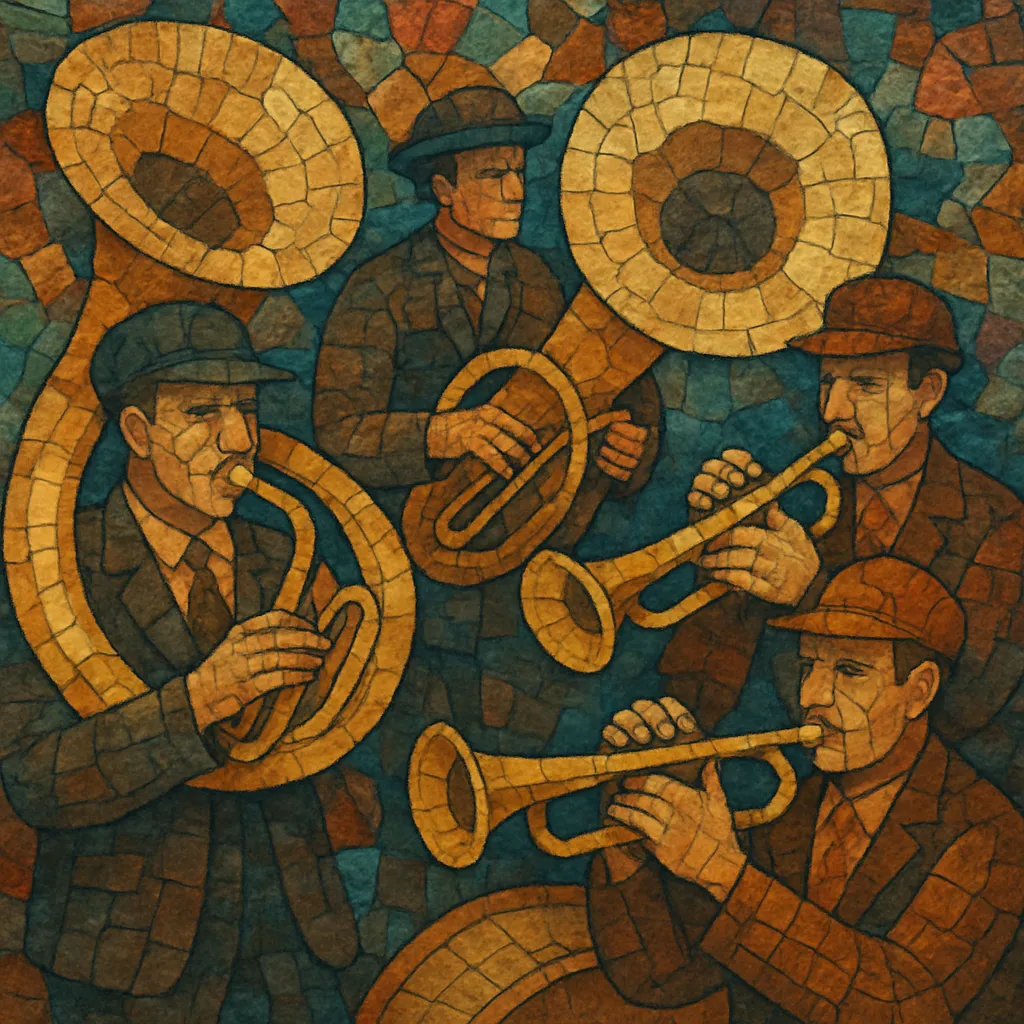
Brass band refers to ensemble-driven music performed primarily by brass instruments and percussion, with a sound characterized by powerful, blended timbres, antiphonal choirs, and a strong emphasis on melody and counter-melody.
In its most codified form (the British-style brass band), the ensemble uses cornets, flugelhorn, tenor horns, baritones, euphoniums, trombones, tubas, and percussion, all written in transposed parts to create a homogenous, organ-like sonority. Repertoire spans marches, hymn tune settings, operatic and orchestral transcriptions, original contest works, and light music.
Globally, the term also encompasses regional traditions such as New Orleans parade/second-line bands (merging ragtime, early jazz, and funk), and Balkan Romani brass bands (fast dance meters and virtuosic ornamentation), showing the format’s adaptability across cultures and celebrations.
History
Brass band music coalesced in the 1830s in the United Kingdom, growing out of military band traditions, religious hymnody, and transcriptions of popular orchestral and operatic repertoire. The Industrial Revolution fostered a vibrant band culture sponsored by factories, mines, and civic organizations, giving workers recreational music-making and communities a musical identity.
By the mid-to-late 19th century, contesting became central (e.g., Belle Vue contests), encouraging standardized instrumentation (cornet-led brass choir without woodwinds) and ambitious original compositions and transcriptions. Publishers, contest organizers, and band associations professionalized the repertoire and raised technical standards.
In New Orleans (late 19th to early 20th century), brass bands fused ragtime, marches, and blues, feeding directly into early jazz and the second-line tradition. In the Balkans, Romani brass ensembles cultivated high-energy dance music with asymmetric meters and dazzling trumpet/tuba lines. Colonial and diaspora contexts carried brass band practices to Africa, the Caribbean, South Asia, and Oceania, where local rhythms and melodies reshaped the idiom.
The UK contest scene (e.g., National Championships, European contests) continued driving compositional innovation and virtuosity. Recording, broadcasting, and education broadened access, while prominent bands became international ambassadors. Meanwhile, New Orleans and Balkan scenes influenced jazz, funk, and global pop, keeping brass bands central to parades, festivals, and popular culture. Today, brass bands thrive both as highly disciplined contest ensembles and as community or street bands that celebrate local identity.