Your digging level
Description
Baroque brass refers to the repertoire and performance style of brass music from the Baroque era (approximately 1600–1750).
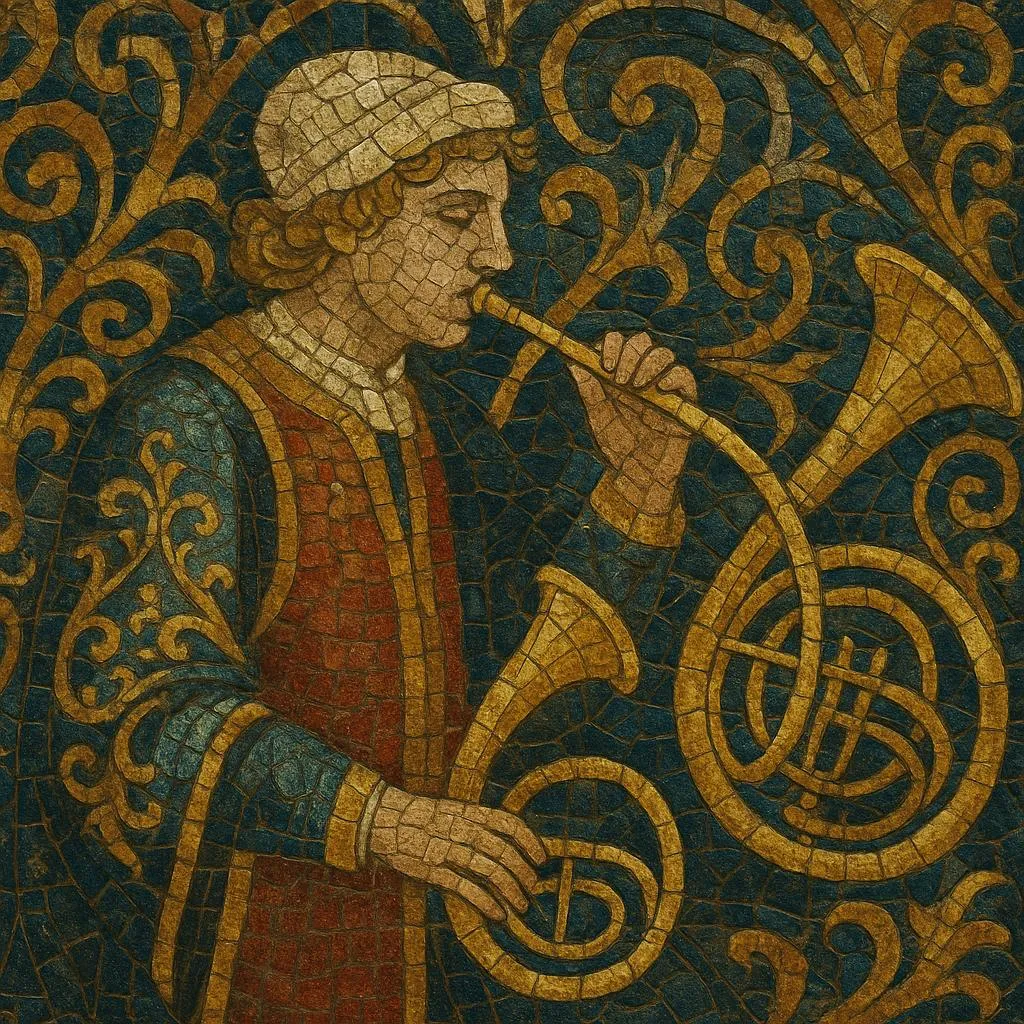
It is characterized by the use of 'natural' instruments without valves, such as the natural trumpet and natural horn, which forced composers to rely on the harmonic series.
This limitation led to the development of the 'clarino' style, where players ascended to the extreme high register to play diatonic melodic lines.
The genre encompasses majestic fanfares, complex polyphonic church music, and virtuosic solo concertos, often symbolizing divine glory or royal power.
History
The history of Baroque brass is a journey from functional signaling to high art.
The Venetian School (Early 1600s):
The style originated in Italy, particularly Venice, where composers like Giovanni Gabrieli utilized the acoustics of St. Mark's Basilica. He wrote for 'cori spezzati' (split choirs), placing brass ensembles in different balconies to create stereophonic, antiphonal effects. This era elevated brass instruments from military signals to sacred concert instruments.
The Rise of the Soloist (Mid-1600s):
As the Baroque era progressed, the focus shifted towards virtuosity. In Bologna, the Basilica of San Petronio became a hub for trumpet music. Composers like Giuseppe Torelli established the trumpet as a solo instrument, solidifying the form of the trumpet concerto.
The Golden Age of Clarino (1700s):
The High Baroque saw the peak of brass complexity. Composers like Bach and Handel wrote incredibly demanding parts for the natural trumpet and horn. Players developed the 'clarino' technique, mastering the extreme upper register to perform fluid, vocal-like melodies. This period produced the famous Brandenburg Concertos and the Water Music.
Decline:
With the transition to the Classical era, musical tastes shifted towards simpler, singing melodies in the strings and woodwinds. The art of high clarino playing faded, and brass instruments were largely relegated to harmonic support until the invention of valves in the 19th century.
Composing or performing Baroque brass music requires a strict understanding of the instruments' physical limitations and historical idioms.
Understand the Harmonic Series:
Since natural instruments have no valves, you cannot write chromatic scales in the lower register. You are limited to the notes of the overtone series (C, c, g, c', e', g', bb', c'', d'', e'', f#'', g''...). Melodies must be diatonic and high in pitch (the clarino register) to be playable.
Instrumentation:
Utilize the core quartet of the era: Natural Trumpets (often in D or C), Natural Horns, Sackbuts (early trombones), and Cornetts (wooden instruments with cup mouthpieces). Sackbuts and Cornetts often double choral parts.
Texture and Rhythm:
Use antiphony (call and response) between different groups of instruments. Employ 'French Overture' rhythms—dotted notes that convey royalty and pomp. In fast movements, use driving motor rhythms.
Ornamentation:
Decorate cadences with trills. Since dynamic range was limited compared to modern brass, use 'terraced dynamics' (abrupt changes from loud to soft) rather than gradual crescendos.