Your digging level

For this genre
0/8
🏆
Sign in, then listen to this genre to level up

Description

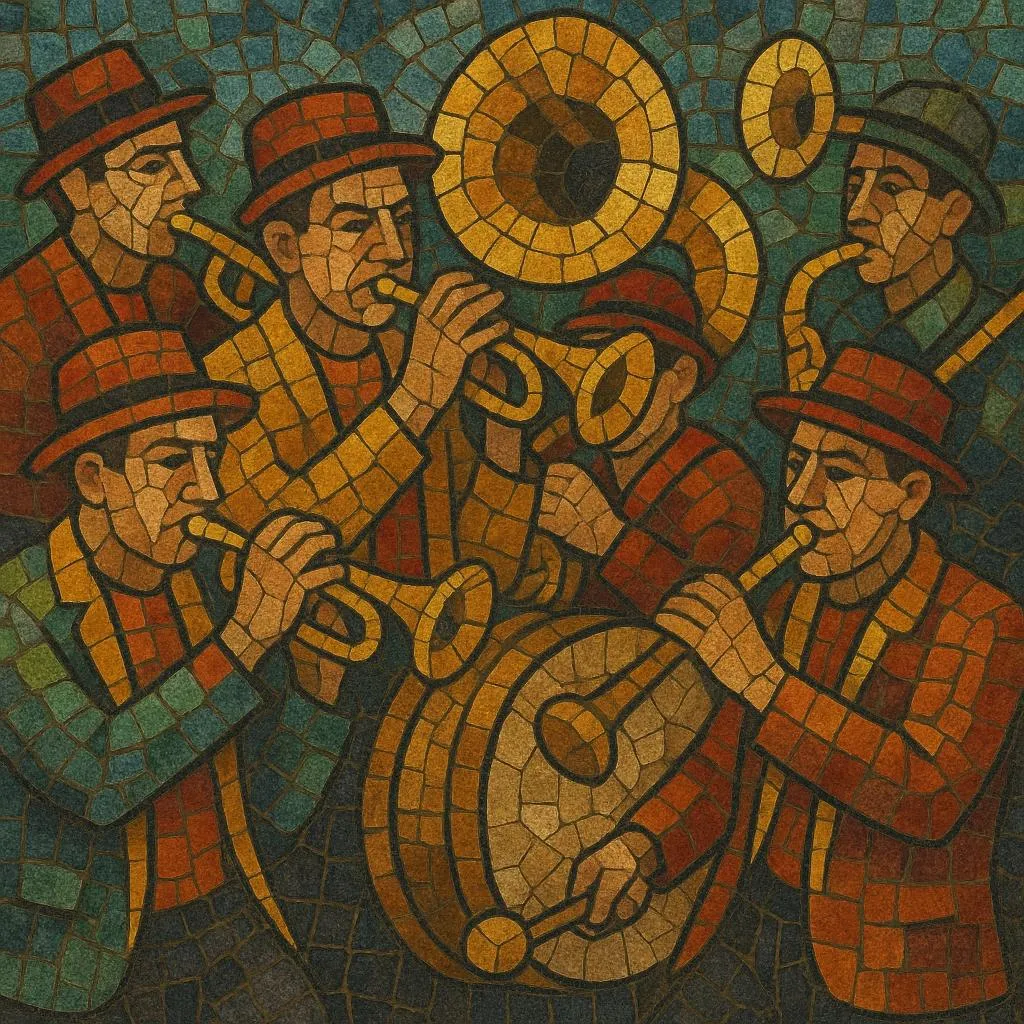
Dweilorkest is a Dutch tradition of mobile brass bands that roam streets and pubs during Carnival and other festivities. The ensembles perform catchy medleys of popular songs, schlager, polkas, waltzes, and contemporary hits, arranged for brass, saxes, and marching percussion.

Typical instrumentation includes trumpets, trombones, alto/tenor saxophones, baritone/euphonium, sousaphone or tuba, and a compact marching drum setup (snare, bass drum, cymbals). The feel is festive and participatory: bands encourage sing‑alongs, call‑and‑response, clapping, and dancing in close interaction with the crowd.

Stylistically, dweilorkesten draw on Central European oompah/blasmusik and Dutch fanfare/marching traditions, but with a pragmatic, entertaining approach—short forms, high energy, familiar melodies, key lifts, and percussive breaks designed for the street, the pub, or the stadium.


Sources: Spotify, Wikipedia, Discogs, Rate Your Music, MusicBrainz, and other online sources

History

Roots and Context

The dweilorkest tradition took shape in the Netherlands out of a long brass‑band culture (fanfare and brass band societies) and the festive street practices of Carnival in the southern provinces (Noord‑Brabant and Limburg). Bands adapted the compact German/Austrian blasmusik "oompah" sound and the mobility of marching bands to the pub‑to‑pub, parade, and town‑square settings of Dutch Carnival.

Emergence in the 1970s

Although brass ensembles had supported Carnival earlier, the recognizable, roaming "dweilorkest" format consolidated in the 1970s as groups standardized flexible line‑ups, portable percussion, and pop‑song medleys. Regional festivals and competitions helped codify repertoire and showmanship, with the Netherlands’ large dweilorkest days shining a spotlight on inventive arrangements and crowd engagement.

Expansion, Sports, and Media (1980s–2000s)

Through the 1980s and 1990s, dweilorkesten broadened beyond Carnival, appearing at village fairs, corporate events, and—famously—Dutch sporting events, where the sound became synonymous with sing‑along stadium culture. Media coverage, recordings, and touring further popularized the style, while festivals fostered friendly rivalry in arrangement craft and choreography.

Today

Modern dweilorkesten remain community‑rooted yet professional in presentation. Bands routinely refresh repertoires with contemporary pop, utilize tight brass voicings and rhythmic breaks, and incorporate choreographed movement. The essence is unchanged: high‑spirited, participatory street brass designed to make crowds sing, clap, and dance.

How to make a track in this genre

Ensemble and Roles
•   Brass melody: 1–2 trumpets (lead), alto/tenor sax doubling lines, trombones for counter‑melodies. •   Harmony/low end: baritone/euphonium for inner voices; sousaphone/tuba provides a clear, on‑the‑move bass line. •   Percussion: marching snare, bass drum, cymbals; add small auxiliary (cowbell/woodblock) for crowd cues.
Groove and Form
•   Core meters: 2/4 polka/march and 3/4 waltz; occasional 4/4 for modern pop/rock. Tempi typically 116–140 BPM (polka/march) and ~90–100 BPM (waltz). •   Forms: short medleys of well‑known melodies (8–32 bars each) with smooth segues, drum fills, and optional semitone or whole‑tone key lifts to raise excitement. •   Crowd moments: build‑and‑drop breaks, shout cues, claps on offbeats, and call‑and‑response tags.
Harmony and Voicing
•   Keep keys brass‑friendly (Bb, Eb, F, Ab). Arrange for Bb/Eb transposing parts. •   Melody in trumpets/alto sax; trombones and baritones supply countermelodies, pads, or rhythmic stabs. •   Bass (sousaphone) alternates oom‑pah (bass–chord implication) with walking or pop‑style lines for modern covers.
Repertoire and Style
•   Blend traditional Carnival songs, schlager, polkas, and Dutch sing‑alongs with current chart hits. •   Prioritize instantly recognizable hooks, concise intros, and memorable codas. •   Use percussive figures (snare rolls, cymbal crashes) to signal transitions and audience cues.
Performance Practice
•   Mobility first: project strongly, phrase clearly, and balance parts for outdoor acoustics. •   Choreograph simple moves (sways, circles, horn flashes) that suit playing while walking. •   End medleys with a tutti stinger or a brief ritard + cymbal choke to cue applause.

Top tracks

Locked
Share your favorite track to unlock other users’ top tracks
Influenced by
Challenges
Digger Battle
Let's see who can find the best track in this genre

Download our mobile app

Get the Melodigging app and start digging for new genres on the go
© 2026 Melodigging
Melodding was created as a tribute to Every Noise at Once, which inspired us to help curious minds keep digging into music's ever-evolving genres.
Buy me a coffee for Melodigging