Your digging level
Description
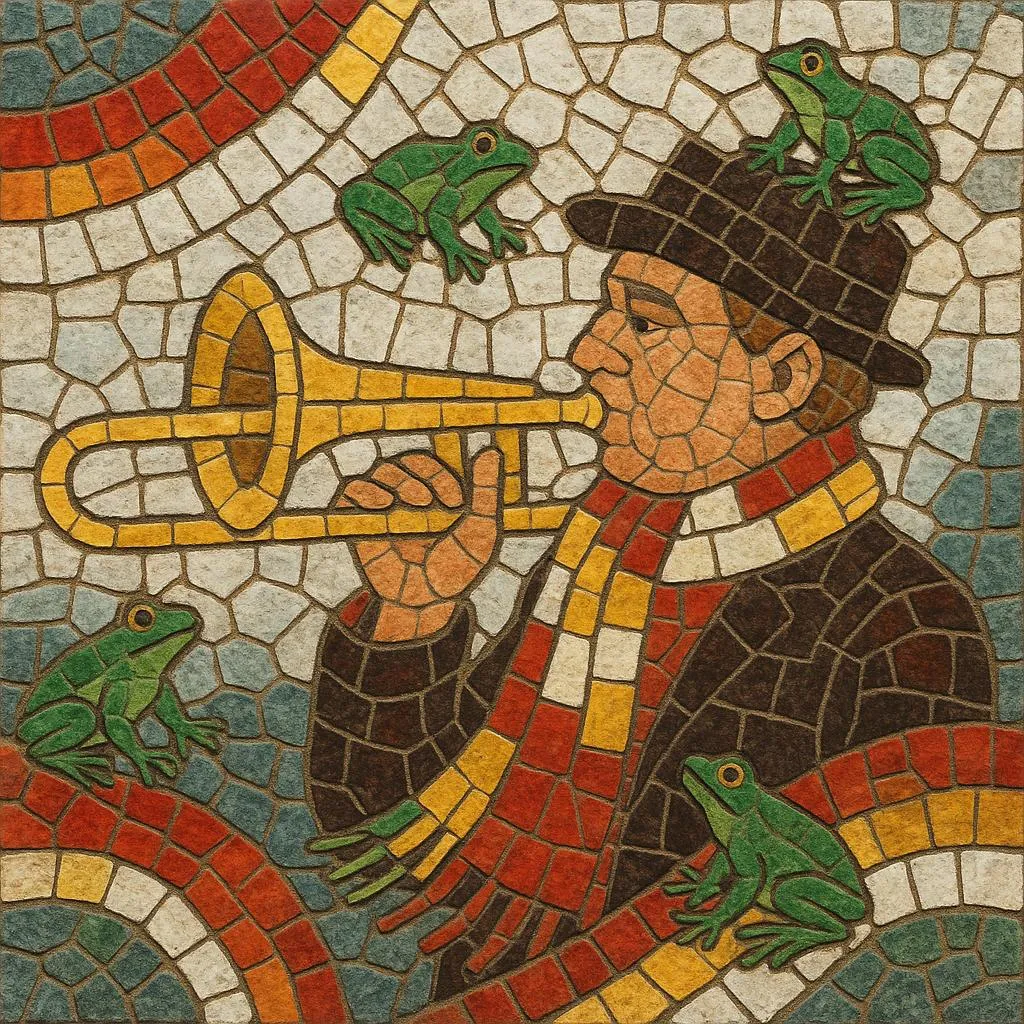
Oeteldonk music is a distinct subgenre of Dutch carnival music specific to the city of 's-Hertogenbosch (Den Bosch). Unlike the beat-driven, electronic carnival music found in other parts of the Netherlands, Oeteldonk music relies heavily on acoustic 'dweilorkesten' (street brass bands). The repertoire consists of marches and waltzes, characterized by a slower, swaying tempo and a high degree of 'chauvinism' (local pride). Lyrics are strictly sung in the local Bosch dialect and revolve around specific recurring themes: the city's transformation into the village of 'Oeteldonk', the frog symbol ('Oetel'), the colors red-white-yellow, and the figure of Farmer Knillis. It blends festive cheer with a deeply nostalgic, sentimental undertone that distinguishes it from the purely party-focused music of neighboring regions.
History
The roots of Oeteldonk music lie in the establishment of the 'Oeteldonksche Club' in 1882. This organization was founded to regulate the rowdy carnival celebrations of the time by turning the festival into a theatrical game where the city became a village and dignitaries became farmers. While music was always present, the genre formalized significantly with the inauguration of the 'Kwèkfestijn' (Croak Festival) in 1959.
This annual song contest became the engine of the genre, challenging local musical clubs ('clubkes') to compose original songs. In the early years, existing melodies were often used with new lyrics, but the rules were later tightened to require original compositions. This ensured a steady stream of new, high-quality repertoire every year, creating a 'Great American Songbook' equivalent for the city.
Today, the genre is fiercely protected and celebrated. The winning song of the Kwèkfestijn becomes the anthem of the year, but older classics remain in heavy rotation. The music is strictly seasonal, played only between the 11th of the 11th (November) and Ash Wednesday, maintaining its exclusive and ritualistic nature.
Compose in a 3/4 time signature (waltz) for the classic swaying feel, or a sturdy 2/4 or 4/4 march. Avoid high-speed electronic beats; the tempo should be moderate to allow for arm-in-arm swaying ('deinen').
Focus on acoustic brass and percussion: trumpets, trombones, sousaphones, snare drums, and bass drums. Woodwinds like saxophones and flutes are also common. The arrangement should be suitable for a walking street band.
Lyrics must be written in the Bosch dialect. Themes should focus on unity, the beauty of Oeteldonk, the 'Oeteldonkse' colors (red, white, yellow), and the temporary equality of all revelers (everyone is a 'farmer').
Use a traditional verse-chorus structure. The chorus must be an 'earworm'—easy to remember and sing along to by a large crowd. A sentimental bridge that swells into a final, grand chorus is a common and effective trope.