Your digging level for this genre

0/8
🏆
Sign in, then listen to this genre to level up

Description

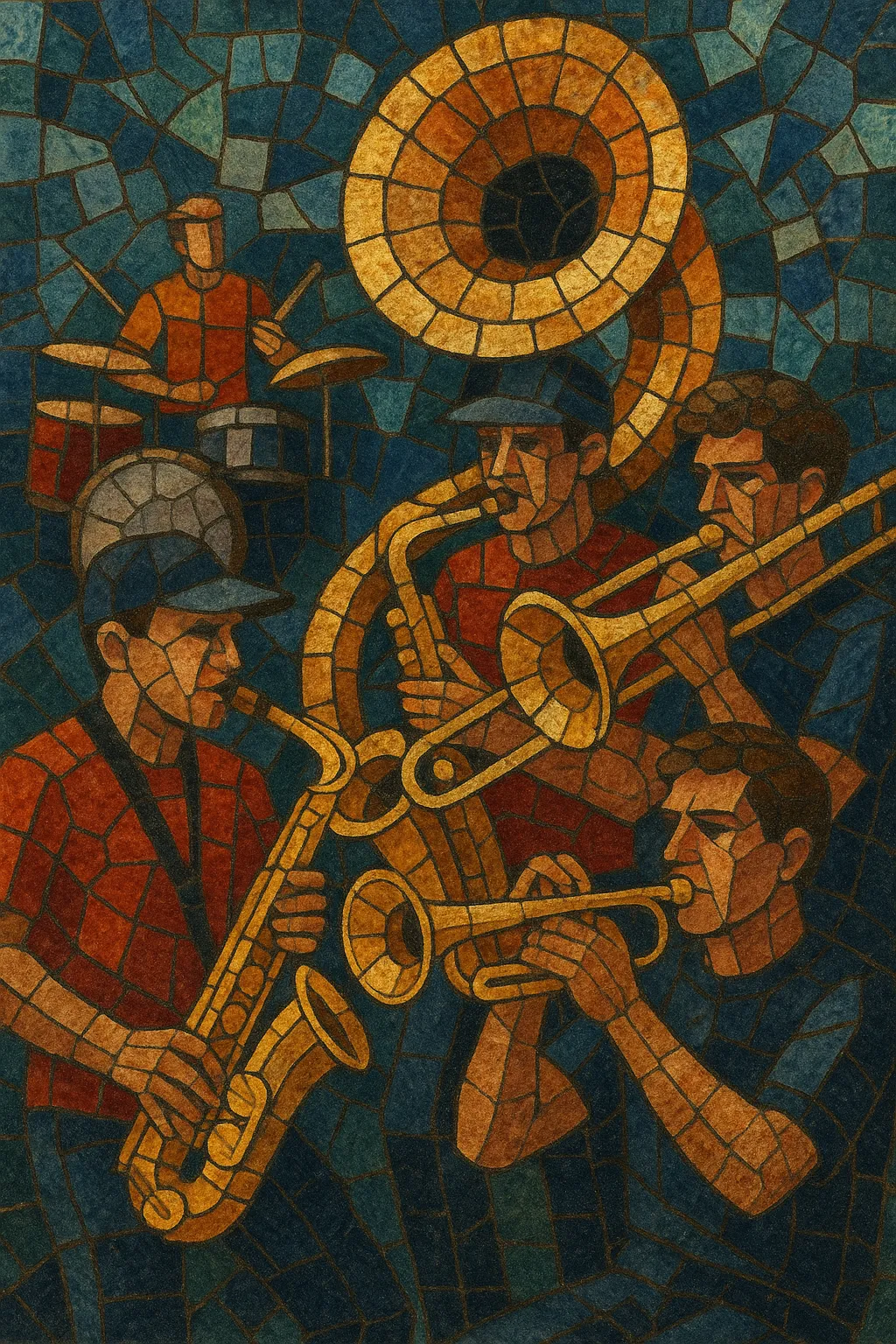
Pep band is an American athletic‑event band style characterized by high‑energy, horn‑driven arrangements of fight songs, rock anthems, and pop hits performed in sports arenas.

Unlike traditional marching band field shows, pep bands play from the stands during time‑outs and breaks, focusing on short, crowd‑engaging "stand tunes" with strong rhythmic drive, memorable hooks, and call‑and‑response chants. Instrumentation centers on brass, saxophones, and drumline‑style percussion, often supported by electric bass or keyboard in modern setups. The goal is not only musical performance but also creating atmosphere—amplifying crowd excitement, coordinating cheers, and sustaining momentum throughout a game.

History

Origins (early–mid 20th century)

Pep bands grew out of the U.S. school and college marching/concert band traditions and the culture of fight songs that took shape in the 1900s–1920s. As indoor sports like basketball expanded after World War II, schools began forming smaller, stationary ensembles to play inside gyms where full marching formations were impractical.

Codification in the 1950s–1970s

By the 1950s, the term "pep band" was common in American high schools and universities. Ensembles adapted brass- and sax‑heavy instrumentation from marching and big band jazz, added drumline cadences for quick between‑play breaks, and standardized the use of short, punchy arrangements. Publishers started releasing dedicated pep band charts of fight songs, marches, and popular tunes suited to loud, reverberant arenas.

Arena era and pop/rock repertoire (1980s–2000s)

With televised college sports and the rise of arena rock, pep band repertoires shifted decisively toward rock and pop anthems with strong crowd hooks. Tunes such as "Hey Baby," "Seven Nation Army," and classic horn‑friendly riffs became staples. Commercial arrangers and educational publishers (e.g., Hal Leonard, Alfred, Jalen, J.W. Pepper) flooded the market with graded charts tailored to limited instrumentation and quick rehearsal turnaround.

Modern practice (2010s–present)

Today, pep bands function as the sonic identity of athletics programs. Many ensembles brand themselves distinctly from their school’s marching band (e.g., separate basketball bands), integrate bass guitar, keyboards, and clip‑on microphones, and use amplified rhythm sections. Social media and streaming have accelerated the circulation of new stand tunes, while licensing frameworks ensure rapid arrangement of current hits. The core aesthetic—loud, catchy, and participatory—remains unchanged.

How to make a track in this genre

Ensemble and instrumentation
•   Core: trumpets, mellophones or French horns, trombones, baritones/euphoniums, tubas/sousaphones, alto/tenor/baritone saxophones, and drumline‑style percussion (snare, quads/tenors, bass drums, cymbals). •   Optional rhythm section: electric bass, keyboard/synth, and auxiliary percussion (cowbell, tambourine). Clip‑on mics help projection in loud arenas.
Rhythm and feel
•   Favor strong backbeats (rock/funk feels at 100–140 BPM) and cadential drumline grooves for time‑outs. •   Use tight rhythmic hits, unison stabs, and simple syncopations that translate in reverberant spaces. •   Write percussion with clear, repeatable cadences and coordinated visual cues for starts/stops.
Harmony and arranging
•   Keep harmonies bold and uncluttered: triads, power chords, and dominant 7ths are common; use parallel brass voicings for impact. •   Score melody in trumpets/altos; reinforce with trombones/tenor sax; anchor with tubas/bari sax. •   Use antiphonal call‑and‑response (brass vs. saxes vs. crowd) and octave‑doubling of hooks for projection. •   Arrange in transposed parts (Bb/Eb) and provide flexible instrumentation so tunes work even with missing voices.
Form, cues, and crowd integration
•   Write short forms (30–90 seconds): intro hit → hook → break → tag. Make the hook loopable for time‑out lengths. •   Include chant breaks (e.g., "GO!" rests) and drum breaks for coordinated cheers. •   Add conductor/drum captain cut‑off cues and fermatas that can stretch to game timing.
Repertoire strategy
•   Combine school fight songs, classic rock anthems, current pop hits, and meme‑friendly chants. •   Prioritize recognizable riffs and singable choruses; avoid dense counterpoint that gets lost in crowd noise.
Rehearsal and performance tips
•   Balance for brass forward; seat low brass near bass drum to lock groove. •   Use consistent dynamics (forte–fortissimo) with controlled articulation to avoid blur; favor marcato/tenuto over long legato. •   Keep a rotating set list and tempo notes matched to game operations (e.g., 60‑second timeout versions).

Top tracks

Locked
Share your favorite track to unlock other users’ top tracks
Influenced by
Has influenced
No genres found
Challenges
Digger Battle
Let's see who can find the best track in this genre
© 2025 Melodigging
Melodding was created as a tribute to Every Noise at Once, which inspired us to help curious minds keep digging into music's ever-evolving genres.
Buy me a coffee for Melodigging