Your digging level
Description
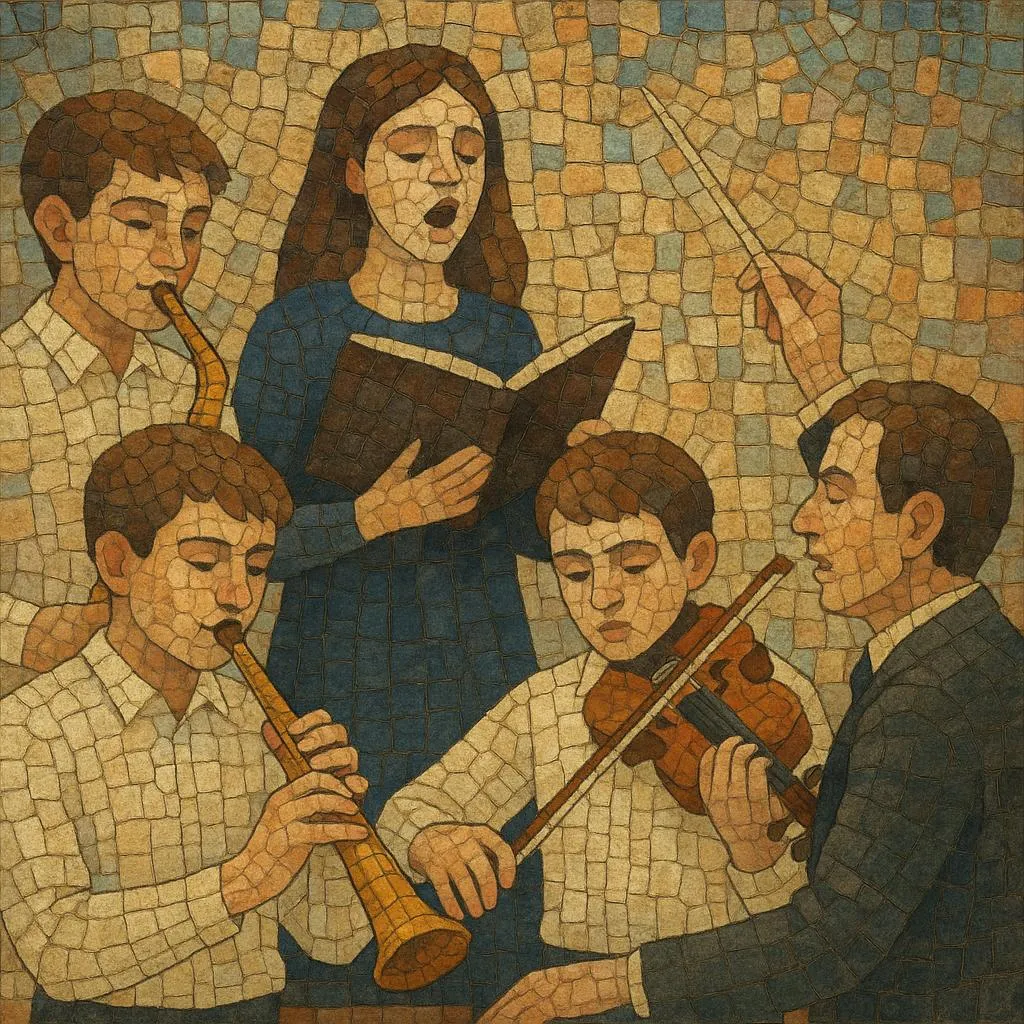
School ensemble is a performance-oriented genre centered on primary and secondary school music groups—concert bands, string orchestras, full symphonic orchestras, choirs, jazz bands, and mixed chamber groups—documented in concerts, festivals, contests, and clinic recordings.
Musically, it spans original pedagogical works and graded arrangements (often at difficulty Grades 1–5) of film scores, classical repertoire, Broadway, folk, and popular music. Compositions emphasize clear textures, idiomatic ranges, teachable rhythms, and ensemble blend so developing players can succeed on stage.
As a recording category, school ensemble captures the sound of youth music education in action: large groups under a director, live hall acoustics, enthusiastic audience response, and repertoire curated to meet curricular goals such as tone production, intonation, expressive phrasing, and stylistic literacy.
History
Public-school music programs in the United States coalesced in the early 20th century alongside teacher training, statewide festivals, and the growth of school bands and orchestras. Professional band traditions, British brass bands, and church/choral practices supplied models for instrumentation and rehearsal culture. Early school concerts were often civic events that showcased burgeoning ensembles and validated music in the curriculum.
After World War II, school music surged with booster organizations, district and state festivals, and the creation of graded pedagogical repertoire by educational publishers. Conductors assembled concert bands, string orchestras, and mixed choirs that could perform accessible arrangements as well as original works crafted for learners. National clinics (e.g., large educator conferences and band/orchestra associations) helped codify best practices, grading levels, and auditioned honor ensembles.
Jazz bands, show choirs, and string-orchestra programs proliferated, broadening stylistic range. Publishers and composers produced repertoire that scaffolded technique (keys, ranges, rhythms) and musicianship (balance, blend, phrasing). Recording technology made it feasible to capture live festival and concert performances, turning school ensemble into a recognizable catalog category accessed by educators and families. Similar models spread globally (notably in Canada, Japan, Europe, and parts of Latin America), adapting to local traditions and contest systems.
Streaming platforms and educational marketplaces now host thousands of live school recordings—concert programs, honor ensembles, and adjudicated performances. Repertoire remains multi-stylistic: original band and string works, contemporary choral literature, and popular-film/Broadway arrangements that promote literacy and engagement. The genre continues to reflect music education aims: inclusive voicings (SAB/SSA/TTB), differentiated parts, equitable percussion writing, and authentic style modeling (from Baroque to swing to cinematic).