Your digging level
Description
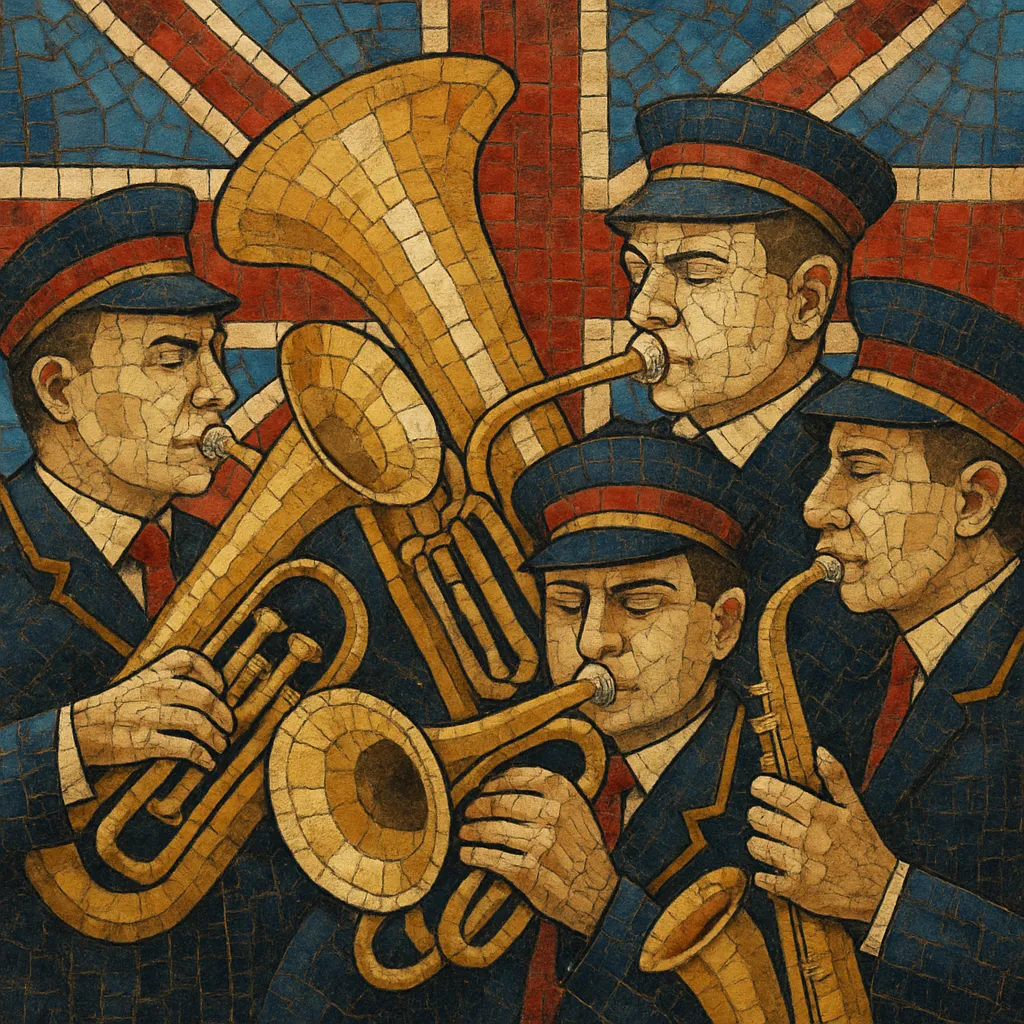
The British brass band is a standardized, all-brass ensemble tradition that took shape in the industrial towns of 19th‑century Britain. It features cornets, flugelhorn, tenor horns, baritones, trombones, euphoniums, tubas, and percussion, with no woodwinds, and a distinctive practice of notating almost all brass parts in treble clef with transposition.
The style is known for warm chorales, precision in balance and blend, and a repertoire that spans marches, hymn‑tune arrangements, concert overtures, and demanding competition “test pieces.” Its sound world draws on Romantic orchestral harmony and hymnody, while its performance culture centers on community bands, contests, and a strong social identity tied to workplaces, towns, and the Salvation Army.
History
British brass bands coalesced during the Industrial Revolution, especially in the 1830s–1850s, when mill and colliery owners sponsored ensembles as outlets for community pride and worker recreation. The adoption of the saxhorn family promoted by the Distin family and makers such as Besson helped standardize a homogeneous brass timbre without woodwinds. Hymn‑tune traditions and military/wind band practices supplied core repertoire models—marches, quicksteps, and chorales.
In 1853 the Belle Vue (British Open) contests in Manchester began, establishing competition as a defining feature. The National Brass Band Championships (from 1900, associated with the Crystal Palace and later the Royal Albert Hall) further solidified instrumentation, seating, and aesthetics. Salvation Army bands (from the late 19th century) expanded the movement nationwide, marrying evangelism with disciplined brass performance.
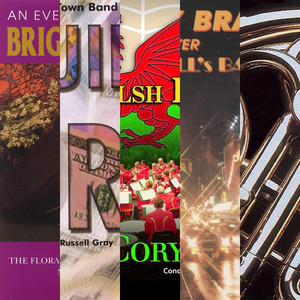
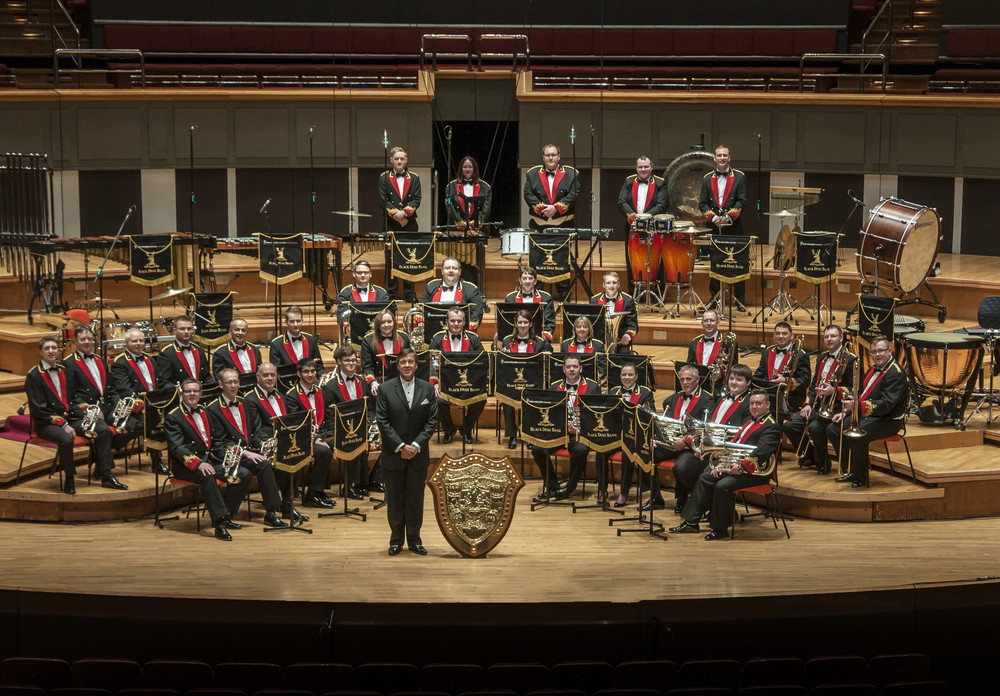
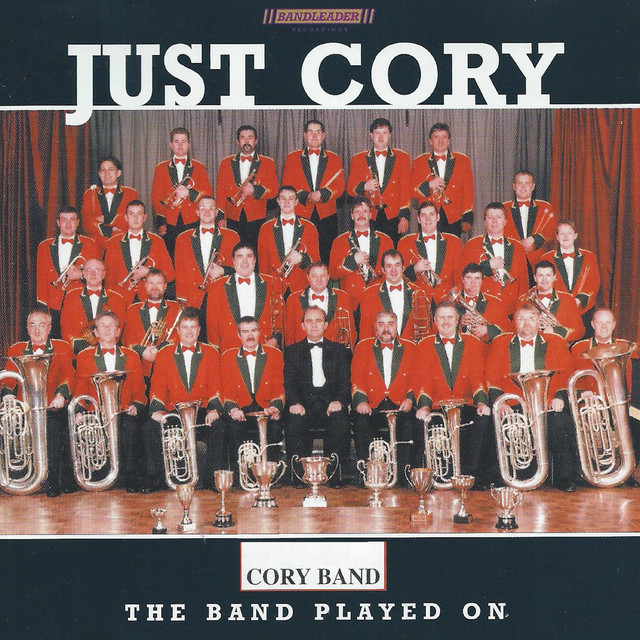
A distinct concert repertoire emerged in the 20th century, with emblematic test pieces and original works by Eric Ball, Gilbert Vinter, Edward Gregson, Elgar Howarth, Philip Sparke, Derek Bourgeois, Peter Graham, and others. Bands such as Black Dyke, Brighouse and Rastrick, Foden’s, and Cory set performance benchmarks through recordings, tours, and contest victories.
The British brass band model spread to the Commonwealth and Europe (notably Scandinavia, the Netherlands, Switzerland, Australia, and New Zealand), inspiring parallel contest scenes. Media moments—such as the film “Brassed Off” (1996) featuring Grimethorpe Colliery Band—brought the genre renewed public attention. Today, elite championship‑section bands coexist with robust youth and community tiers, and commissioning of new music continues to shape a modern, technically exacting repertoire.
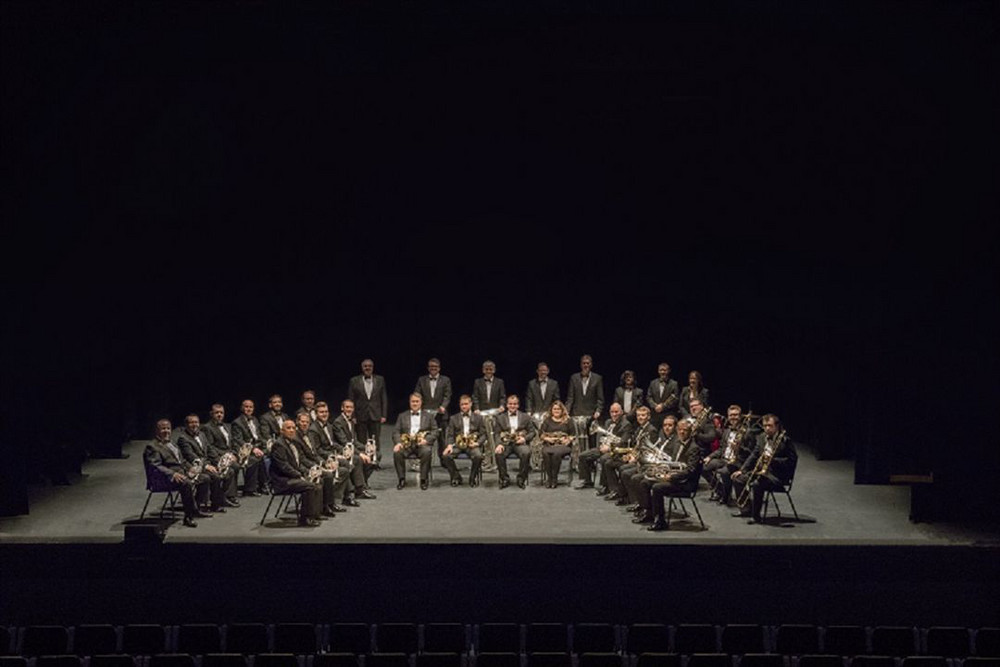
Use the standard British brass band instrumentation: 1 Eb soprano cornet; Bb cornets (solo/principal section of 4, plus repiano 1, 2nd 2, 3rd 2); 1 Bb flugelhorn; Eb tenor horns (solo/1st/2nd, total 3); Bb baritones (1st/2nd, total 2); trombones (1st and 2nd tenor, plus bass trombone); Bb euphoniums (usually 2); tubas/basses (2 Eb and 2 BBb); and 2–4 percussionists (kit, timpani, tuned and auxiliary). Write almost all brass parts in transposed treble clef (tenor trombones included); bass trombone is typically in concert‑pitch bass clef.
Aim for a homogenous, blended brass sonority. Build full, warm chorales with close‑position inner voices in tenor horns and baritones, firm foundation in tubas, and cantabile melodies led by solo/repiano cornets or euphonium. Use late‑Romantic diatonic harmony colored by chromatic passing tones, secondary dominants, and expressive modulations. Exploit dynamic breadth—from whispered pianissimo chorales to brilliant tuttis.
Incorporate staple forms: 2/4 and 6/8 marches (crisp articulation, well‑voiced bass lines, and trio modulations), hymn‑tune settings, concert overtures, and multi‑section “test pieces” that alternate virtuosity and lyricism. Technical fast sections often feature semiquaver runs in cornets and euphonium, antiphonal brass choirs, and metric shifts; slow movements highlight warm chordal writing and expressive solo lines.
Use straight, cup, and harmon mutes for color; write idiomatic lyrical solos for cornet, flugelhorn, and euphonium; and feature trombone glissandi judiciously. Balance is paramount—protect inner‑voice clarity and avoid over‑dominant cornets. Percussion should support color and articulation rather than overwhelm; timpani, snare, bass drum, cymbals, and glockenspiel are common choices.
Mark clear phrase shaping, breath points, and dynamic terracing. Encourage traditional cornet vibrato tastefully in lyrical passages, with clean, centered tone in technical writing. Seat and voice parts to preserve the characteristic British brass band blend: a cohesive, vocal‑like brass choir with precise ensemble articulation.