Your digging level

For this genre
0/8
🏆
Sign in, then listen to this genre to level up

Description

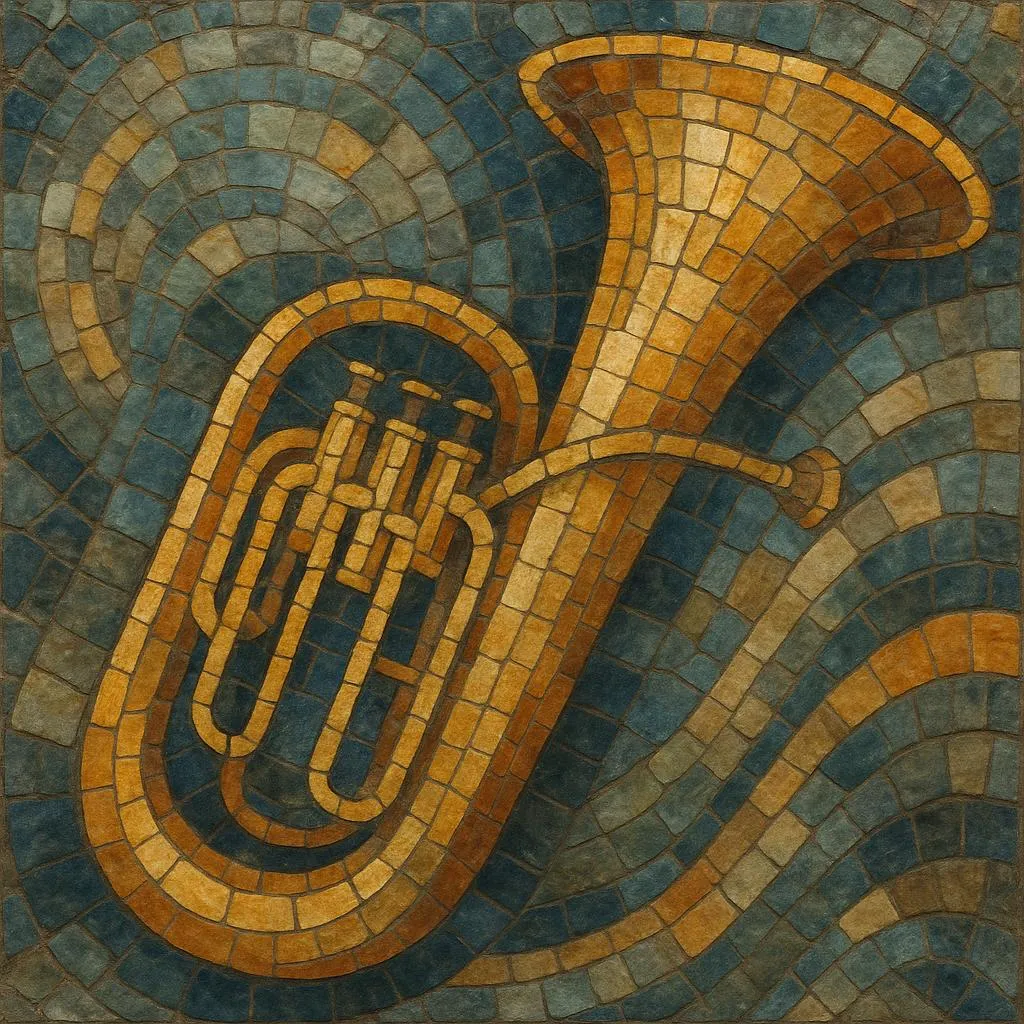
Euphonium (as a tagged style) refers to repertoire and performance practice centered on the euphonium—the tenor-voiced, conical-bore brass instrument of the tuba family. Its sound is warm, lyrical, and vocal, making it a natural vehicle for cantabile melodies as well as agile variation pieces.

The instrument was developed in the mid‑19th century (credited to Sommer of Weimar in 1843) and quickly became the leading tenor brass voice in brass and military bands. Notationally, euphonium parts appear at concert pitch in bass clef and, in British-style brass bands, in treble clef transposed up a major ninth. Typical compass spans roughly from the third B♭ below middle C to about the C above middle C, with advanced players extending higher. These acoustical and notational traits shape the idiom of “euphonium music.” (britannica.com)


Sources: Spotify, Wikipedia, Discogs, Rate Your Music, MusicBrainz, and other online sources

History

Origins (1840s)

The euphonium emerged during the rapid 19th‑century evolution of valved brass. Ferdinand Sommer’s “Euphonion” (Weimar, 1843–44) is widely cited as the instrument’s origin, contemporaneous with Adolphe Sax’s saxhorn family in Paris—both streams converging in mid‑century band practice. (britannica.com)

Into bands and the British tradition

Through the touring and advocacy of the Distin family, saxhorns (and the euphonium/tenor‑tuba role) spread quickly into British and American bands, catalyzing the brass‑band movement and standardizing the euphonium as the principal tenor voice. (en.wikipedia.org)

Design refinements and the “British‑style” euphonium

A watershed was David Blaikley’s 1878 compensating‑valve patent for Boosey & Co., yielding today’s four‑valve British‑style euphonium with improved intonation and homogenous tone—now a global benchmark. (en.wikipedia.org)

20th‑century soloists and wind‑band culture

Virtuosi such as Simone Mantia (Sousa and Pryor bands) helped define an agile, singing solo idiom, while American and European wind‑band programs embedded the euphonium as a core color. Later figures (e.g., Brian Bowman) institutionalized university‑level euphonium study and brought the instrument to venues like Carnegie Hall. (en.wikipedia.org)

Contemporary repertoire and global reach

Since the 1990s, a growing concerto and chamber repertoire—often championed by Steven Mead and David Childs—has expanded beyond brass band into orchestral and string settings (e.g., Philip Sparke’s concertos; James MacMillan’s 2025 concertante work for euphonium and strings). Japan and Europe have thriving solo schools and competitions, and the euphonium now occupies a clear solo identity across classical and band worlds. (philipsparke.com)

How to make a track in this genre

Instrument and range
•   Write primarily for a warm, lyrical tenor tuba color; idiomatic range spans E2/B♭2 up to C5 (higher for virtuosi). In brass bands, the treble‑clef part sounds a major ninth lower; in wind bands/orchestras, use concert‑pitch bass clef. Plan lines to sit in the middle–upper staff for singing projection. (britannica.com)
Texture and roles
•   Solo features: long, vocal melodies with expressive vibrato and legato tonguing; variation airs (“theme & variations”) and bravura finales exploit rapid valve technique and wide interval slurs. •   Section writing: in wind/brass bands, the euphonium often doubles/answers horns, trombones, or cellos; use it to bind low brass and middle voices or to carry countermelodies above tuba.
Rhythm and articulation
•   Favor cantabile lines with clear phrase arches; contrast with articulated passagework (double‑/triple‑tonguing) in moto‑perpetuo or 6/8 gallops. In march‑style writing, let it sing strains or obbligatos rather than only bass reinforcement.
Harmony and accompaniment
•   Euphonium thrives over warm triadic pads (horns, clarinets) or pizzicato‑like tuba/bass figures. Avoid overly dense low textures that mask the tenor register; thin accompaniments under sustained high phrases.
Orchestration formats
•   Solo with piano (recital), brass band or wind band (concertos), and increasingly with strings or full orchestra. Study modern concerti (e.g., Sparke, Jenkins, MacMillan) for pacing, cadenzas, and balance strategies. (philipsparke.com)

Top tracks

Locked
Share your favorite track to unlock other users’ top tracks
Influenced by
Has influenced
Challenges
Digger Battle
Let's see who can find the best track in this genre
© 2026 Melodigging
Melodding was created as a tribute to Every Noise at Once, which inspired us to help curious minds keep digging into music's ever-evolving genres.
Buy me a coffee for Melodigging