Your digging level
Description
Blaskapelle (literally “brass band” in German) refers to Central European brass-band folk tradition, especially in German-speaking areas and neighboring Bohemia/Moravia.
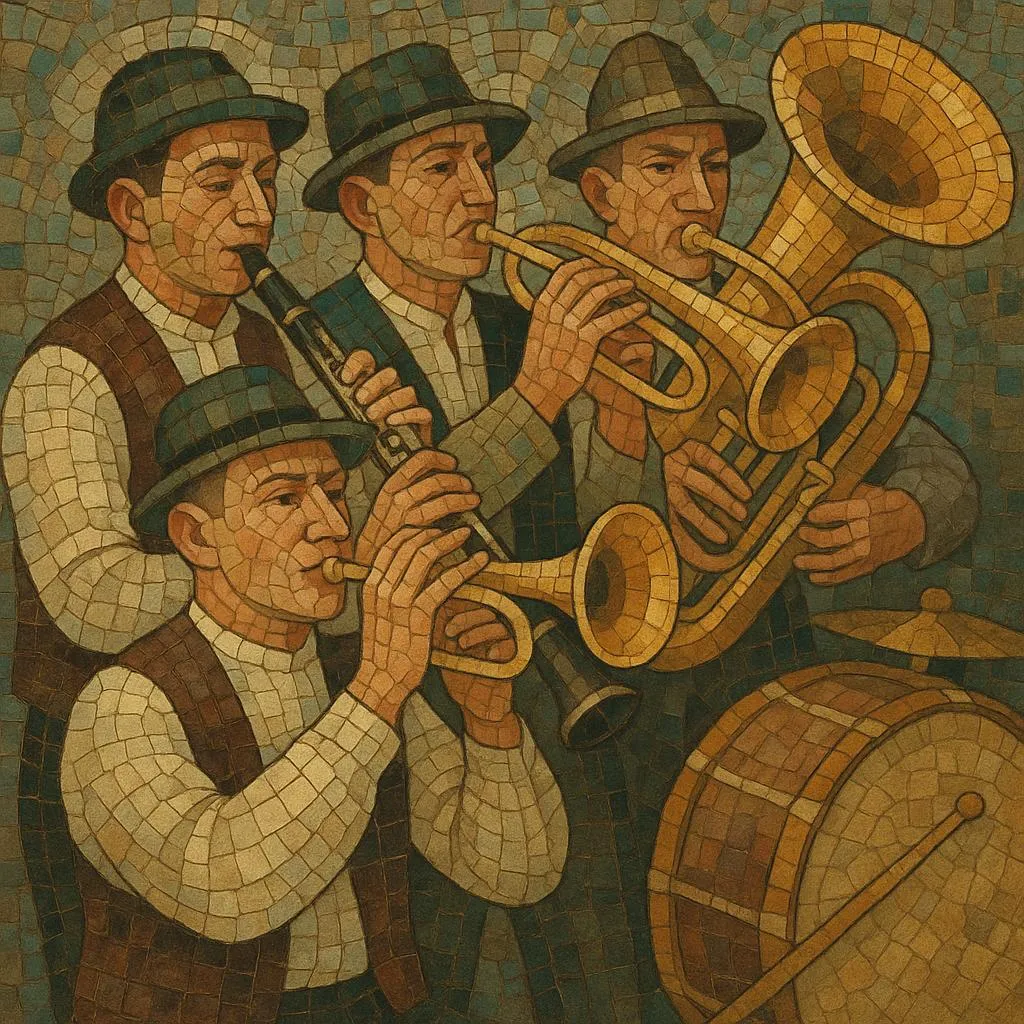
The sound is centered on brass and woodwinds (trumpets/flugelhorns, tenor horns, baritone/euphonium, trombones, tuba, clarinets/saxophones) with percussion, performing dance forms such as polka, waltz, and marches.
Typical hallmarks include bright, blended brass timbres, clear melodic lead lines (often flugelhorn or clarinet), strong oom-pah accompaniment, and a repertoire that ranges from village dance music to concert marches and sentimental ballads.
History
Blaskapelle traditions grew out of 19th-century military and civic band culture across Central Europe, where brass instruments became more affordable and standardized. Local village ensembles adopted band instrumentation for weddings, festivals, church processions, and public dancing.
As the repertoire of polkas, waltzes, and marches spread, recognizable regional styles emerged—especially the Bohemian/Moravian brass approach (often called “böhmische Blasmusik” in German contexts), characterized by lyrical melodies and tight, buoyant dance rhythms.
After World War II, touring ensembles, radio, and recordings accelerated the genre’s reach. Arranging became more standardized, virtuosity rose, and ensembles developed a characteristic polished blend and “singing” brass tone.
Blaskapelle remains a living community practice in Bavaria, Austria, Switzerland, and parts of Central/Eastern Europe, while also feeding modern offshoots: show-oriented brass entertainment, crossover “brass pop,” and festival-focused repertoires. Many groups now balance traditional dance sets with concert programs and contemporary arrangements.
Harmony is usually functional and diatonic (I–IV–V with secondary dominants), with occasional chromatic passing chords.
•Common forms:
•A–A–B–A (dance tune)
•Trio form for marches (A–A–B–B with a softer/lyrical trio section)
•Intro → multiple strains → coda for stage-ready arrangements.
Write singable, stepwise melodies with clear phrases (often 8-bar units).
•Add countermelodies (clarinet/flugelhorn/tenor horn) that answer the lead line without crowding it.
•Voicing tips:
•Keep inner brass (tenor horns/euphonium) moving in smooth voice-leading.
•Use trombones for rhythmic punctuation and parallel harmony when you want power.
•Let the tuba line be simple and stable; avoid overly busy bass unless aiming for virtuoso show style.