Your digging level
Description
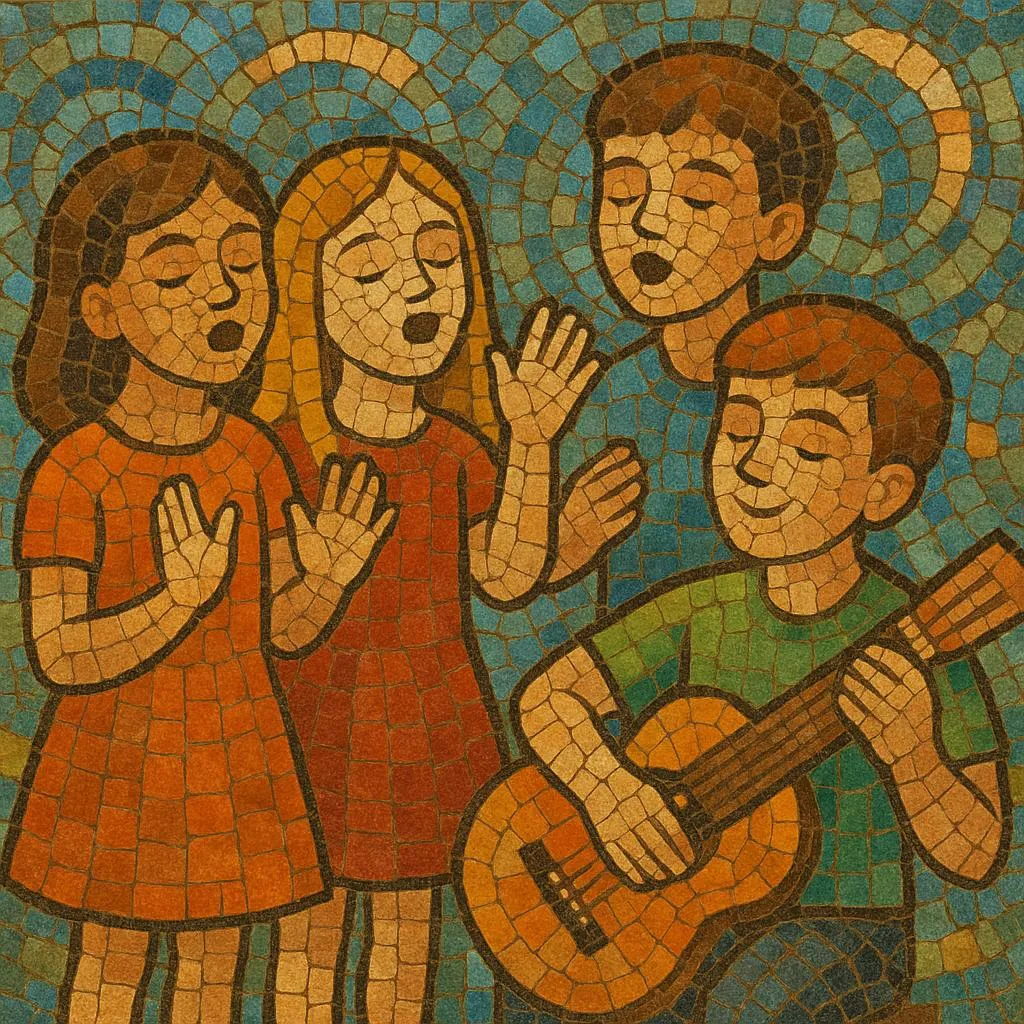
Zespół dziecięcy (Polish: “children’s ensemble”) refers to Polish vocal or vocal‑instrumental groups made up of children, most often organized around cultural centers, schools, churches, broadcasters, or community clubs. Repertoires balance entertainment and pedagogy: simple, catchy melodies, clear diction, and topics close to a child’s world (family, animals, seasons, kindness, play).
Stylistically, these ensembles sit at the intersection of children’s music, pop, and light choral writing. Arrangements typically feature unison or two‑part harmony, bright major keys, steady danceable meters, and instrumentation that ranges from piano/keyboard, guitar, bass, and drum kit to Orff instruments, hand percussion, and clapping. Performances often include basic choreography and audience participation, making the format a staple of school festivals, TV programs, parish events, and regional song competitions in Poland.
History
Post‑war Poland fostered many youth cultural initiatives through houses of culture and school music programs. Within this ecosystem, children’s ensembles emerged as organized groups that could present polished, age‑appropriate songs on local stages and radio. Early repertoires drew on Polish folk melodies, school songbooks, and light popular styles, arranged for unison or simple two‑part children’s voices.
State radio and television widened exposure for zespół dziecięcy formats. Producers favored clear, didactic lyrics, upbeat tempos, and memorable refrains suited to educational contexts. Festivals and regional showcases helped standardize a performance model: costumed choirs or small bands of children, concise pop forms, and choreography. This period solidified the genre’s image as both entertainment and musical pedagogy.
After systemic changes in the 1990s, the landscape diversified. Church, municipal, and private cultural institutions formed new ensembles; recording studios and educational publishers released children’s albums for preschools and primary schools. Some groups incorporated contemporary pop production, gospel‑influenced harmonies, or light rock textures, while maintaining child‑suitable ranges and themes.
Streaming and video platforms amplified the reach of children’s ensembles, enabling nursery‑rhyme adaptations, movement songs, and thematic series (safety, ecology, patriotism, holidays). Many ensembles now combine stage performances with multimedia content, lyric videos, and classroom materials. Despite modern production gloss, core traits remain: simple structures, participatory choruses, and texts tailored to children’s imagination and learning.