Your digging level
Description
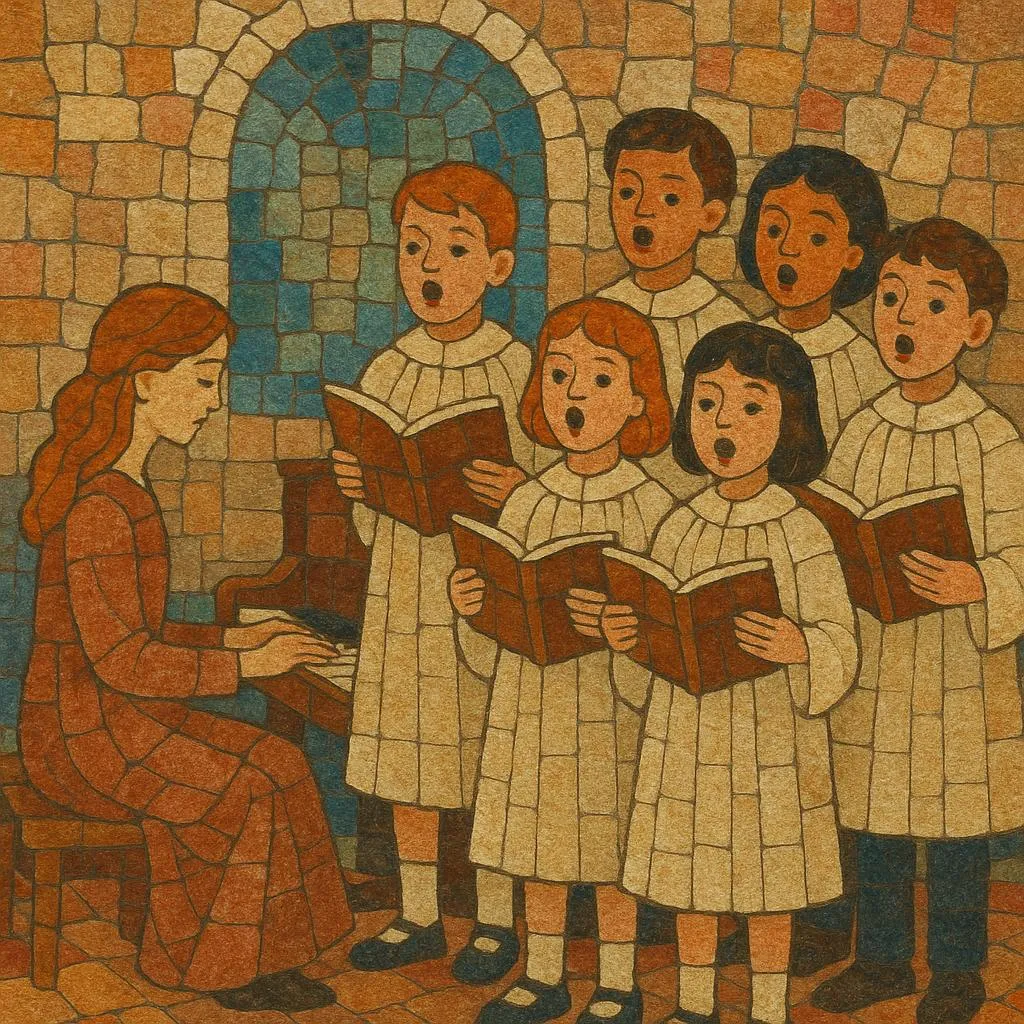
Children's choir is a choral tradition featuring treble voices (typically ages 6–18) singing in unison or multi-part harmony (SA, SSA, or SSAA), often accompanied by piano, organ, or small orchestra.
Its repertoire spans sacred and secular music: hymns, anthems, folk-song arrangements, art songs, and contemporary works written expressly for developing voices. The style emphasizes clear diction, blended tone, healthy vocal production within limited ranges, and text-centered expression. Ensembles can be community-based, school-affiliated, or connected to cathedrals and conservatories, with training that combines musicianship, language, and ensemble skills.
History
Treble-voice choral singing originates in medieval ecclesiastical practice, where boys sang the upper parts of liturgical polyphony in monasteries and cathedral foundations. Through the Renaissance and Baroque, English cathedral choirs and continental Kantorei institutionalized the training of young choristers, establishing a pedagogy of solmization, part-singing, and Latin/vernacular diction.
During the 1800s, widespread church music reform and the expansion of public education brought children’s choral singing into schools and civic life. Singing-class movements, tonic-solfa pedagogy, and conservatory-affiliated choirs broadened repertoire beyond liturgy to include secular part-songs, national folk material, and arrangements tailored to youthful ranges.
The 20th century saw the rise of professional children’s choirs and touring ensembles, commissions from major composers, and increased studio/broadcast work. New pedagogies (e.g., Kodály, Orff) reinforced sequential literacy and audiation, while repertoire expanded to multilingual works, world folk arrangements, and contemporary idioms. The recording era and international festivals helped standardize high performance practice and amplified the genre’s visibility.
Children’s choirs now commission works addressing contemporary themes, incorporate movement and body percussion, and collaborate across genres (film, crossover, world traditions). Focus areas include vocal health, inclusive language, culturally responsive programming, and technology-assisted rehearsal tools, all while maintaining the foundational goals of blend, text clarity, and expressive musicianship.