Your digging level

For this genre
0/8
🏆
Sign in, then listen to this genre to level up

Description

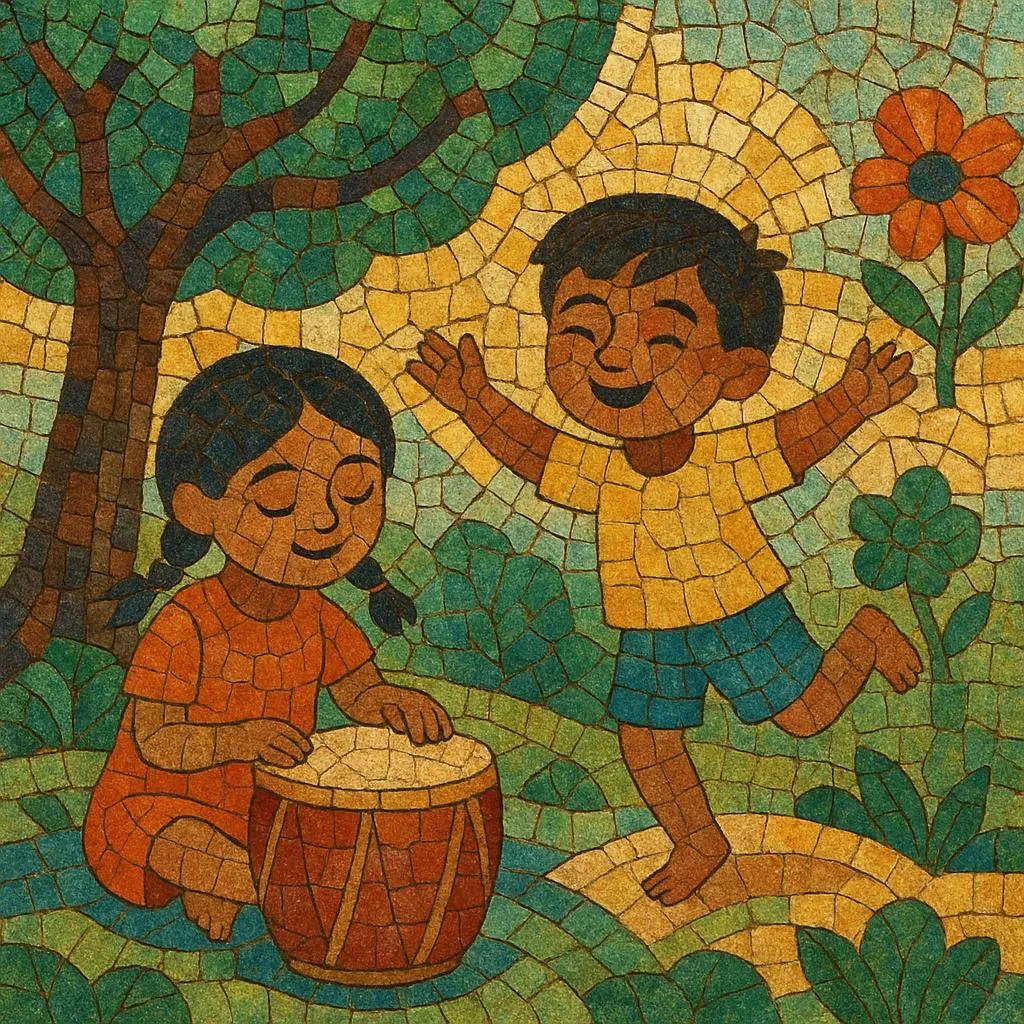
Bachchon ke geet (Hindi: बच्चों के गीत) are Hindi-language children's songs that include playful rhymes, lullabies (lori), counting songs, alphabet songs, and moral or nature-themed tunes. They are designed for early-childhood listening and participation, using simple, memorable melodies and repetitive phrases.

Musically they draw from Indian folk song forms and light-classical idioms alongside film and television songcraft, often in accessible 6-beat (dadra) or 8-beat (keherwa/kaharwa) cycles. Acoustic handclaps, dholak/tabla, harmonium, and bright synths are common. Modern releases also adopt pop, EDM-lite and nursery-EDU production to suit animated and classroom contexts.

The genre supports language development, numeracy, and cultural transmission through call-and-response, onomatopoeia, and easy actions, making it a staple of Indian early-learning media at home, in schools, on radio/TV, and on today’s streaming and video platforms.


Sources: Spotify, Wikipedia, Discogs, Rate Your Music, MusicBrainz, and other online sources

History

Origins (pre-1950s)

Bachchon ke geet grew out of oral folk traditions in North India: cradle songs (lori), counting rhymes, seasonal songs, and playful work chants that caregivers adapted for children. Melodic turns often reflected light raga contours (e.g., Khamaj/Pahadi) while remaining narrow in range for easy singing.

Broadcast and Film Era (1950s–1980s)

With All India Radio and later Doordarshan, dedicated children’s programs popularized “bal geet” nationwide. Hindi cinema contributed memorable child-focused numbers written in straightforward Hindi/Hindustani, introducing studio polish, catchy refrains, and narrative motifs crafted by leading lyricists and composers.

Cassette/CD Classroom Boom (1990s–2000s)

Affordable cassettes and CDs brought large compilations of alphabet, numbers, colors, animals, and moral songs into schools and homes. Labels standardized kid-friendly arrangements (dholak/tabla + harmonium/synth), call-and-response choruses, and clear diction aimed at early readers and ESL/Hindi learners.

Digital and Animation Era (2010s–present)

YouTube and streaming reshaped the genre through animated videos, lyric-on-screen singalongs, and bilingual (Hindi–English/Hinglish) formats. Production incorporated modern pop/EDM-lite textures, brighter mastering, and interactivity (actions, gestures, counting graphics). The repertoire now spans traditional rhymes, original EDU songs, and culturally rooted festival pieces adapted for preschool curricula.

Musical Traits and Pedagogy

Across eras, the constants are: simple melodies within a small vocal range; repetitive hooks for memorization; keherwa (8) and dadra (6) grooves for easy clapping/stepping; onomatopoeia and nature/animal imagery; and clear, positive messaging to support language, numeracy, values, and cultural familiarity.

How to make a track in this genre

Core elements
•   Aim for a narrow vocal range (about a 5th–6th) and a singable key (C–F major or relative minor) so children can join easily. •   Build short, symmetrical phrases (2–4 bars) with repetition and a clear, catchy refrain.
Harmony & Melody
•   Use simple diatonic major or pentatonic melodies; light raga color (e.g., Khamaj/Pahadi) can add Indian flavor without complexity. •   Harmonies should be uncomplicated (I–IV–V, occasional vi). Avoid dense chromaticism.
Rhythm & Groove
•   Choose child-friendly thekas: keherwa/kaharwa (8-beat) or dadra (6-beat). Keep tempo moderate (90–120 BPM) for clapping/stepping. •   Use claps and simple percussion patterns to cue participation; keep fills minimal and predictable.
Instrumentation & Sound Design
•   Acoustic base: dholak/tabla, handclaps, harmonium; optionally guitar/ukulele for strumming. •   Modern touch: bright, soft-edged synths, mallet/bell tones, light bass, and gentle pads. Avoid harsh highs; de-ess vocals.
Lyrics & Themes
•   Write in clear, simple Hindi with repetition and alliteration; introduce numbers, colors, animals, nature, good habits, and festivals. •   Include call-and-response lines and action cues (jump, clap, spin) to encourage movement and memory.
Arrangement & Structure
•   Common form: Intro (count-in or spoken cue) → Verse → Chorus → Verse → Chorus → Outro. •   Add brief spoken interludes for teaching moments (e.g., counting to 10) and echo lines for group response.
Recording & Production
•   Prioritize intelligibility: close, dry vocal capture; light compression; gentle high-shelf for clarity. •   Leave headroom; keep mixes uncluttered so lyrics lead. Master at moderate loudness; avoid fatiguing brightness.
Cultural/Linguistic Notes
•   Use inclusive, non-stereotyped imagery and age-appropriate moral messages. •   Balance Hindi with Hinglish only if instructional goals benefit bilingual learners; maintain correct pronunciation and scansion.

Top tracks

Locked
Share your favorite track to unlock other users’ top tracks
Influenced by
Has influenced
Challenges
Digger Battle
Let's see who can find the best track in this genre

Download our mobile app

Get the Melodigging app and start digging for new genres on the go
© 2026 Melodigging
Melodding was created as a tribute to Every Noise at Once, which inspired us to help curious minds keep digging into music's ever-evolving genres.
Buy me a coffee for Melodigging