Your digging level
Description
Bērnu dziesmas refers to Latvian children's songs: simple, memorable pieces written and sung in Latvian for and often by children.
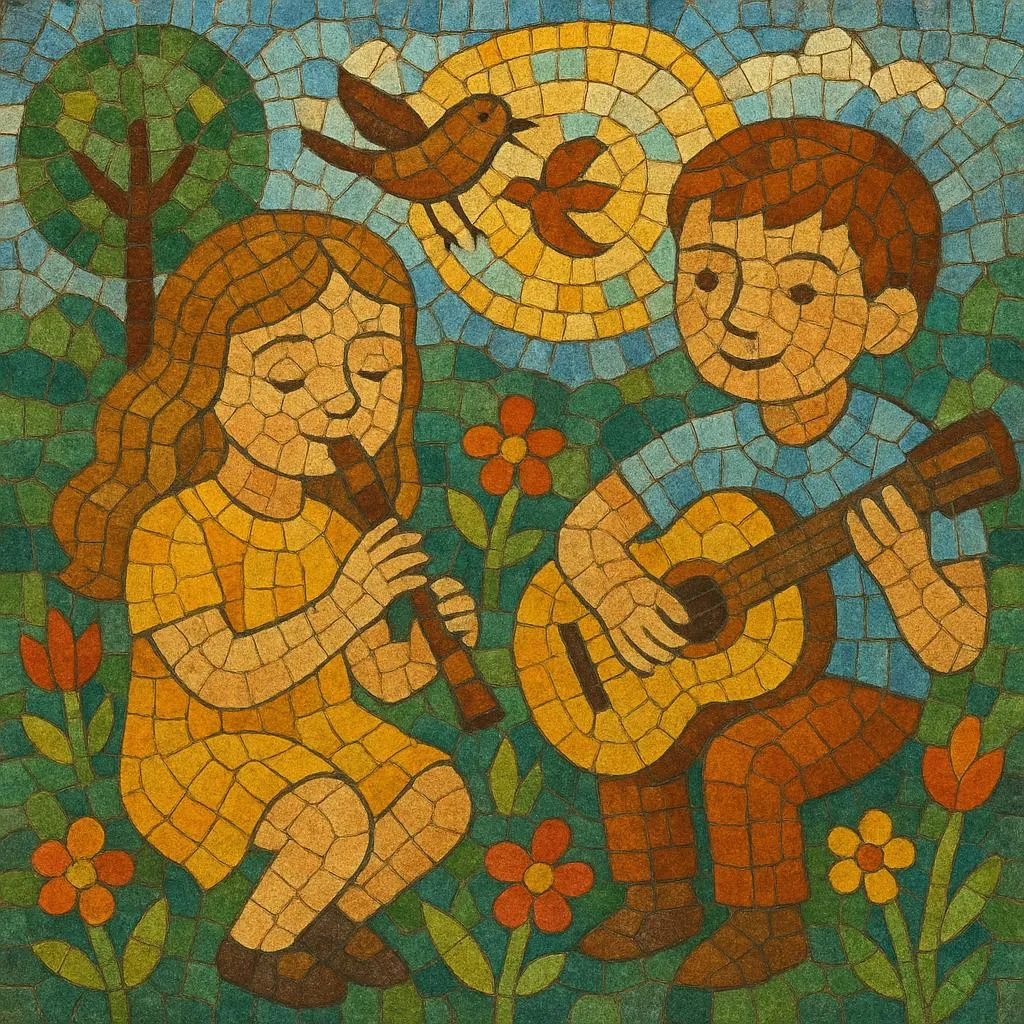
Musically, the style favors diatonic melodies in major keys, narrow vocal ranges, and steady dance‑like meters (2/4, 3/4, or light 4/4). Arrangements commonly feature piano, acoustic guitar, light percussion (including Orff instruments), recorders or flutes, and small choirs. Call‑and‑response, repeated refrains, and onomatopoeia support participation and learning.
Lyrically, they draw on nature, seasons, animals, play, school, friendship, and folk imagery, often embedding moral or educational messages. Folkloric cadence and prosody from Latvian verse strongly influence rhyme and rhythm.
Performances range from classroom sing‑alongs and kindergarten concerts to children’s vocal ensembles and televised song festivals.
History
Latvian children’s repertoire grows out of traditional lullabies, counting rhymes, and simple game‑songs that circulated orally in families and schools. During the late 19th and early 20th centuries, the codification of Latvian folk material and the rise of school songbooks created a common core of easy melodies and texts for children.
In the Soviet era, children’s choirs and vocal ensembles gained strong institutional support through music schools, cultural houses, and broadcasting. Composers began writing original children’s material shaped by folk modality and light popular harmony, yet tailored to child voices and didactic aims. Annual children’s song events and recordings helped standardize a national sound: bright, lyrical, participatory, and nature‑focused.
Following independence in 1991, a new wave of albums, school musicals, and TV programming refreshed the repertoire with contemporary pop production while keeping folk imagery and sing‑along choruses. Publishers and music educators expanded graded songbooks and Orff‑based classroom arrangements, ensuring continuity between home, kindergarten, and stage.
Streaming, animated videos, and interactive classroom content broadened access, and children’s ensembles continued to record seasonal and thematic albums. The genre remains a living bridge between folk heritage and modern Latvian pop sensibility, widely used in early childhood education, choirs, and community celebrations.