Your digging level

For this genre
0/8
🏆
Sign in, then listen to this genre to level up

Description

ZCC (Zion Christian Church) is a South African gospel substyle associated with the independent African church movement founded in the early 20th century.

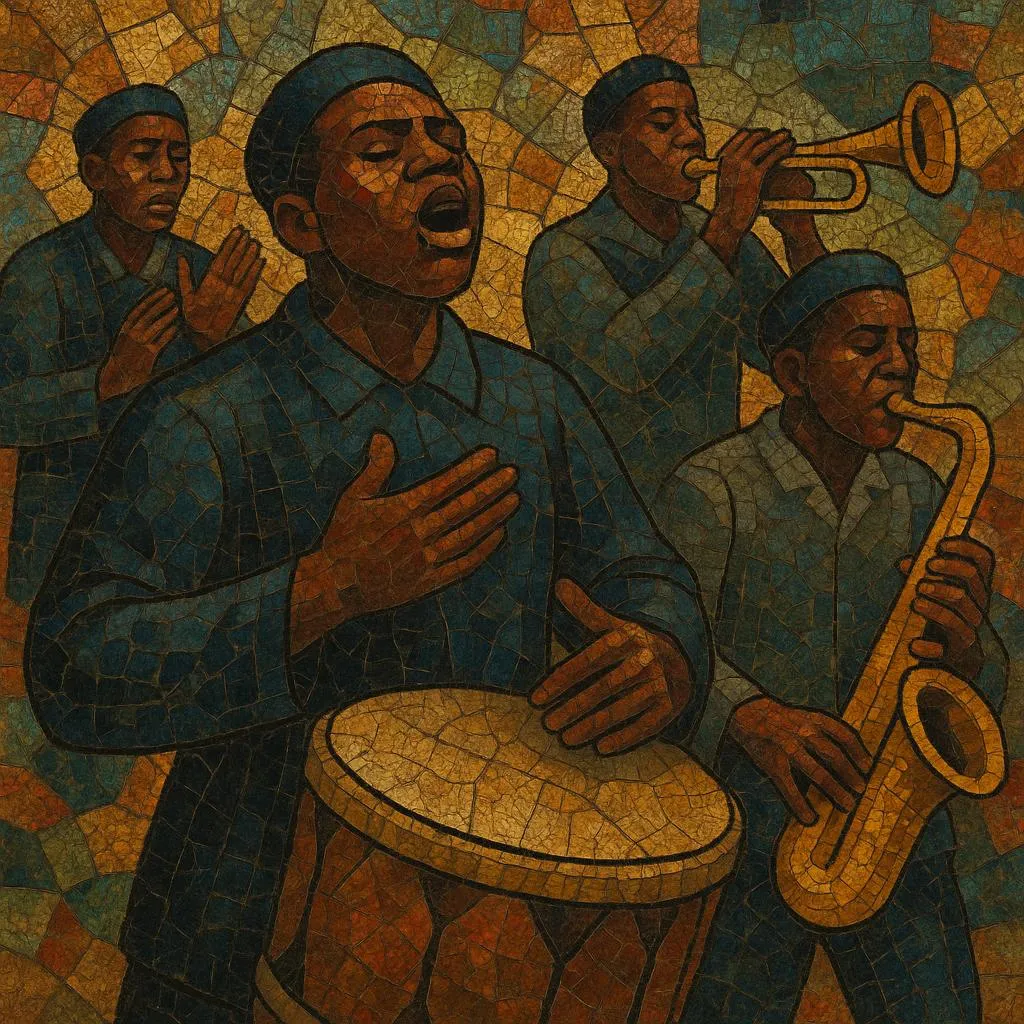
It is characterized by massed unison and close-harmony choral singing, vigorous call-and-response between a lead voice and congregation, and strong, metrical, marching rhythms marked by handclaps, foot-stomps, and whistles. Performances may be entirely a cappella or accompanied by snare and bass drum, and in many congregations by brass band choirs that render hymn-like chorales and processional pieces.

Texts focus on praise, testimony, healing, and moral exhortation, sung primarily in Sotho-Tswana languages (Sepedi, Sesotho, Setswana) as well as isiZulu, isiXhosa, Xitsonga, and Tshivenda. Melodies often center on pentatonic or hexatonic contours, and arrangements favor steady 4/4 or 2/4 “march” feels suited to ZCC’s emblematic mokhukhu (uniformed) drill-dance.


Sources: Spotify, Wikipedia, Discogs, Rate Your Music, MusicBrainz, and other online sources

History

Origins (1910s–1940s)

The Zion Christian Church emerged in South Africa in the early 20th century as part of the wider African Independent/Initiated Churches (AIC) movement. ZCC congregational singing grew from mission-hymn repertories brought by Protestant missions, but quickly absorbed local choral practices (notably makwaya) and indigenous responsorial singing. By the 1930s–40s, a recognizable ZCC liturgical sound—unison lead lines answered by rich choral blocks, marching pulse, and handclaps—was firmly established.

Consolidation and the Brass-Band Tradition (1950s–1970s)

Post‑war urbanization and church conferences at Moria strengthened standardized song repertories and performance practice. ZCC brass bands flourished, paralleling school and civic brass traditions and giving ZCC processions and large gatherings a distinctive ceremonial sound. In parallel, male uniformed groups developed the mokhukhu drill-dance, fusing sung praise with synchronized stepping and whistle calls.

Cassette Era and Regional Spread (1980s–1990s)

The growth of cassette culture enabled ZCC choirs and uniformed groups to record hymns, choruses, and brass processions for a burgeoning audience beyond services. Cross-pollination with South African gospel and isicathamiya/mbube-based harmony widened its reach, while the core ZCC sonic markers—call-and-response, march tempo, clapping, and congregational blend—remained intact.

Contemporary Practice (2000s–present)

Digital distribution has amplified ZCC’s presence across Southern Africa. Many ensembles now balance traditional a cappella or drum-and-brass formats with light keyboards and bass for recordings, while live worship retains the communal, participatory ethos. Elements of the ZCC sound—big choirs, key-lift vamps, and testimony-driven lyrics—have influenced broader South African gospel and even crossover fusions (e.g., gospel-inflected gqom or amapiano devotions).

How to make a track in this genre

Core Feel and Tempo
•   Aim for a firm march pulse in 2/4 or 4/4 at roughly 90–110 BPM. Keep the groove steady and communal—this music is built for mass participation and procession.
Melody and Harmony
•   Use call-and-response: a lead voice (soloist or small leader group) states a line; the full choir answers. •   Melodic shapes are typically pentatonic/hexatonic with clear diatonic centers; keep intervals singable and memorable. •   Harmonies favor I–IV–V progressions, often with parallel third/sixth motion in the upper voices and strong root motion in the bass. •   Plan one or two key-lift modulations near the climax to heighten energy (“vamp and modulate”).
Vocal Forces and Texture
•   Build an SATB choir or a men’s chorus (common in uniformed mokhukhu groups). Keep textures homophonic for congregational clarity, reserving simple descants or echoes for lift. •   Encourage robust unison passages that break into block harmony on refrains.
Rhythm, Percussion, and Brass
•   Lead with handclaps on beats 2 and 4 (or a straight two-step) and boot-stomps to reinforce the march. •   Add snare and bass drum patterns (rudimental, parade-style). Whistle cues can signal entries or dance figures. •   For processional numbers, arrange brass (cornets/trumpets, trombones, euphonium, tuba) in chorale voicings. Keep lines syllabic and hymn-like, doubling the choir or interlocking antiphonally.
Language and Text
•   Write in Sotho-Tswana languages (Sepedi, Sesotho, Setswana) and/or isiZulu/isiXhosa; keep lines short, declarative, and repetitive for call-and-response. •   Lyrical themes: praise, thanksgiving, healing, testimony, perseverance, moral guidance.
Form and Arrangement Tips
•   Structure: Short intro (drum/claps/whistle) → Call-and-response verse → Big refrain → Vamp with key lift and intensified clapping/stomps → Closing benediction tag. •   Keep arrangements participatory: prioritize clear cues, sectional repeats, and refrain hooks over dense counterpoint.
Recording and Production
•   Capture a natural, communal room sound; moderate reverb can simulate a church hall. •   Balance the claps/stomps so they reinforce the groove without masking the choir. •   If using brass, seat it around or behind the choir to preserve vocal intelligibility.

Top tracks

Locked
Share your favorite track to unlock other users’ top tracks
Influenced by
Challenges
Digger Battle
Let's see who can find the best track in this genre

Download our mobile app

Get the Melodigging app and start digging for new genres on the go
© 2026 Melodigging
Melodding was created as a tribute to Every Noise at Once, which inspired us to help curious minds keep digging into music's ever-evolving genres.
Buy me a coffee for Melodigging