Your digging level for this genre

0/8
🏆
Sign in, then listen to this genre to level up

Description

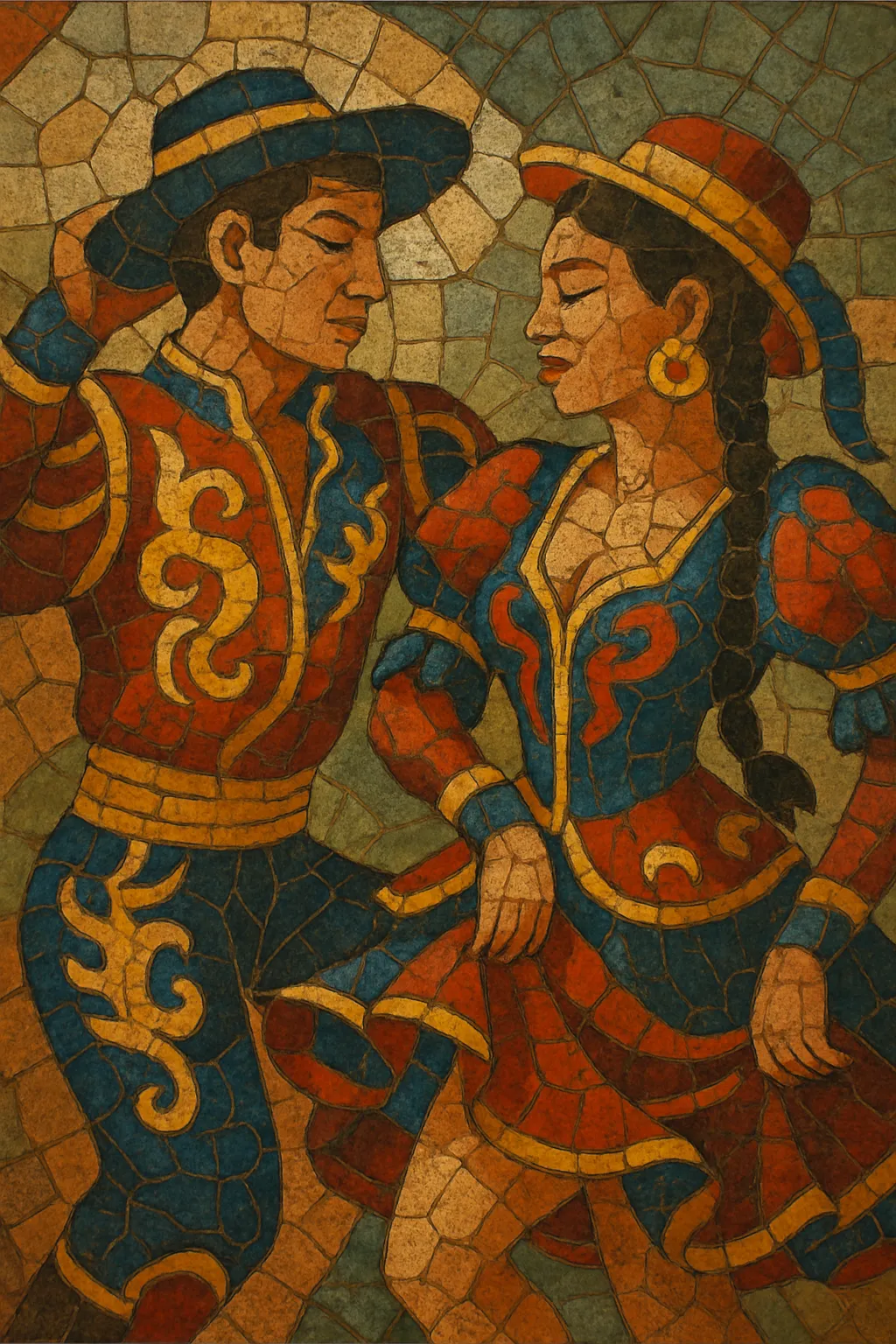
Caporal (often performed to the dance Caporales) is a Bolivian urban-folkloric genre that blends Afro-Bolivian rhythmic ideas with the powerful sound of local brass bands.

It is written in a driving duple meter (2/4), led by bombo (bass drum) pulses and crisp snare off-beats, with bright trumpet and trombone fanfares. Choruses are typically call-and-response and meant for mass participation by dancers wearing bell-adorned boots, which add a distinctive jingling counter-rhythm.

Musically, caporal favors diatonic, hymn-like melodies, bold parallel brass lines, and festive modulations, all arranged for marching brass ensembles that lead large dance fraternities during major Bolivian festivals.

History

Origins (late 1960s)

Caporal emerged in Bolivia in the late 1960s, crystallizing around 1969 in urban centers such as La Paz and Cochabamba. Its creators drew inspiration from the Afro-Bolivian saya tradition (particularly its characteristic duple pulse and responsorial singing) and from the theatricalized “caporal” figure historically associated with Afro-descendant communities. At the same time, the genre adopted the imposing sound of local brass bands, which were already central to Bolivian festival culture.

Consolidation in festivals (1970s–1990s)

During the 1970s and 1980s, caporal spread rapidly through major festivities like Gran Poder in La Paz and the Carnaval de Oruro, where large dance fraternities paraded to brass-led arrangements. Its musical identity solidified: emphatic bombo downbeats, syncopated snare patterns, bright unison brass hooks, and participatory refrains. The visual dimension—costumes, boots with bells, and choreographic vigor—reinforced the music’s athletic, celebratory character.

Diaspora and modernization (2000s–present)

With the Bolivian diaspora, caporal established scenes in neighboring South American countries, the United States, and Europe. Bands and folklore ensembles incorporated modern arranging techniques (tighter brass voicings, modulating codas, studio production) while maintaining recognizable rhythmic cells. Today, caporal remains a fixture of Bolivian identity, performed by professional brass bands, folklore groups, and university fraternities, both on stage and in the streets.

How to make a track in this genre

Rhythm and tempo
•   Use a strong 2/4 meter at a lively marching tempo (roughly 120–140 BPM). •   Emphasize bombo (bass drum) on the downbeats and a crisp, steady redoblante (snare) on off-beats; add suspended crashes for climactic hits. •   If performing with dancers, write room for the bell-adorned boots (cascabeles) to articulate subdivisions and accent turns.
Instrumentation and texture
•   Core ensemble: brass band (trumpets, trombones, baritones/euphoniums, sousaphones/tubas) plus percussion (bombo, snare, cymbals). Optional Andean colors (charango, quena, zampoñas) can double or introduce themes. •   Arrange brass in bold, parallel lines (thirds/sixths) with fanfare-like motives; keep low brass pumping the harmonic rhythm.
Harmony and form
•   Favor diatonic major/minor with functional progressions (I–IV–V, or i–VII–VI–V variants). Use modulating bridges or last-chorus key lifts for excitement. •   Typical form: Intro fanfare → Verse → Call-and-response Chorus → Instrumental interlude (brass riffs) → Verse/Chorus → Coda with rallentando or grand cadence.
Melody and vocals
•   Write singable, hymn-like melodies with clear phrasing for mass chorus participation. •   Use call-and-response between soloist and chorus; include festive shouts and short slogans that dancers can echo.
Production and performance tips
•   Prioritize punchy brass articulation and tight snare/bass coordination; record or mic outdoors with attention to transients. •   Leave breaths and rests in brass phrases to accommodate marching choreography and audience call-backs.

Top albums

Top tracks

Locked
Share your favorite track to unlock other users’ top tracks
Influenced by
Has influenced
No genres found
Challenges
Digger Battle
Let's see who can find the best track in this genre
© 2025 Melodigging
Melodding was created as a tribute to Every Noise at Once, which inspired us to help curious minds keep digging into music's ever-evolving genres.
Buy me a coffee for Melodigging