Your digging level

For this genre
0/8
🏆
Sign in, then listen to this genre to level up

Description

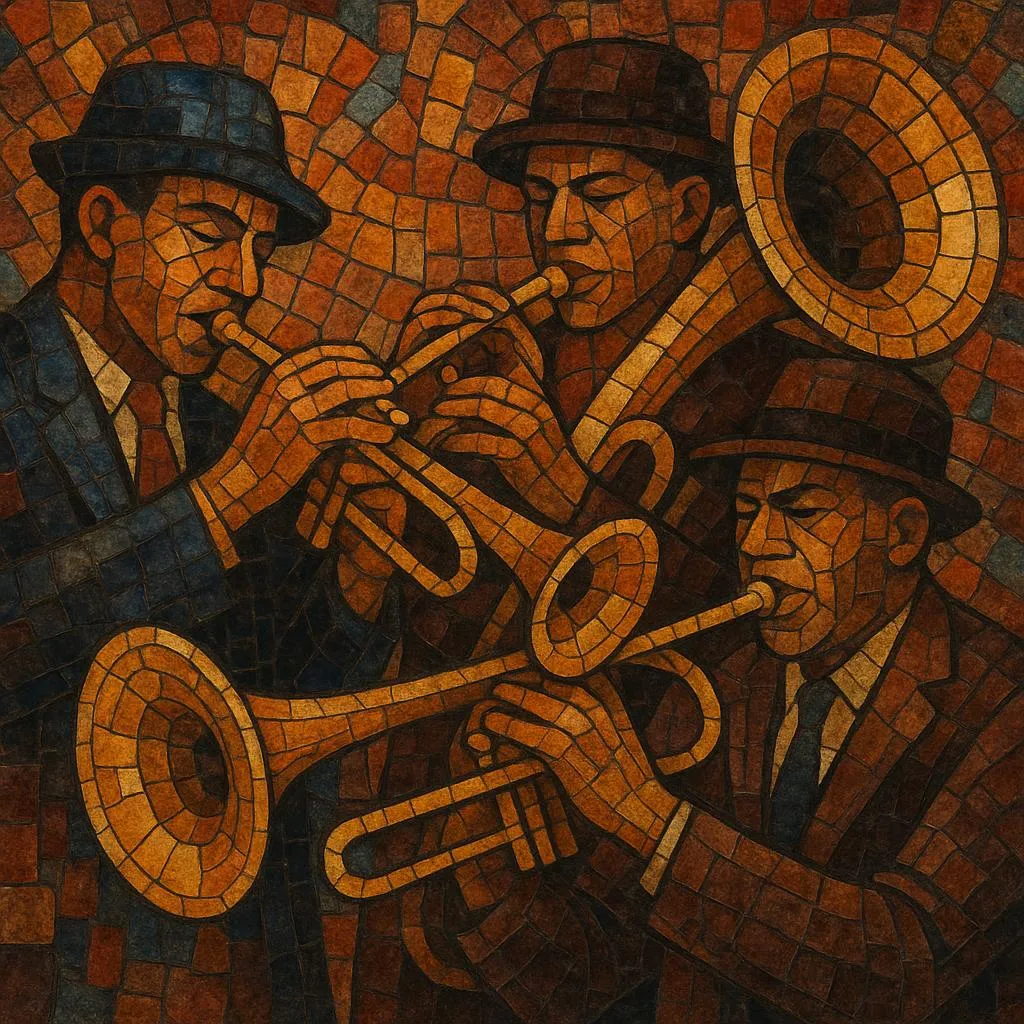
Jazz brass is a jazz-centered approach that foregrounds brass instruments—chiefly trumpet, trombone, and tuba/sousaphone—either as solo voices or as harmonized horn sections. It emphasizes the distinct timbres, colors, and articulations available to brass, from velvety cup-muted lines and plunger “wa-wa” effects to open-horn brilliance and growls.

Across small combos and big bands alike, jazz brass is defined by swing and post–swing rhythmic feels, riff-based call-and-response, shout choruses, and an improvisational language rooted in the blues. Early forms drew on New Orleans marching/brass band traditions and ragtime; later developments absorbed bebop’s chromaticism and hard bop’s gospel/blues inflections, while contemporary practice spans straight-ahead, second-line, and modern chamber-like brass voicings.

In performance, brass players exploit mutes (Harmon, cup, plunger, bucket), lip slurs, half-valve effects, shakes, smears, and flutter-tongue to shape phrases—making tone color and articulation as central as harmony and rhythm.


Sources: Spotify, Wikipedia, Discogs, RYM, MB, user feedback and other online sources

History

Origins (1910s–1920s)

Jazz brass coalesced in New Orleans where brass bands and parade traditions intersected with ragtime and the blues. Cornet/trumpet led the frontline alongside trombone, while tuba/sousaphone supplied bass lines before the double bass took over. Early ensemble textures featured collective improvisation and riffy counterlines derived from marching-band voicings.

Swing and Big Bands (1930s–1940s)

As big bands rose, brass sections (trumpets and trombones) became a defining sonic pillar. Arrangers codified sectional voicings, call-and-response with reeds, and climactic shout choruses. Cup, straight, and Harmon mutes expanded tone palettes, and section lead players set standards for phrasing, power, and blend.

Bebop to Hard Bop (1940s–1960s)

Bebop brought faster tempos, advanced harmony, and agile, horn-forward lines—particularly for trumpet. Hard bop re-centered blues, gospel, and groove, with brass often fronting small ensembles. Trombone innovators refined legato articulation and linear clarity to match trumpet/sax agility, while brass writing in small groups adopted tighter, quasi–big band voicings.

Post-bop and Modern Expansions (1970s–present)

Post-bop and jazz fusion integrated expanded harmonies and electric rhythm sections while keeping brass as essential solo and coloristic voices. Contemporary scenes range from New Orleans second-line and tuba-driven ensembles to chamber-like brass groups exploring counterpoint, odd meters, and extended techniques. Today, jazz brass comfortably spans straight-ahead idioms, modern orchestration, and cross-genre hybrids while retaining the improvisational and timbral core that has defined it since New Orleans.

How to make a track in this genre

Instrumentation & Sound
•   Center the frontline on trumpet and/or trombone; add tuba/sousaphone or bass trombone for color (especially for New Orleans/second-line flavors). •   Use mutes (Harmon with/without stem, cup, straight, bucket, and plunger) to sculpt timbre. Write explicit mute changes to create sectional color contrasts.
Harmony & Melody
•   Base vocabulary in blues language (blue notes, call-and-response) and standard jazz progressions (ii–V–I, turnarounds, rhythm changes), then add bebop passing tones and enclosures. •   For brass-section writing, voice in close triads/tetrads and drop-2/drop-3 spreads; balance lead brightness (trumpet) against inner trombone lines that support guide tones.
Rhythm & Feel
•   Swing eighths for mainstream styles; second-line street beat for New Orleans; straight-eighth/funk for modern grooves. •   Outline walking bass (acoustic bass or tuba) and comping patterns that leave space for horn pickups and shout figures.
Arrangement Techniques
•   Alternate riffs between brass and reeds/rhythm (or between trumpet and trombone in small groups). •   Build a shout chorus: harmonized, rhythmically driving brass figures leading to the climax. •   Use antiphony (call-and-response), backgrounds (pads, falls, shakes), and short counterlines under solos.
Tone & Articulation
•   Mark articulations (doits, falls, shakes, smears) and dynamics precisely; jazz brass relies on clear phrasing. •   Encourage plunger speech effects ("wa-wa") and half-valve color for expressive ballad lines.
Improvisation Vocabulary
•   Emphasize chord-tone resolution, bebop chromaticism, motifs developed through sequence and rhythmic displacement. •   Integrate blues language (minor pentatonic, b3→3, b5→5) and language from classic recordings to inform phrasing.
Recording/Mixing Tips
•   Spot-mic bell positions to capture attack; add a room mic for blend and natural brass bloom. •   Control brightness around 3–5 kHz; retain transient punch while taming harshness with gentle EQ and saturation.

Top tracks

Locked
Share your favorite track to unlock other users’ top tracks

Upcoming concerts

in this genre
Has influenced

Download our mobile app

Get the Melodigging app and start digging for new genres on the go
© 2026 Melodigging
Melodding was created as a tribute to Every Noise at Once, which inspired us to help curious minds keep digging into music's ever-evolving genres.
Buy me a coffee for Melodigging