Your digging level
Description
Carnaval Limburg is the festive popular-song tradition associated with the annual Vastelaovend (Carnival) celebrations in the Dutch province of Limburg. Songs are typically sung in Limburgish dialects, celebrate local pride, and are written for easy communal singing in pubs, parade routes, and town squares.
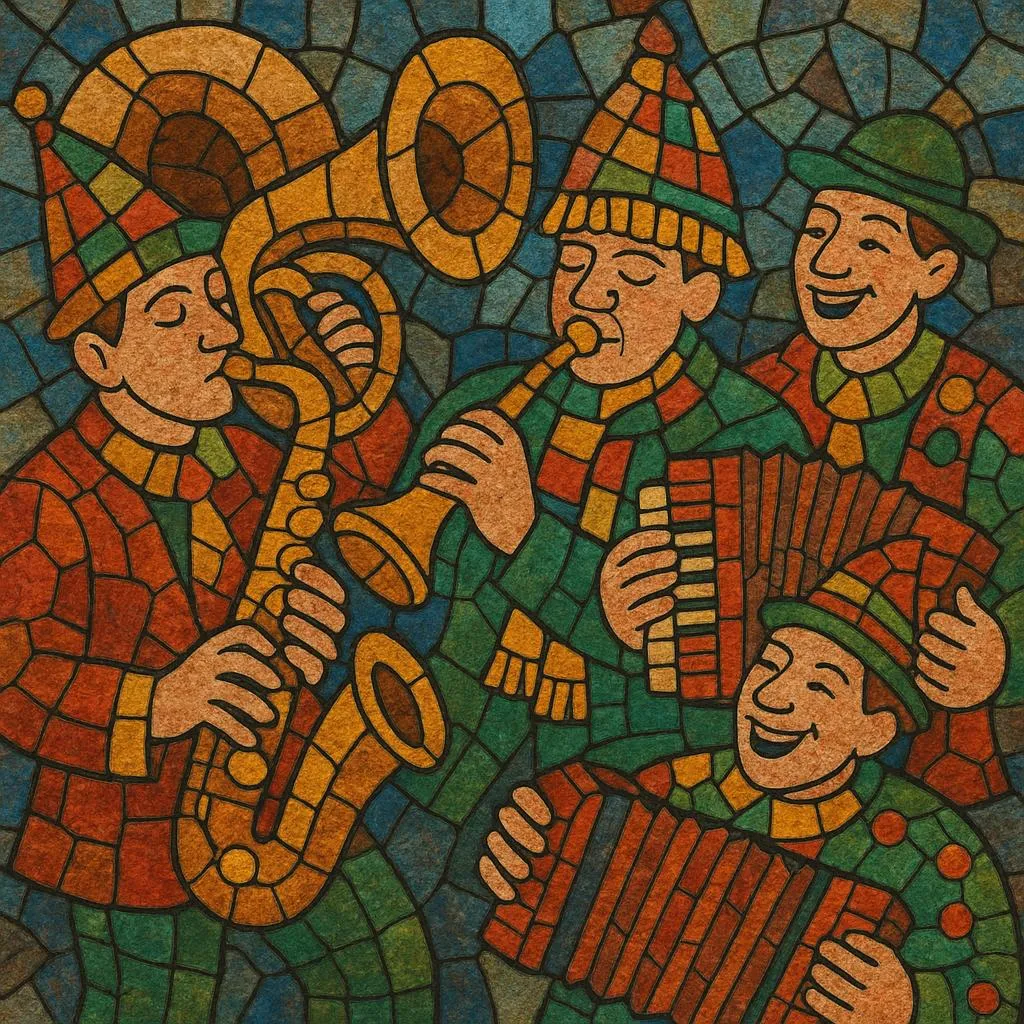
Musically, arrangements draw on brass- and reed-band instrumentation (trumpets, trombones, clarinets, saxophones), accordion, drums, and tuba/ sousaphone, often in march (2/4), polka (2/4), or waltz (3/4) feels. The style sits between schlagers and brass-band repertoire: catchy melodies, straightforward harmonies, big refrains, and humorous or affectionate lyrics about places, people, and Carnival rituals. Zaate hermeniekes ("drunken" marching bands) are a hallmark of the street sound during Carnival in Limburg.
History
After World War II, purpose‑written Carnival songs (carnavalsschlagers) spread rapidly in Limburg, aligning with the revival of local dialect culture and parish/prince societies that organize festivities. These songs were designed for mass participation and local pride, typically performed by street bands (zaate hermeniekes) and in packed pubs.
By the early 1960s, Limburg’s Carnival repertoire was being recorded and compiled. Archival releases such as “Carnaval in Limburg” and “Carnaval in Mestreech” (both issued in October 1961) document the sound of the period—oom‑pah brass, accordion, and crowd‑ready refrains—indicating that by the 1960s the style was established enough to merit commercial albums.
Local scenes in Maastricht (Mestreech), Venlo, and other towns developed distinctive repertoires and annual song contests and revues. In Venlo, songwriters and arrangers such as Thuur Luxembourg and lyricist Frans Boermans helped shape the idiom with dialect texts and memorable tunes recorded by local vocalists and ensembles, cementing the genre’s blend of regional language, brass‑band color, and schlager catchiness.
Carnaval Limburg remains a living practice: each season brings new dialect songs for parades and pub singing, alongside evergreens from the 1960s onward. Museums and regional archives actively document the culture, while town societies and street bands keep the participatory performance context at the center of the music.
These traits align the piece with Limburg’s Carnival contexts—parade routes, pub floors, and town‑hall stages—where participation is paramount.