

Your digging level

For this genre
0/8
🏆
Sign in, then listen to this genre to level up

Description

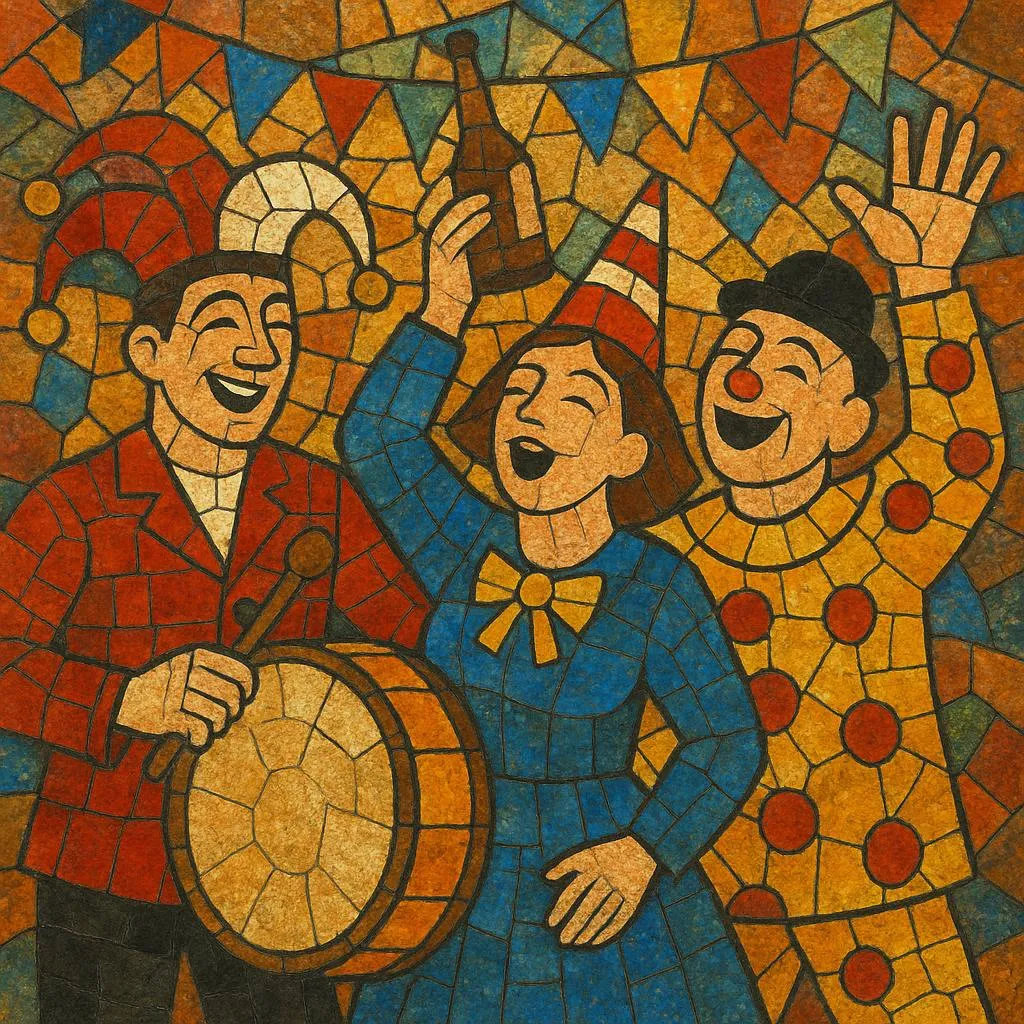
Kölsche Karneval is the local carnival song tradition from Cologne, Germany, performed in the Kölsch dialect and designed for mass sing‑alongs during the city’s “fifth season” (Fastelovend).

Musically it blends German Schlager and folk‑dance rhythms (polka, march, and waltz) with brass‑band arrangements and contemporary pop/rock energy. Choruses are short, instantly memorable, and often shouted by the crowd. Lyrics celebrate the city, camaraderie, humor, and gentle satire, with recurring carnival calls like “Alaaf!”

It is not just a sound but a participatory culture: songs are written to be sung shoulder‑to‑shoulder in halls, pubs, and parades, accompanied by brass, drums, and handclaps, and timed to specific carnival events from November 11 to Rosenmontag.


Sources: Spotify, Wikipedia, Discogs, Rate Your Music, MusicBrainz, and other online sources

History

19th‑century roots (organization of modern Carnival)

Cologne’s organized Carnival was reformed in 1823 with the Festkomitee Kölner Karneval. From that point, local humorous and satirical songs in Kölsch became a fixture of masked balls, sessions, and parades. Early repertoires drew on popular folk song, military and civic marches, waltzes, and polkas performed by town and guild bands.

Early 20th century to postwar rebuilding

Through the early 1900s, Carnival songs spread via singing clubs and brass ensembles. After WWII, the city’s cultural rebuild put Carnival music back at the center of communal life. The emerging Schlager industry and radio supported cleaner, catchier refrains, and arrangements that were portable from halls to broadcast studios.

1970s–1990s: Band culture and Kölsch rock

From the late 1960s on, full‑time bands singing in Kölsch transformed the style from stand‑alone couplets into modern pop/rock songs with brass sections. Sing‑along anthems about neighborhood pride, the Rhine, and everyday humor codified the genre’s hallmarks: simple harmonic frameworks, stomping 2/4 and 4/4 grooves, and giant call‑and‑response hooks.

21st century: Stadium anthems and crossover

In the 2000s–2020s, younger groups fused brass‑pop, rock, and festival production into arena‑ready choruses. Songs became staples not only of Carnival sessions and parades, but also of football terraces and summer festivals. Digital releases and televised “Sitzungen” widened the audience while preserving Kölsch language and local identity.

Culture and function

Kölsche Karneval remains function‑first music: it is written for communal singing (“Schunkeln” swaying, mass call‑backs), comedic sketches, and procession pacing. The dialect, recurring motifs (friendship, love for Cologne, cheerful irreverence), and participatory performance practice define the genre as much as its sound.

How to make a track in this genre

Instrumentation and groove
•   Core rhythm in 2/4 (polka/march) at ~110–135 BPM for dancing and parades; 3/4 waltz at ~80–95 BPM for “Schunkeln”; 4/4 pop/rock at ~105–125 BPM for modern anthems. •   Use brass and reeds (trumpets, trombones, saxes), snare and bass drum with clear backbeat, tuba/e‑bass for oom‑pah foundations, plus guitars/keys/accordion to glue harmony. •   Arrange with unison horn riffs before/after the chorus and crowd‑cue drum fills leading into refrains.
Harmony and melody
•   Keep harmony bright and simple: I–IV–V, I–V–vi–IV, or I–vi–IV–V in major keys; brief secondary dominants for lift. •   Melodies should sit within an octave, mostly stepwise, with strong pickup notes and end‑of‑line cadences that invite group shouting.
Form and hook design
•   Common form: Intro (horn riff) – Verse – Pre‑chorus – Big Chorus – Verse – Chorus – Middle eight/Break – Double Chorus. •   Write a short slogan‑like hook (often ending with “Alaaf!”, place names, or team/club calls) and repeat it; build in call‑and‑response lines for the audience.
Lyrics and delivery
•   Sing in Kölsch dialect; themes: city pride, friendship, humor, everyday stories, gentle satire. Keep lines punchy with internal rhyme and easy scansion. •   Include participatory cues (count‑ins, claps, chants). Avoid complex metaphors—clarity and communal feeling trump intricacy.
Performance practice
•   Emphasize crowd engagement: teach the chorus quickly, lower band volume during shout‑backs, then hit full brass for payoff. •   For parade use, ensure steady, marchable tempos and clear drum patterns; for hall sessions, allow breakdowns for clapping and “Schunkeln.”

Top tracks

Locked
Share your favorite track to unlock other users’ top tracks
Influenced by
Has influenced
Challenges
Digger Battle
Let's see who can find the best track in this genre

Download our mobile app

Get the Melodigging app and start digging for new genres on the go
© 2026 Melodigging
Melodding was created as a tribute to Every Noise at Once, which inspired us to help curious minds keep digging into music's ever-evolving genres.
Buy me a coffee for Melodigging
