Your digging level
Description
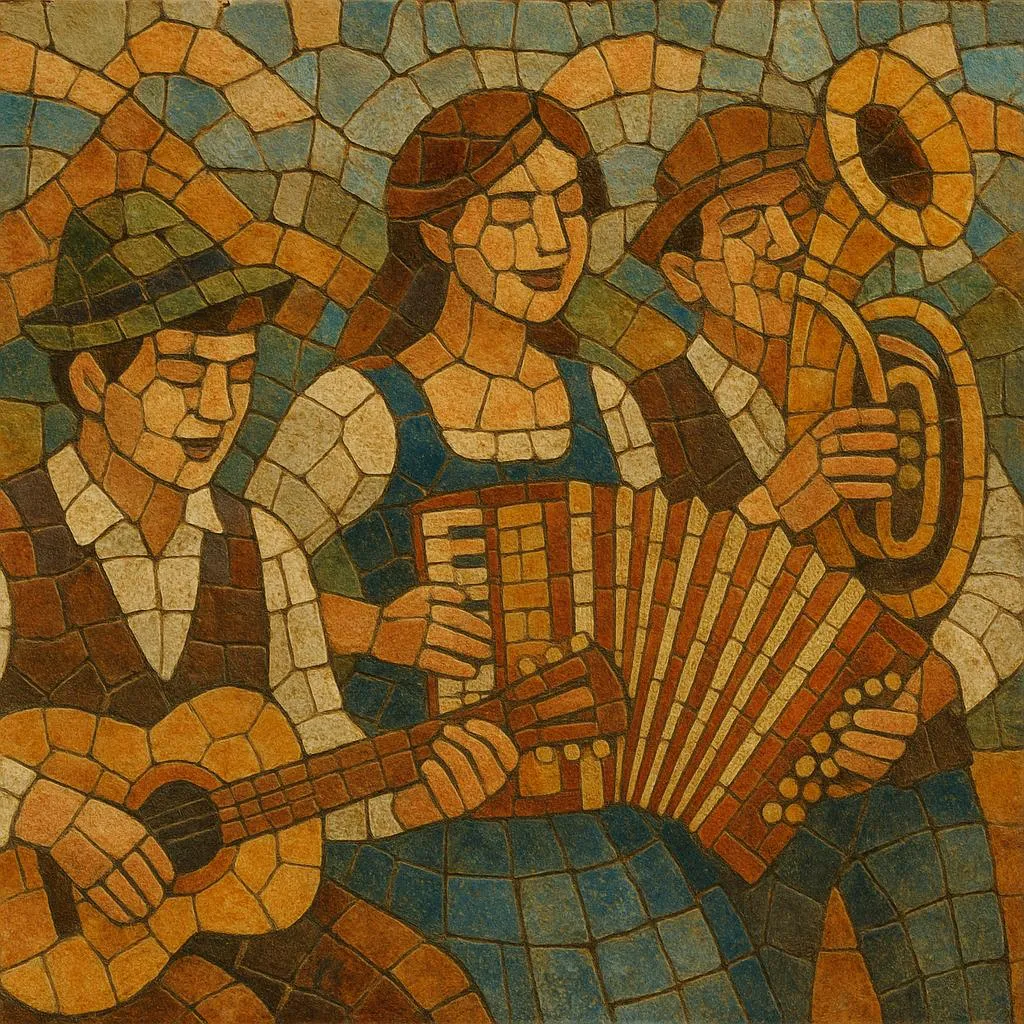
Volkspop is a contemporary, radio-friendly pop style that blends Alpine and Central European folk music signifiers (dialect lyrics, traditional dance rhythms, and folk instrumentation) with modern pop/rock production.
It commonly features sing-along choruses, clear verse–pre-chorus–chorus forms, and a bright, polished sound while retaining regional identity through language, melodic turns, and characteristic instruments such as accordion/steirische Harmonika, brass, and sometimes fiddle.
The genre is especially associated with the German-speaking Alpine regions and is often positioned between “Volksmusik/Neue Volksmusik,” schlager, and mainstream pop.
History
Volkspop emerged as a commercial and stylistic bridge between traditional folk-oriented music and contemporary pop, emphasizing modern production values while keeping recognizable regional folk markers.
In the 2010s, a wave of artists in the German-speaking Alps popularized a more pop-centric folk hybrid that fit festival stages and radio formats. This period is widely associated with the term “Volkspop” in media and marketing, highlighting a modernized folk aesthetic designed for broad audiences.
Today, volkspop spans a spectrum from highly produced, chart-oriented tracks to more band-driven and indie-leaning variants, often borrowing from rock, EDM-inspired drops, and hip-hop-adjacent vocal phrasing while keeping folk instrumentation and dialect identity as anchors.
Favor danceable, steady pulses:
•Straight 4/4 pop groove with folk accenting.
•2/4 or polka-like drive (often felt as energetic “oom-pah” phrasing).
•3/4 or 6/8 for waltz-leaning tracks.
•Keep the kick/snare pattern simple and anthemic, then let off-beat accordion/brass stabs supply folk propulsion.
Use diatonic, major-key progressions (I–V–vi–IV, I–IV–V, or I–vi–IV–V) for immediate singability.
•Add folk character via:
•Turnarounds and passing tones that reference regional melodic idioms.
•Call-and-response motifs between vocal and brass/accordion.
•Choruses should have narrow-to-wide contour: a tighter verse melody that opens into a higher, more sustained chorus hook.
Aim for pop clarity:
•Lead vocal centered, compressed, and bright.
•Bass tight and controlled; kick present but not overly aggressive.
•Keep folk instruments highly intelligible:
•Accordion/brass should cut through the mix (gentle presence boost, controlled dynamics).
•Use room/plate reverb to give “live band” width without washing out intelligibility.
•Master for loudness and punch, but preserve transients in brass and snare to maintain dance energy.