Your digging level
Description
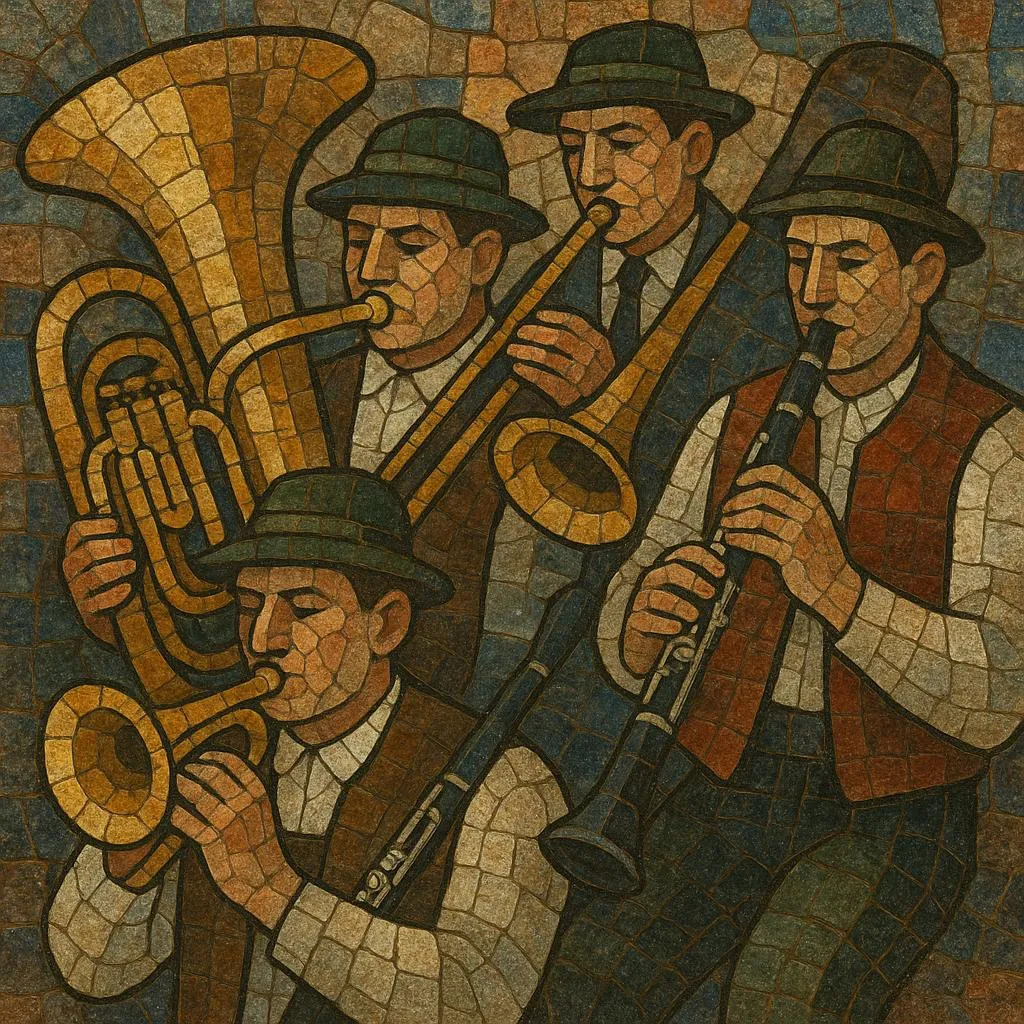
Blasmusik is the Central European tradition of village, civic, and festival brass band music, most associated with the German‑speaking world and neighboring Bohemia/Moravia. Typical ensembles (Blaskapellen) feature trumpets and flugelhorns, clarinets, tenor horns/baritones/euphoniums, trombones, tubas/helikons, and a compact drum section.
Its core repertoire comprises polkas, waltzes, and marches, along with regional dances (Ländler, Boarischer) and lyrical song arrangements. The style is defined by a buoyant oom‑pah bass, clear off‑beat articulation, close‑voiced mid‑brass harmonies, lyrical flugelhorn or clarinet melodies, and festive, singable tunes suited to parades, beer tents, and open‑air concerts. Distinct strains such as Böhmisch‑Mährisch (Bohemian–Moravian) emphasize warm flugelhorn leads and intertwined clarinet counter‑melodies, while Bavarian/Austrian variants favor rustic Ländler rhythms and robust march traditions.
Today, Blasmusik spans amateur village bands to elite professional ensembles and a modern “Neue Blasmusik” wave that blends traditional instrumentation with pop, jazz, or rock influences—yet the danceable, communal spirit remains central.
History
Blasmusik grew out of Central Europe’s civic and military band culture in the 1800s, when brass instruments (with valves) became more reliable and widespread. Towns, worker associations, fire brigades, and shooting clubs formed their own bands, adapting local folk dances (Ländler), songs, and marches to seated and marching brass ensembles.
Bands in the historic Czech lands popularized a warm, lyrical sound—flugelhorn and clarinet in cantabile dialogue—paired with crisp oom‑pah accompaniment and expressive rubato in waltzes. This Bohemian–Moravian articulation and repertoire strongly shaped what many listeners now recognize as the quintessential Blasmusik sound across Germany, Austria, and Switzerland.
Between the World Wars and after 1945, the tradition professionalized: publishers standardized part‑writing, national associations organized contests, and radio/records spread regional styles. Star bandleaders and arrangers codified repertoire, technique, and seating plans, while village bands remained central to seasonal festivals, processions, and fairs.
From the 1960s onward, touring “Böhmisch‑Mährisch” ensembles and high‑level concert wind bands expanded the audience. Since the 2000s, a younger “Neue Blasmusik” generation has fused brass‑band instrumentation with pop, funk, or rock, without abandoning the core polka‑waltz‑march triad. Major festivals and youth academies sustain a vibrant pipeline of players, arrangers, and composers, ensuring Blasmusik’s continued cultural role at beer tents, town squares, and concert halls.