Your digging level
Description
Música sinaloense (often called banda sinaloense or simply banda) is a brass‑band tradition from the state of Sinaloa, Mexico. It blends European military brass and dance forms (polka, waltz, schottische, mazurka, pasodoble) with Mexican song types such as corridos and rancheras.
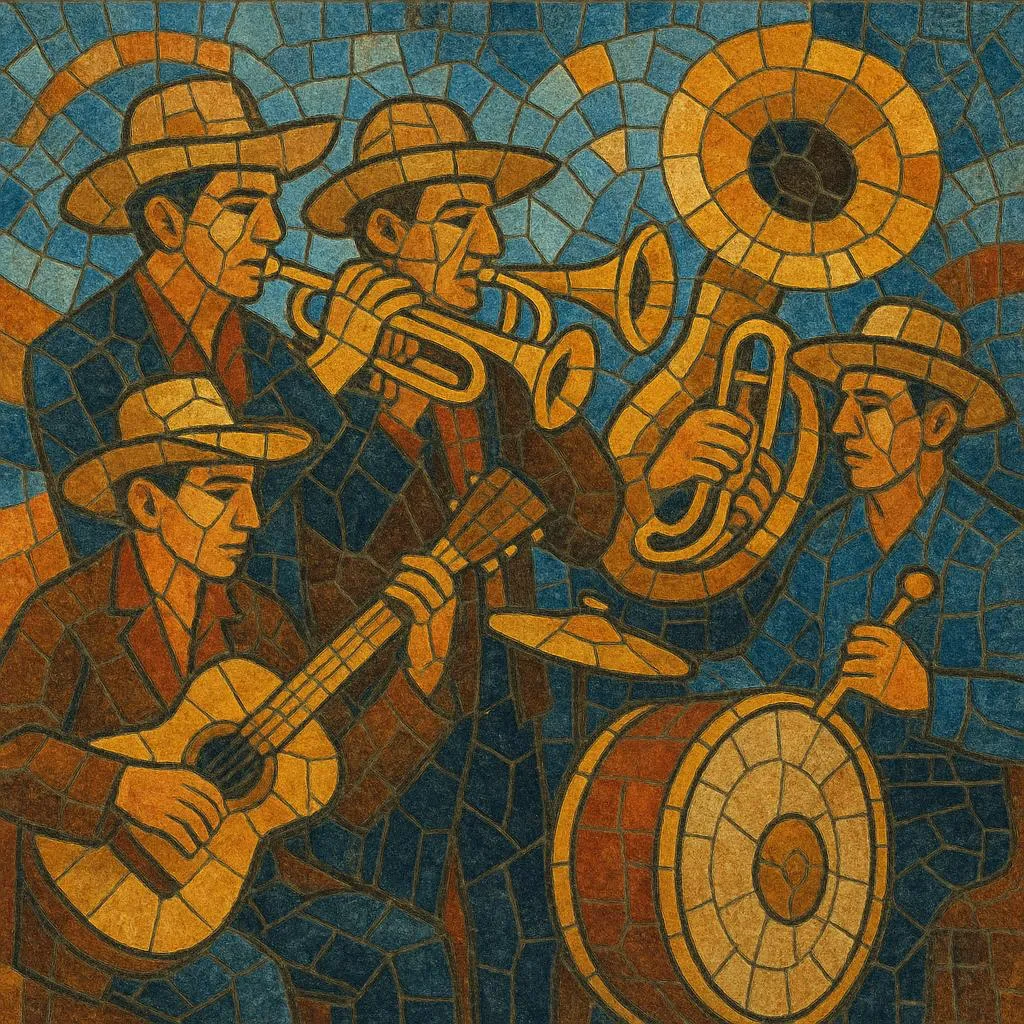
The classic ensemble is wind‑ and percussion‑driven: clarinets carry agile melodies and countermelodies; trumpets and trombones provide harmonized riffs and fanfares; a tuba (or sousaphone) anchors the line with walking or two‑beat bass; and percussion—tarola (snare) plus tambora (large bass drum with mounted cymbals)—drives buoyant, danceable grooves. The sound is extroverted, brilliant, and communal, yet it also supports tender romantic ballads and narrative songs.
Today, música sinaloense ranges from traditional instrumental sets for dances and street festivities to pop‑oriented “banda romántica” with lead vocalists, and has become one of the pillars of Regional Mexicano across Mexico and the Mexican diaspora.
History
Música sinaloense arose in Sinaloa—especially around the port city of Mazatlán—where European military bands, immigrant brass traditions, and local dance culture converged. Military and civic bands spread polkas, waltzes, schottisches, and mazurkas, which local musicians adapted to regional tastes. By the 1890s–1910s, Sinaloan ensembles were performing these forms alongside Mexican corridos and rancheras at town fiestas, processions, and social dances.
The repertoire and instrumentation standardized between the 1930s and 1950s, with clarinets taking melodic prominence, supported by trumpets, trombones, alto/baritone horns (charchetas), tuba, and the tarola/tambora percussion team. In 1938, Cruz Lizárraga founded Banda El Recodo, which professionalized the style, toured widely, and recorded prolifically—helping broadcast the Sinaloan brass sound over radio and records nationwide.
From the 1970s onward, banda groups broadened their repertoire to include romantic ballads and cumbias, while retaining traditional instrumental dance sets. In the late 1980s and early 1990s, commercial offshoots like technobanda (adding keyboards and drum kit) emerged, alongside a smoother “banda romántica” vocal focus. Migration and touring amplified the genre across northern Mexico and the U.S. West Coast, making it a core of the modern Regional Mexicano market.
In the 2000s–2020s, bands such as Banda MS, La Arrolladora Banda El Limón, and Banda Los Recoditos topped charts, while brass‑driven tuba lines influenced adjacent styles (e.g., sierreño, corridos tumbados and bélicos). Live performance remains central—from plazas and patronal feasts to arenas—preserving the festive, communal spirit that defines música sinaloense.