Your digging level
Description
Regional Mexicano (Música Mexicana) is an umbrella term for folk-derived regional styles from Mexico and their Mexican American continuations in the Southwestern United States. Rather than one single sound, it gathers subgenres tied to specific regions—such as mariachi and ranchera (Jalisco/Centro-Occidente), norteño and sierreño (Norte), banda sinaloense (Sinaloa), and narrative corridos that travel nationwide.
Its foundations reach back to the 16th–19th centuries, when Indigenous musical practices fused with Spanish song forms, African rhythms, and European dance-band traditions (polka, waltz, schottische), later meeting brass-band instrumentation and, in the North, accordion-led ensembles. In the 20th century it consolidated through radio, cinema, and records, and in the late 20th century became a major Spanish-language radio format in the U.S. Today it ranges from emotive ranchera ballads to high-energy banda and norteño dance music and modern corridos that reflect contemporary social life.
History
Choose a regional ensemble archetype:
•Mariachi/ranchera: violins, trumpets, vihuela, guitarrón (plus guitar/harp); lead vocal with strong, sustained phrasing.
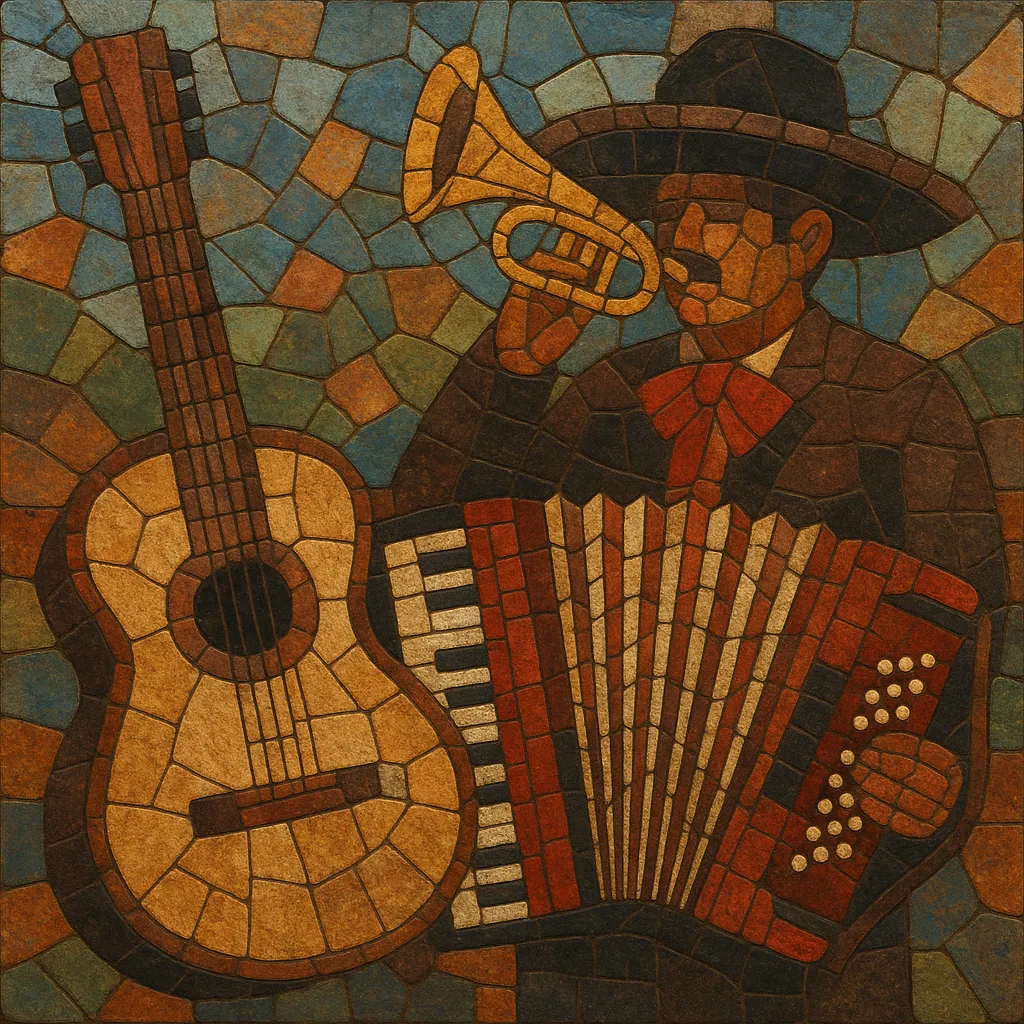
•Norteño/sierreño: accordion + bajo sexto (or 12‑string), bass/tuba, snare/toms; sierreño often features requinto or 12‑string guitar in place of accordion.
•Banda sinaloense: full brass and winds (clarinets, trumpets, trombones), tuba/sousaphone for bass, tambora + tarola (snare) for percussion.