Your digging level

For this genre
0/8
🏆
Sign in, then listen to this genre to level up

Description

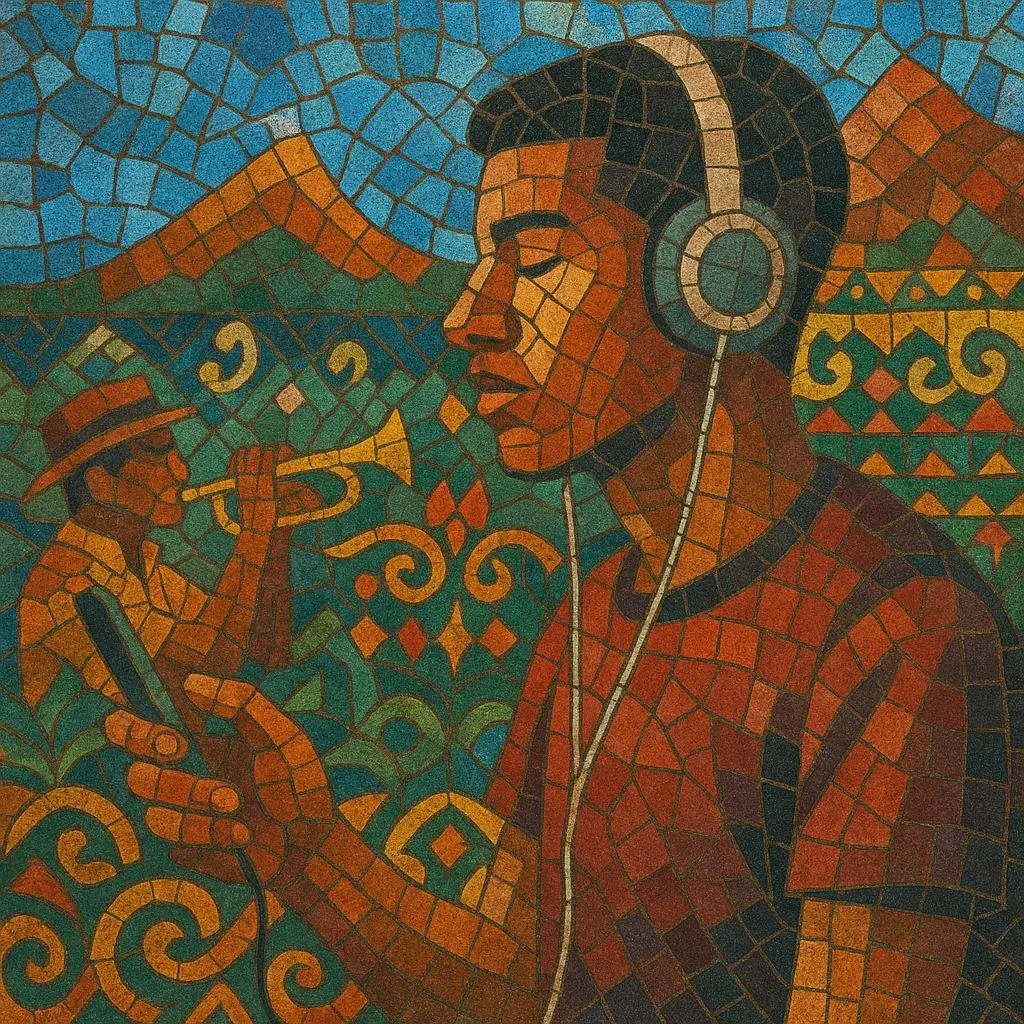
Musica urbana oaxaqueña (Oaxacan urban music) is a contemporary, grassroots blend of Latin urban styles—reggaeton, Latin trap, dancehall and hip‑hop—with regional sounds and languages from the state of Oaxaca, Mexico. It often mixes Spanish with Indigenous languages such as Zapotec, Mixtec, Mixe, Mazatec, and Triqui, foregrounding local identity alongside global club aesthetics.

Production typically marries dembow or halftime trap drums with timbres and melodic turns inspired by Oaxacan brass band traditions (bandas de viento), chilena costeña (6/8–3/4 hemiola swing), son istmeño motifs, and cumbia keyboards or guitars. Lyrically, it ranges from party and romance to migration, pride, and community narratives tied to fiestas patronales, tequio (communal work), and Oaxacan diasporic life.

Sources: Spotify, Wikipedia, Discogs, RYM, MB, user feedback and other online sources

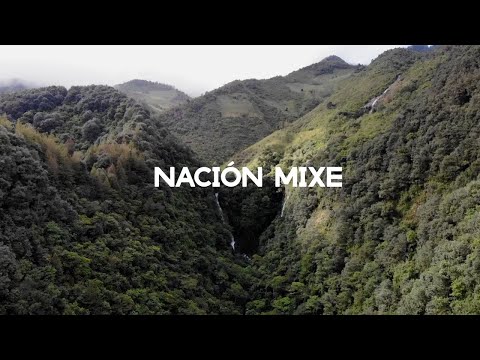
Los jamás conquistados de Oaxaca - Nación Mixe
Jorge De León

History

Origins (late 2000s–2010s)

Oaxaca’s long tradition of bandas de viento, sones, and chilenas intersected with the arrival of affordable DAWs, smartphones, and YouTube in the late 2000s. Young artists in Oaxaca City, the Isthmus of Tehuantepec (Juchitán, Salina Cruz), the Mixteca, and the Sierra Norte began rapping and singing over reggaeton and trap beats while weaving in local rhythms and Indigenous languages. Early community studios, school bands, and cultural centers helped artists learn recording and beatmaking.

Consolidation and Visibility (mid–late 2010s)

The 2010s saw a wave of videos and mixtapes that openly embraced bilingual or trilingual lyrics (Spanish + Zapotec/Mixtec/Mixe) and featured local dance and dress. Social media (Facebook, YouTube, later TikTok) gave visibility beyond Oaxaca—especially across the Oaxacalifornia diaspora—while collaborations with DJs and bandas de viento created a distinctive sound palette.

2020s: Scene Maturity and Crossovers

In the 2020s, musica urbana oaxaqueña diversified into romantic reggaeton, socially conscious hip‑hop, club‑ready perreo, and fusions with cumbia sonidera and EDM. Local crews and independent labels improved recording quality, and festivals and cultural programs began to include urban acts alongside traditional ensembles, positioning the style as a living, evolving expression of Oaxacan culture in a global urban context.


How to make a track in this genre

Groove and Tempo
•   Use reggaeton dembow at 90–105 BPM for dance‑oriented tracks; for trap/hip‑hop, aim for 65–75 BPM (or 130–150 BPM with a halftime feel). •   Layer a swing or hemiola feel (6/8 over 3/4) to nod to chilena costeña; introduce handclaps or zapateado‑like accents on transitions.
Rhythm Section and Sound Design
•   Core kit: punchy kick, syncopated snare/clap on 3 (dembow) or halftime snares (trap), rolling hats with occasional triplets. •   Add Latin percussion (guiro, congas, bongos) and Oaxacan touches: short brass stabs (trumpet/trombone), woodwinds, or sampled bandas de viento riffs. •   For cumbia‑leaning tracks, include bright organ/synth leads and offbeat rhythm guitar; for trap, use 808 subs, sliding bass, and sparse atmospheric pads.
Harmony and Melody
•   Favor minor keys with Phrygian or Aeolian colors common in Mexican regional melodies. •   Write short, singable hooks; double them with trumpets or clarinets to evoke banda phrasing. Call‑and‑response lines work well for crowd energy.
Lyrics and Language
•   Blend Spanish with Zapotec, Mixtec, Mixe, or other local languages. Themes can be festive (bailes, fiestas patronales) or reflective (identity, migration, community pride, love). •   Keep verses rhythmically tight and percussive; reserve melismatic or folkloric turns for pre‑chorus/chorus.
Arrangement and Production Tips
•   Introduce the hook early (within 20–30 seconds). Use 4–8 bar instrumental breaks to spotlight brass/woodwind or a folkloric motif. •   Reference local instruments (marimba, jarana, requinto) as ear‑candy layers. Don’t over‑quantize parts that should feel hand‑played. •   Master with club translation in mind: solid low‑end control (40–80 Hz), forward vocal presence, and crisp percussive transients.

Best playlists

The Sound of Música Urbana Oaxaqueña
Every Noise at Once
Musica Urbana Oaxaquena
Chosic
Best of Musica Urbana Oaxaquena
volt.fm
POPURRI ISTMEÑO LA POTENCIA DE OAXACA
La Potencia OFICIAL
!! 𝐘 𝐚𝐫𝐫𝐢𝐛𝐚 𝐎𝐚𝐱𝐚𝐜𝐚 !! 𝐌𝐮́𝐬𝐢𝐜𝐚 𝐫𝐞𝐠𝐢𝐨𝐧𝐚𝐥 𝐎𝐚𝐱𝐚𝐪𝐮𝐞𝐧̃𝐚 𝐏𝐚𝐫𝐚 𝐁𝐚𝐢𝐥𝐚𝐫 𝐃𝐚𝐧𝐳𝐚𝐧𝐭𝐢𝐜 𝐌𝐢𝐱
Danzantic Mix

Top tracks

Locked
Share your favorite track to unlock other users’ top tracks

Upcoming concerts

in this genre
Influenced by
Has influenced
No genres found

Download our mobile app

Get the Melodigging app and start digging for new genres on the go
© 2026 Melodigging
Melodding was created as a tribute to Every Noise at Once, which inspired us to help curious minds keep digging into music's ever-evolving genres.
Buy me a coffee for Melodigging