Your digging level
Description
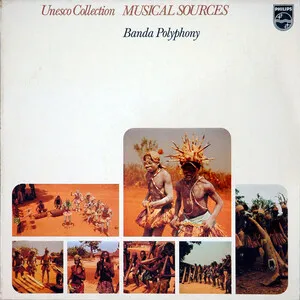
Banda is the traditional music of the Banda peoples of the Central African Republic and adjacent regions of the central Sudano–Congolese belt. It centers on communal performance—singers, dancers, and instrumentalists creating interlocking parts that are woven together through call-and-response and polyrhythm.
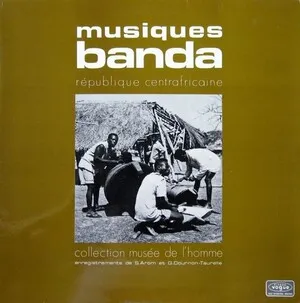
Characteristic timbres include ensembles of natural horns (notably among Banda-Linda groups) that perform single-note hocketing to build complex melodic textures, wooden slit-drums used for rhythm and communication, frame and barrel drums, rattles, handclaps, transverse and end-blown flutes, and lamellophones (sanza/likembe). Vocal music ranges from antiphonal work and dance songs to ceremonial chants, often supporting life-cycle rituals, healing, hunting, and communal celebrations.
Melodically, Banda repertoires commonly employ pentatonic and heptatonic pitch collections, while rhythmically they favor layered ostinati in compound meters (e.g., 12/8) and additive patterns. The music functions as living social practice, binding community, marking identity, and conveying oral history.
History
Banda musical practices predate colonial contact and were integral to social life across what is now the Central African Republic, as well as neighboring parts of Chad, South Sudan, Cameroon, and the Democratic Republic of the Congo. Music served as a medium for communication (slit-drum signaling), ritual (initiation, healing, spirit veneration), and collective work and festivity.
European and later African scholars and recordists in the late 19th and 20th centuries began describing and recording Banda ensembles. Among the most studied are Banda-Linda horn orchestras, whose interlocking single-note parts create striking, polyphonic hocket textures—an emblematic Central African contribution to the global understanding of polyphony and ensemble coordination.
Colonial rule, missionization, and labor migrations altered performance contexts. Some ritual repertoires declined or were adapted to new settings, while dance and entertainment genres expanded. Instruments and performance practice persisted but increasingly coexisted with imported instruments and pan-African popular styles.
After independence (1960), national cultural festivals, schools, and state ensembles showcased Banda music alongside other Central African traditions. Field recordings released by labels and archives introduced Banda repertoires—especially horn and drum ensembles—to international audiences and ethnomusicology classrooms, helping codify analytical frameworks for Central African polyrhythm and hocketing.
Today, Banda music remains community-based, performed at village and town ceremonies, harvests, and social events. Younger generations also adapt Banda rhythmic cells, call-and-response structures, and timbres (horns, flutes, sanza patterns) into contemporary fusions with global “world music,” African popular genres, and experimental electronic work. Despite modernization pressures, the music continues to function as a living index of identity, history, and social cohesion.

%2C%20Cover%20art.webp)