Your digging level
Description
Musica aguascalentense refers to the contemporary popular and dance-music scene of the Mexican state of Aguascalientes. It blends central-Mexican cumbia and grupera with nearby Bajío and Zacatecas brass traditions (especially tamborazo), plus norteño–sax and banda instrumentation. The result is a highly danceable, festive sound that thrives at ferias, bailes, quinceañeras, and neighborhood fiestas.
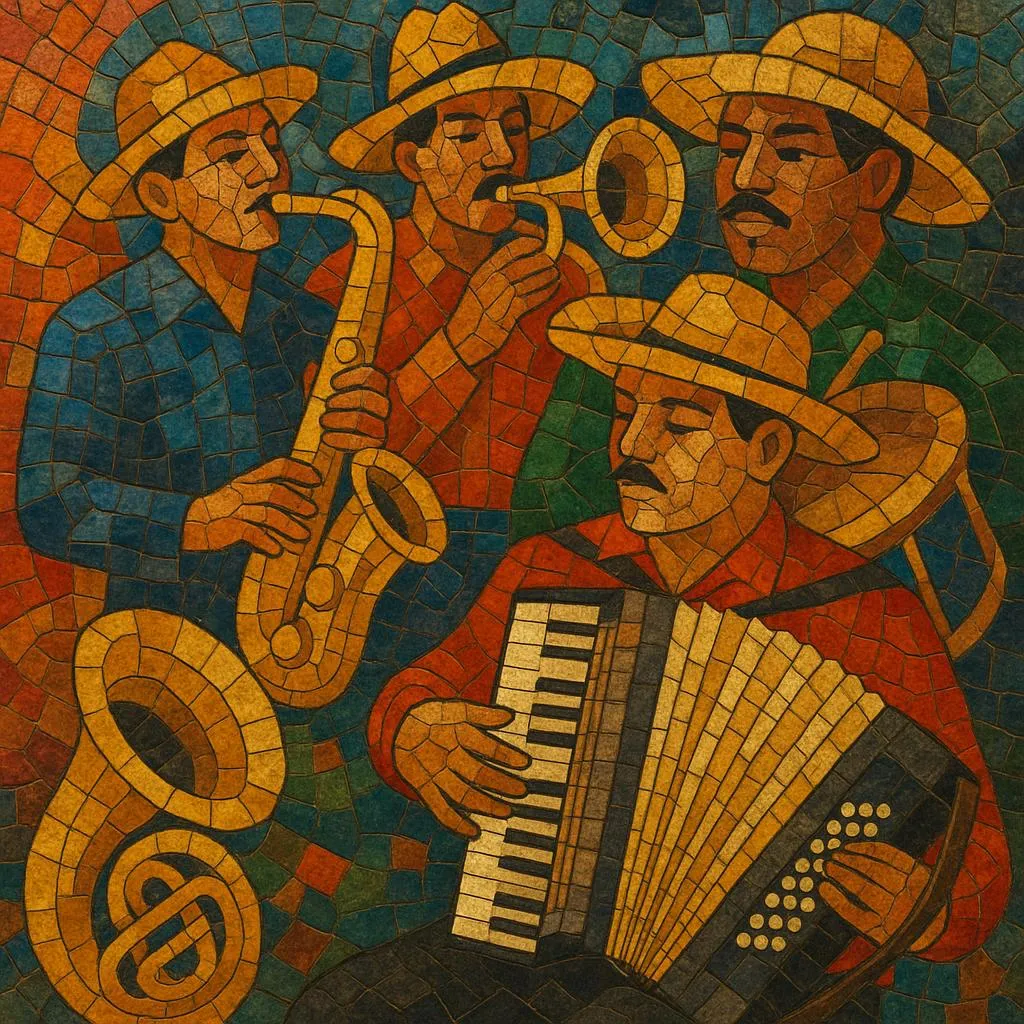
Hallmarks include steady cumbia and quebradita grooves; bright brass (trumpets, trombones, tuba) or sax/accordion leads; and a prominent keyboard line inherited from 1990s technocumbia and grupera. Repertoire ranges from romantic, melodramatic canciones and corridos bailables to humorous or party-oriented cumbias, often with local references ("Hidrocálido/a", Feria de San Marcos, Calvillo, Jesús María).


History
Aguascalientes sits at a musical crossroads in the Bajío. Brass-driven tamborazo from neighboring Zacatecas, mariachi and banda from Jalisco and Sinaloa, and the nationwide rise of cumbia and grupera all reached local dance floors in the late 1970s and 1980s. Local conjuntos and bailes began to standardize a regional, party-first sound.
The 1990s grupera and technocumbia boom provided the template: keyboards, electric bass, congas/güiro, and romantic lead vocals over cumbia or quebradita rhythms. Parallel to this, banda/tamborazo lineups (trumpets, trombones, tarola, tambora, tuba) anchored outdoor ferias and patron-saint festivities, especially around the Feria Nacional de San Marcos, giving the scene a reliable stage and audience.
Norteño–sax (accordion or sax front lines) strengthened ties to central/northern styles (San Luis Potosí, Zacatecas, Guanajuato). DJs and sonidero culture amplified cumbia remixes and extended versions at neighborhood parties. Lyrics foregrounded everyday life, love/heartbreak, and the festive identity of the “Hidrocálido/a.”
Streaming and low-cost recording brought a surge of independent bands and singers who fuse classic cumbia/grupera with banda-brass stabs, EDM-lite percussion, or pop-rock hooks. The local scene remains live-centered—weddings, quinceañeras, jaripeos—but increasingly documented on social platforms, playlists, and local radio, sustaining a recognizable Aguascalientes flavor within the broader umbrella of Regional Mexicano.

Best playlists