Your digging level

For this genre
0/8
🏆
Sign in, then listen to this genre to level up

Description

Tamborazo (often called tamborazo zacatecano) is a traditional brass-and-percussion dance music from the state of Zacatecas in north‑central Mexico.

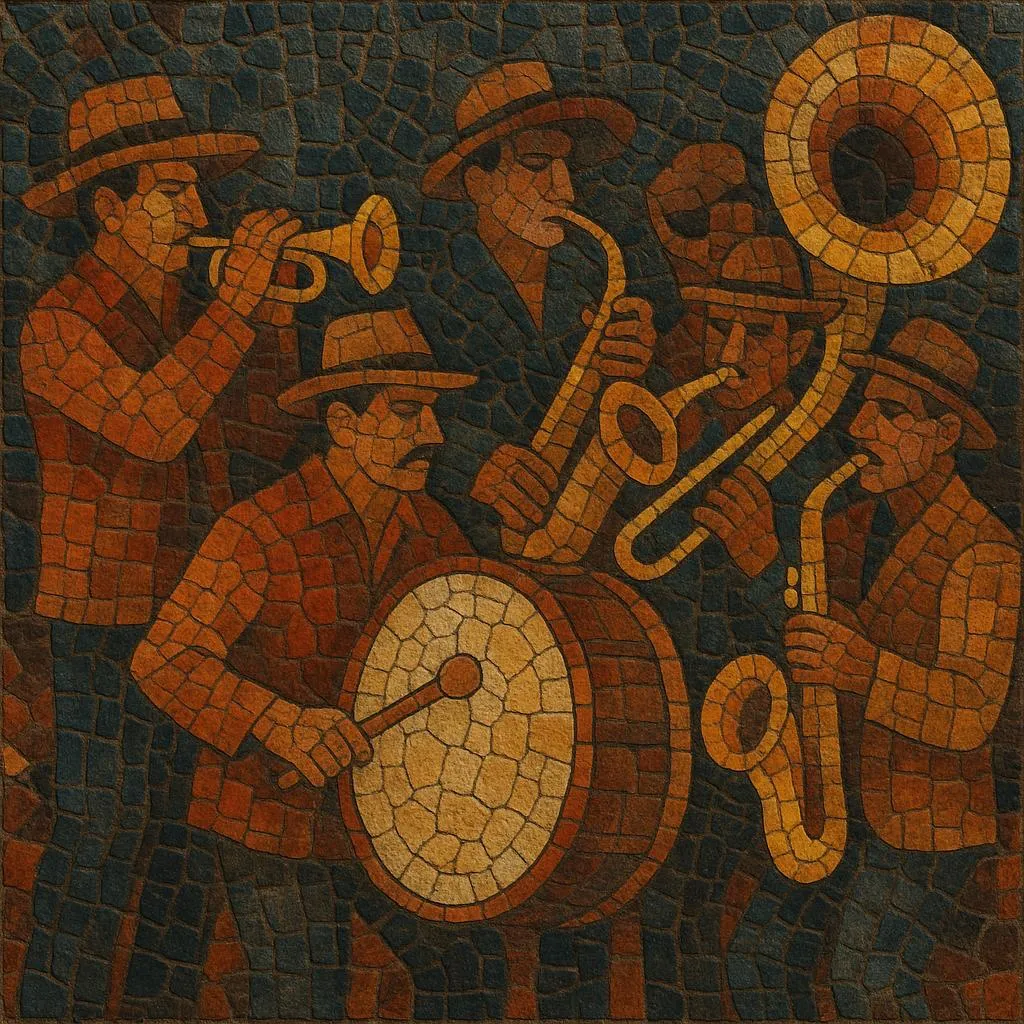
Characterized by a powerful drum section (snare/“tarola” and bass drum with cymbals) driving bright, unison or parallel-harmony brass melodies (trumpets, trombones, saxophones) over tuba/sousaphone oom‑pah bass lines, tamborazo favors lively duple-meter polkas, brisk marches, and festive sones, alongside sentimental waltzes and rancheras. It is typically instrumental and performed for outdoor fiestas, patron-saint festivities, charreadas, processions, and street parades.

Compared with Sinaloan banda, tamborazo is leaner and more percussive, generally with fewer woodwinds (often no clarinets), a punchier battery, and straightforward, crowd-leading arrangements designed for dancing and communal celebration.


Sources: Spotify, Wikipedia, Discogs, Rate Your Music, MusicBrainz, and other online sources

History

Roots (late 19th century)

Tamborazo grew from the meeting of Mexican rural dance traditions with European military and civic band practices that spread throughout Mexico in the 19th century. In Zacatecas—particularly around Jerez de García Salinas—village and regimental brass ensembles adapted polkas, marches, and waltzes to local festivities. The emphatic drum battery that gives the style its name (tamborazo ≈ “big drum sound”) became a defining feature in this high‑plateau region.

Local consolidation (early–mid 20th century)

Through the 1910s–1950s, community bands standardized the instrumentation: trumpets, trombones, saxophones, tuba/sousaphone, snare (tarola), and bass drum with mounted cymbals. Repertoires mixed imported European forms with Mexican genres (rancheras, sones, corridos), arranged for outdoor projection and participatory dancing. Ensembles played at fairs, religious processions, and civic events, cementing the style as a sonic emblem of Zacatecas.

Public identity and recordings (late 20th century)

From the 1970s onward, noted Zacatecan tamborazos recorded regional hits and toured within Mexico and among Zacatecan diaspora communities in the United States. Local traditions like Jerez’s Sábado de Gloria carnival further amplified the style’s visibility, while streamlined, percussion‑forward arrangements distinguished tamborazo from the fuller, clarinet‑heavy Sinaloan banda.

Contemporary practice (21st century)

Today, tamborazo remains a living folkloric and popular practice: ubiquitous at fiestas and patronales, performed by professional, semi‑professional, and youth ensembles. Its drum‑driven brass sound continues to influence broader Regional Mexicano offshoots and to symbolize Zacatecan identity at home and abroad.

How to make a track in this genre

Instrumentation and texture
•   Core rhythm battery: snare (tarola) articulating crisp rudiments and off‑beats; bass drum with mounted cymbals marking the downbeat and crashes. Keep the drums prominent and propulsive. •   Brass: 2–3 trumpets carry the tune (often in unison or parallel 3rds/6ths), 1–2 trombones and/or alto/tenor saxes provide inner harmony and fanfares. •   Bass: tuba/sousaphone plays steady oom‑pah (I–V alternation) in duple meter, or a lilting 3/4–6/8 bass for waltzes/sones.
Rhythm and forms
•   Tempi: polkas/marches at ~120–140 BPM; waltzes at ~80–100 BPM; sones can sit in compound feels. •   Meters: predominantly 2/4 (polka/march), 3/4 (vals), occasional 6/8 for certain sones. •   Forms: short intro fanfare → A (melody) → A’ (embellished or harmonized) → B (secondary tune) → breaks/callbacks. Aim for 2–4 minute, dance‑oriented cues with clear cadences.
Harmony and melody
•   Keys: brass‑friendly flats (Bb, Eb, Ab). Harmonize melodies in 3rds/6ths; use simple diatonic progressions (I–IV–V; occasional ii–V). Modulations up a whole step for lift are common. •   Melodic style: bright, singable contours; short antecedent–consequent phrases; end phrases with cadential hits matched by the drums.
Groove and articulation
•   Tarola patterns alternate straight polka backbeats with rudimental flourishes leading into brass hits. Bass drum anchors beat 1; cymbal chokes accent cadences. •   Brass articulations are crisp and staccato for polkas; employ trombone glissandi and trumpet mordents for flair. Leave small drum fills between phrases to cue dancers.
Repertoire and performance practice
•   Arrange regional polkas, rancheras, corridos, sones, and waltzes for your ensemble; keep melodies out front and the drum battery loud and festive. •   Performance is typically instrumental; if vocals are used, treat them as brief crowd‑lead interjections rather than the focus. •   Prioritize portability and projection for outdoor settings; balance so drums and tuba never get buried by the trumpets.

Top tracks

Locked
Share your favorite track to unlock other users’ top tracks
Influenced by
Has influenced
Challenges
Digger Battle
Let's see who can find the best track in this genre

Download our mobile app

Get the Melodigging app and start digging for new genres on the go
© 2026 Melodigging
Melodding was created as a tribute to Every Noise at Once, which inspired us to help curious minds keep digging into music's ever-evolving genres.
Buy me a coffee for Melodigging