Your digging level
Description
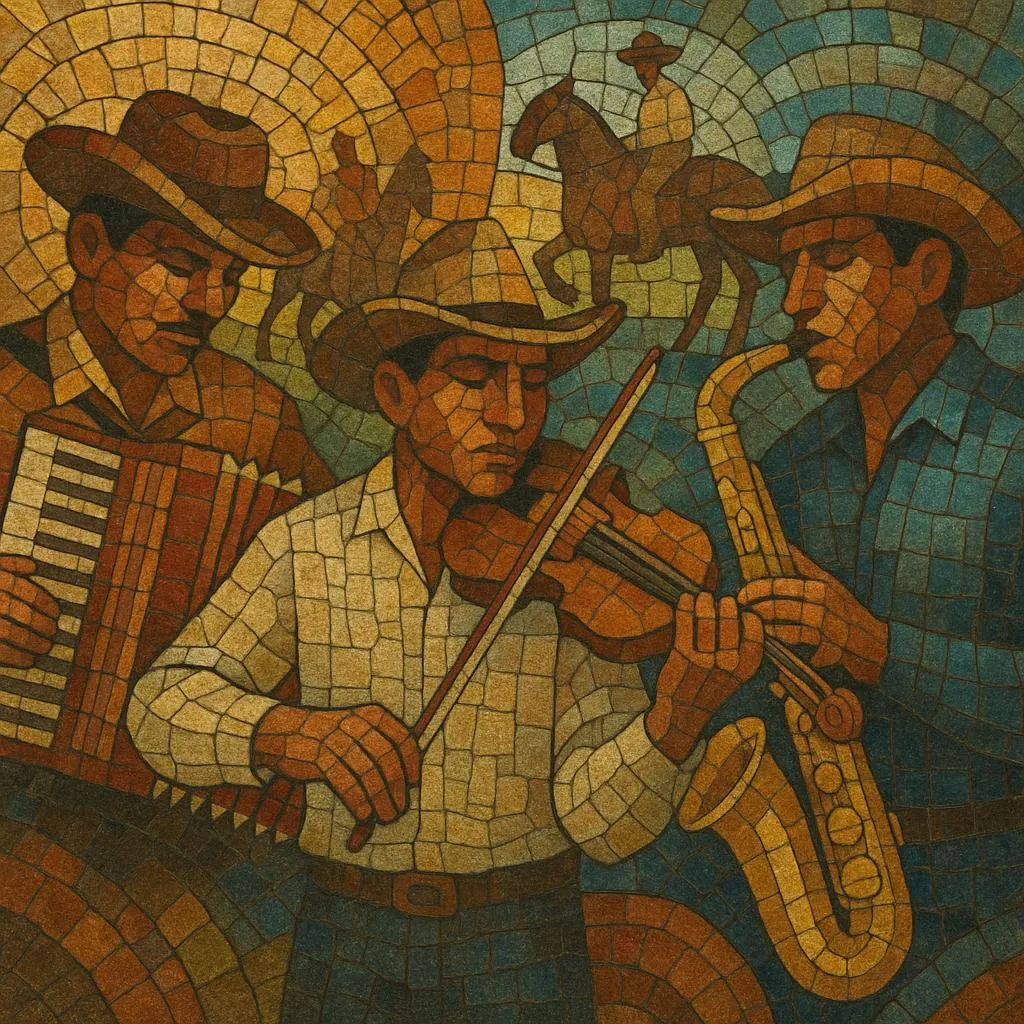
Música potosina refers to the regional Mexican music made in and around the state of San Luis Potosí, Mexico, blending the accordion- and sax-led norteño sound of the Altiplano and Zona Media with the violin-driven huapango (son huasteco) from the Huasteca Potosina.
At dances, jaripeos, and fiestas patronales you will hear brisk polkas, rancheras, corridos, and schottisches performed by conjunto norteño or norteño-sax lineups, alongside the falsetto vocals, virtuosic violin, and syncopated zapateado rhythms of trío huasteco ensembles. The lyrical themes span rural pride, horses and jaripeo culture, love and heartbreak, community history, and locally rooted corridos about people and places of the state.
Over the decades, the scene has also nurtured romantic grupera ballads and cross-pollinated with neighboring tamborazo and mariachi traditions, giving música potosina a distinct mix of dance-floor energy, melodic sentiment, and strong regional identity.
History
San Luis Potosí sits at the crossroads of multiple musical geographies: the Huasteca region in the east (home to son huasteco/huapango) and the northern/central plateau where European social dances (polka, schottische, redova) fused with local string and later accordion traditions. By the early 20th century, trío huasteco ensembles (violin, jarana huasteca, quinta huapanguera) and cantadores were already active in the Huasteca Potosina, while string bands and brass groups animated town plazas across the Altiplano and Zona Media.
From the 1940s onward, radio and regional labels helped codify a potosino sound rooted in two parallel currents:
• Conjunto norteño and later norteño-sax (accordion plus alto/tenor sax) playing fast polkas, corridos, rancheras, and cumbias for community dances. • Trío huasteco groups popularizing huapango across the state with soaring falsetto singing, improvisatory violin, and driving ternary rhythms for zapateado.Festivals, jaripeo circuits, and local ferias (e.g., in Rioverde, Ciudad Valles, Tamazunchale) kept both currents thriving, while musicians freely borrowed repertoire and style elements from neighboring Zacatecas (tamborazo) and the broader grupera and mariachi spheres.
Since the 1990s, música potosina has encompassed a wide palette: romantic grupera ballads, norteño-sax dance sets, contemporary corridos, and traditional huapangos often share the same bill. Recording studios in the capital and regionally in the Huasteca helped document local corridos and dance sets, while digital platforms expanded reach beyond the state.
Today the scene remains community-driven: town fiestas, jaripeos, and family events still anchor demand, while younger musicians blend classic norteño instrumentation, huapango technique, and modern production aesthetics, keeping the potosino identity audible in both traditional and contemporary formats.