Your digging level

For this genre
0/8
🏆
Sign in, then listen to this genre to level up

Description

Pasodoble is a fast, duple‑meter (2/4) march‑like music and its corresponding two‑step couple dance. It originated as a double‑time military march and later became a distinct Spanish popular genre.

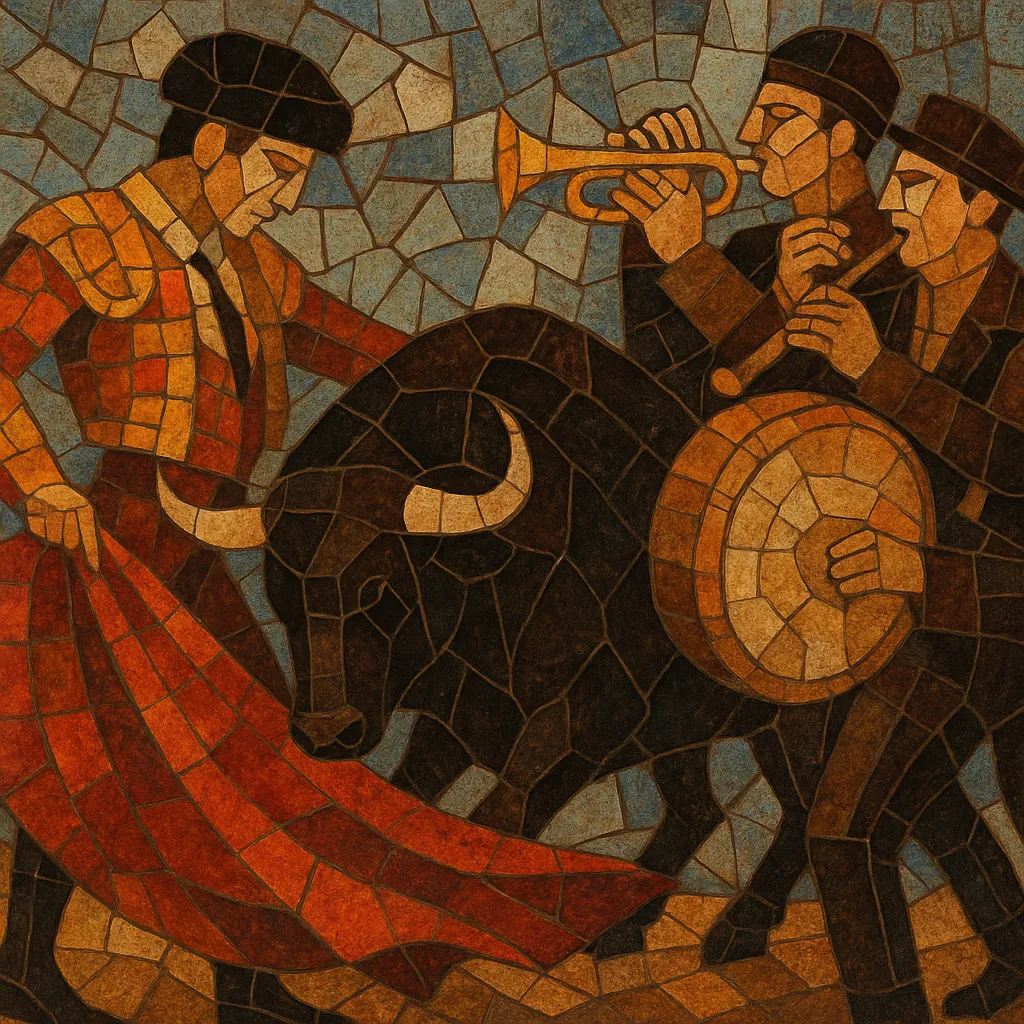
Typically performed by brass and wind bands with crisp snare drum patterns, pasodobles move at about 120–132 beats per minute (historically aligning with 120 infantry steps per minute). Over the 19th and early 20th centuries it separated from purely military use and became strongly associated with bullfighting, where it accompanies ceremonial entries and dramatic moments in the ring.

Musically, pasodobles favor clear, fanfare‑like melodies, major keys with Iberian modal color (occasional Phrygian cadences), dotted rhythms, and sharply accented downbeats. In dance and festival contexts, phrases are structured to cue dramatic poses and crowd responses.

Sources: Spotify, Wikipedia, Discogs, RYM, MB, user feedback and other online sources

History

Origins (18th century)
•   The immediate ancestor of pasodoble was the French pas redoublé, a brisk double‑time infantry march in the 18th century. Its tempo standardized around 120 steps per minute for coordinated troop movement.
Adoption in Spain (19th century)
•   French double‑time practice entered Spanish military band repertoire, where it took on Spanish melodic turns and ornamental figures. The name paso doble (double step) reflects both tempo and the feel of two marching steps per beat. •   Outside barracks and parades, the style appeared in civic celebrations and popular theater. Zarzuela (Spanish operetta) frequently featured pasodobles, accelerating their transition from military function to public entertainment.
Bullring and popular culture (late 19th–early 20th century)
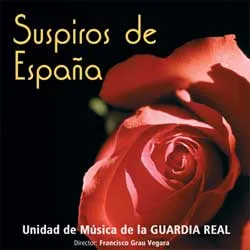
•   By the late 19th century, pasodobles were the signature sound of bullfighting spectacles, used for the paseo (grand entry) and to heighten climactic moments. Iconic concert pasodobles emerged: Suspiros de España (1902, Antonio Álvarez Alonso), Gallito (1905, Santiago Lope), El Gato Montés (1916 pasodoble from Manuel Penella’s opera), Amparito Roca (1925, Jaime Teixidor), and España cañí (c. 1923–1925, Pascual Marquina Narro). •   Brass and wind bands (especially in Valencia and Murcia) became the idiomatic medium, and the style spread through festivals and processions across Spain.
Global spread and ballroom codification (20th century)
•   Through migration, recording, and touring bands, pasodoble traveled to Latin America (e.g., Mexico’s banda and mariachi ensembles) and the Philippines. Regional bands incorporated local instrumentation while preserving the march‑dance identity. •   In mid‑20th‑century ballroom, Paso Doble was standardized as an International Latin competitive dance, with music retaining 2/4 meter and ~120–132 BPM, and choreographies emphasizing dramatic, march‑derived phrasing.
Today
•   Pasodoble remains a staple of Spanish band culture, bullrings, fiestas, and parades, and endures globally via ballroom, wind‑band repertory, and Latin American brass traditions.

How to make a track in this genre

Meter, tempo, and groove
•   Use 2/4 meter at 120–132 BPM. Keep a firm, march‑like feel with a strong, accented downbeat and a crisp, lighter second beat. •   Percussion drives the style: snare drum (rolls and ruffs), bass drum on downbeats, and cymbal crashes for cadential emphasis.
Form and phrasing
•   Common layout: a short fanfare‑style introduction (llamada), a primary march theme (paseo), and a contrasting strain (often brighter or in a nearby key). Shape 8‑ or 16‑bar phrases to cue dance “highlights.” •   Include dramatic holds or breaks that allow dancers (or the bullring ceremony) to strike poses; resume with a snare roll pickup.
Harmony and melody
•   Favor major keys, straightforward functional harmony (I–IV–V) with colorful Spanish inflections: Phrygian‑flavored cadences (e.g., bII–I or IV–bII–I) and lowered second scale degree in melodic turns. •   Write bold, singable, fanfare‑like melodies with dotted rhythms, anacruses (pickups), and ornamental grace notes. Parallel thirds/sixths in winds can add Iberian color.
Orchestration
•   Brass and winds are idiomatic: trumpets/cornets for the lead, clarinets/saxophones for countermelody and inner lines, low brass for robust bass and offbeat punctuations. Add piccolo/flute for brilliance. •   Percussion should articulate transitions (snare rolls into cadences) and reinforce accents at phrase endings.
Dance and dramatic cues
•   Align musical peaks every 8 counts for ballroom Paso Doble figures; provide brief fermatas or sforzandi for dramatic shaping. •   If adding vocals (less common), lyrics often praise locales, festivals, or toreadors; keep lines syllabic and rhythmically aligned to the march pulse.

Best playlists

Top tracks

Locked
Share your favorite track to unlock other users’ top tracks

Related labels

Upcoming concerts

in this genre
Influenced by
Has influenced

Download our mobile app

Get the Melodigging app and start digging for new genres on the go
© 2026 Melodigging
Melodding was created as a tribute to Every Noise at Once, which inspired us to help curious minds keep digging into music's ever-evolving genres.
Buy me a coffee for Melodigging