Your digging level
Description
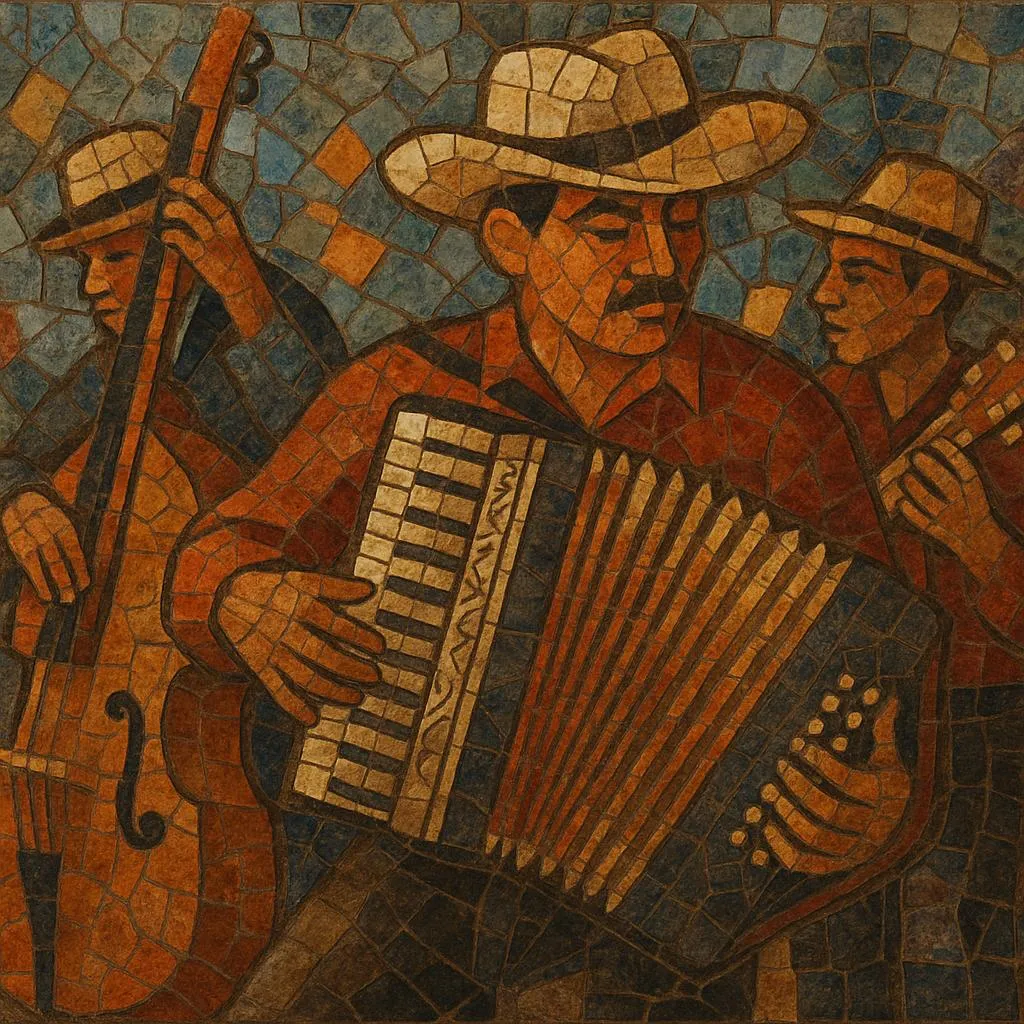
Conjunto is a borderlands dance music that blends traditional Mexican song forms with Central‑European dance rhythms (especially the polka), typically performed by small, working‑class ensembles. In its Mexican/Texas form, it is defined by the bright, reedy diatonic button accordion paired with the basso‑rich bajo sexto, driving bass, and a danceable two‑step groove.
The word conjunto (“ensemble”) also names a Cuban format developed for son cubano in the 1930s–40s, where septetos were expanded with trumpets, piano, and conga to power the son‑montuno style that later fed directly into salsa. Thus, “conjunto” can mean: 1) the Tex‑Mex/Mexican accordion music grounded in polkas, rancheras, and corridos, and 2) the Cuban son conjunto ensemble that became a backbone of modern salsa.
History
German, Czech, and Polish immigrants brought the diatonic accordion and social dance forms (polka, waltz, schottische, mazurka) to northern Mexico and South Texas in the late 19th and early 20th centuries. Mexican and Tejano musicians embraced these instruments and rhythms, marrying them to local song types such as rancheras and corridos. By the 1920s–30s, the classic small conjunto—centered on accordion and bajo sexto—had coalesced.
Pioneers such as accordionist Narciso Martínez (with bajo sexto player Santiago Almeida) made influential recordings in the mid‑1930s that standardized the virtuosic accordion lead with a rhythmic, bass‑reinforcing bajo sexto. Valerio Longoria later added vocals and boleros, while Tony de la Rosa modernized the dance pulse with a steadier, amplified beat. Conjunto became the sound of cantinas, community dances, and radio across the borderlands.
Independently, in late‑1930s Cuba, Arsenio Rodríguez expanded the son septeto into the conjunto format (multiple trumpets, tres, piano, conga, bongo, bass), emphasizing the montuno section, call‑and‑response coros, and tumbao bass. This powerful, brassy son conjunto sound directly seeded 1960s–70s salsa via Havana and then New York (e.g., Conjunto Casino, Conjunto Chappottín), even as the Mexican/Texas conjunto followed its own path.
From the 1960s onward, Tex‑Mex conjunto artists such as Flaco Jiménez and Esteban “Steve” Jordan globalized the style, crossing into country, rock, and roots circuits while keeping the dance‑hall essence intact. Meanwhile, the Cuban conjunto lineage flowed into salsa and later timba. Today, conjunto remains a living tradition at festivals, family gatherings, and dance halls, with regional scenes in Mexico, Texas, and beyond, and with active dialogue between heritage performance and contemporary production.