Your digging level
Description
Música chihuahuense refers to the regional popular music associated with the Mexican state of Chihuahua, especially the sax-forward branch of norteño ensemble music that flourished along the Chihuahua–Texas border.
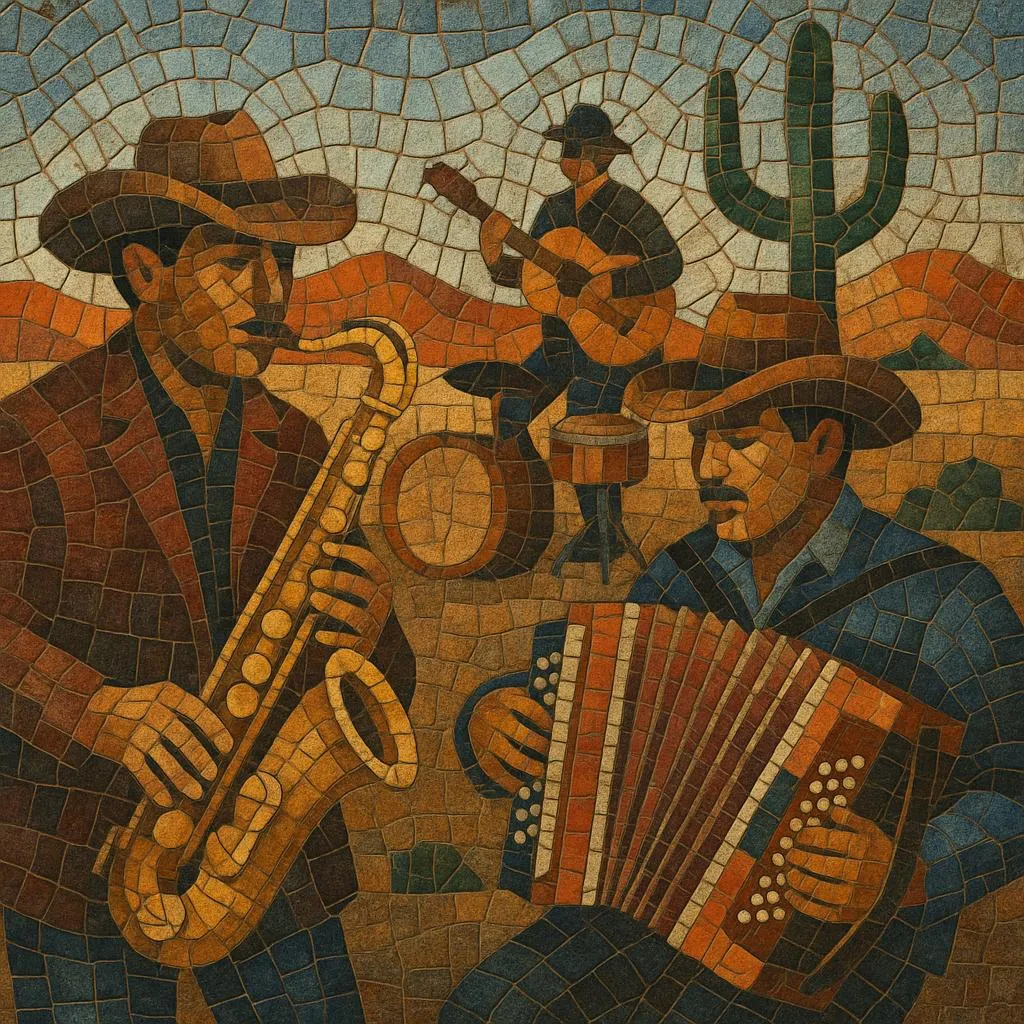
Characterized by dance-meter polkas (2/4), schottisches and redovas, lilting waltzes (3/4), and corridos with vivid border storytelling, it typically features a frontline of alto/tenor saxophone paired with accordion over bajo sexto, electric (or earlier tololoche) bass, and trap drums. The sound is bright, driving, and highly danceable, yet it also embraces romantic ballads with rich harmonized melodies.
The style reflects Chihuahua’s frontier life—railroads, migration, desert landscapes, and binational exchange—melding European-derived dance forms, local mestizo traditions, and the border city club circuit centered on Ojinaga, Delicias, Camargo, and Ciudad Juárez.
History
Chihuahua’s musical foundations were shaped by European immigrant dances (polka, redova, mazurka, waltz) transmitted through northern Mexico and the U.S. borderlands. Brass and reed timbres, heard in community bands and bailes, filtered into local ensembles. Corrido tradition took deep root, narrating frontier life, ranching, railways, and cross-border commerce.
While accordion–bajo sexto conjuntos had long been active across the north, Chihuahua’s bands increasingly foregrounded the saxophone as a melodic partner to the accordion. In border hubs such as Ojinaga and Ciudad Juárez, working dance groups codified the bright, percussive sax lead riding atop polkas, chotís, and waltzes. This developing sound—lighter than brass banda yet punchier than pure accordion duos—became a local hallmark.
Groups formed or consolidated by Chihuahuan musicians—most famously Conjunto Primavera and Los Rieleros del Norte—brought the Chihuahuan aesthetic to Mexican and U.S. charts. Their repertoire balanced romantic canciones, huapangos, and corridos, often arranged with parallel sax/accordion lines and crisp drum backbeats. The period cemented the identity of música chihuahuense in the broader Regional Mexicano ecosystem and popularized what many listeners recognize as “norteño sax.”
Since the 2000s, Chihuahuan acts have interacted with neighboring currents—norteño-banda textures, cumbia inflections, and contemporary corrido aesthetics—while keeping dance-floor polkas and heartfelt waltzes central. Streaming and binational touring (West Texas, New Mexico, and beyond) have sustained the style’s audience, and newer ensembles maintain the sax-led identity that listeners associate with Chihuahua’s border sound.