Your digging level
Description
Tololoche is a strand of Regional Mexican music distinguished by its use of the tololoche—an acoustic, gut/nylon‑strung upright bass smaller than the orchestral contrabass—played with pronounced, percussive slap and walking lines.
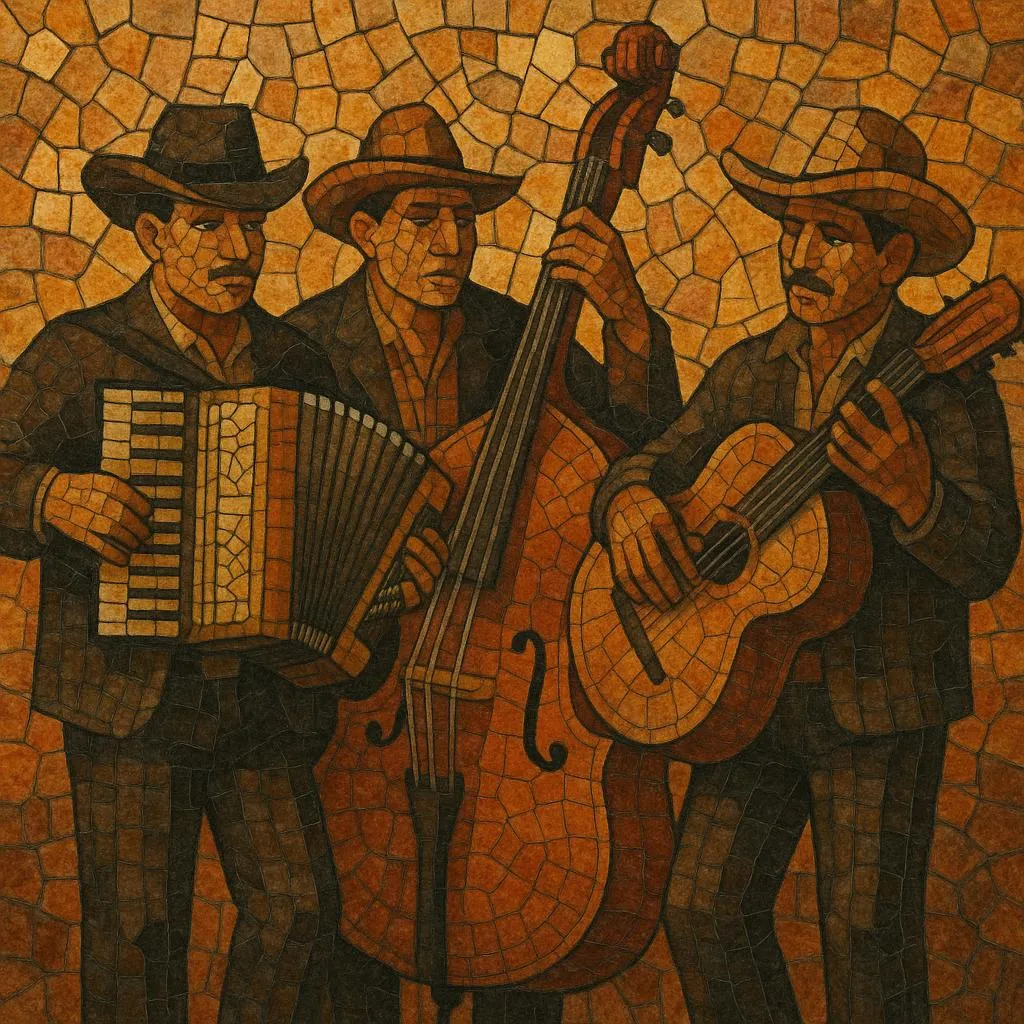
Typically heard in early norteño/campirano trios and quartets, the ensemble pairs accordion and bajo sexto with the tololoche, and sometimes a light snare (tarola). Repertoires center on polkas (2/4), waltzes (3/4), rancheras, and corridos, with brisk dance tempos and narrative lyrics about rural life, romance, travel, and bravado.
The sound is earthy, resonant, and highly rhythmic: the tololoche’s slap articulations supply the backbeat while its walking bass outlines harmony, giving the music its unmistakable bounce.
History
The tololoche instrument traces to European contrabass/violone traditions brought to northern Mexico, adapted into a smaller, portable bass with gut or nylon strings. By the early 20th century, rural ensembles across Nuevo León, Tamaulipas, and Coahuila paired accordion and bajo sexto with tololoche to accompany local dances (polka, schottische, waltz), creating a distinctly acoustic norteño/campirano sound.
Radio, 78s, and later LPs documented trios and quartets that standardized the format: accordion melody, bajo sexto harmony, and a driving tololoche bass—sometimes with a light tarola. Corridos and rancheras flourished alongside dance tunes, and the tololoche’s slap technique became a signature of the groove. Many foundational recordings of early norteño were cut with tololoche rather than electric bass.
As amplification spread, electric basses, drum kits, and larger PA systems shifted mainstream norteño toward a louder, modern profile. The tololoche never disappeared, but it became more associated with campirano, acoustic sets, and traditionalist ensembles, while the commercial scene favored electrified timbres.
In the 2010s–2020s, acoustic currents—sierreño trios, unplugged corridos, and heritage‑minded recordings—re‑centered the tololoche. Streaming and social media boosted intimate, room‑recorded performances where the instrument’s woody resonance and slap articulations read clearly. Today, the “norteño con tololoche” aesthetic coexists with electrified Regional Mexican styles, prized for its authenticity, danceability, and storytelling power.