Your digging level
Description
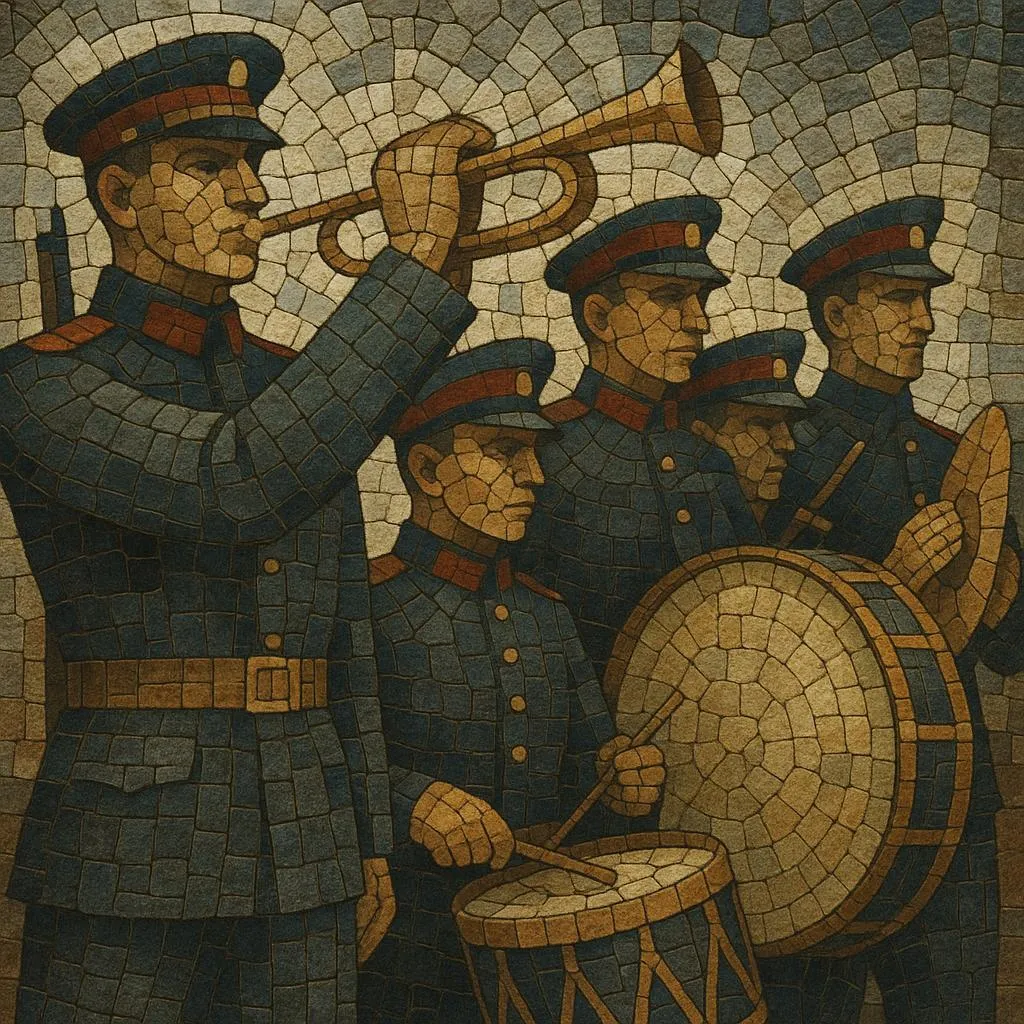
Military music (also called martial music) is music created for and used by armed forces, performed historically by professional soldiers known as field musicians and, later, by formal military bands. Its core functions include announcing events (bugle calls and fanfares), regulating movement (drum cadences for marching), signaling on the field, and marking ceremonies, parades, and commemorations.
Across cultures and eras, it has used portable, projecting instruments: drums, fifes, bugles, trumpets and other natural horns, bagpipes, cymbals, and—since the 18th–19th centuries—full wind and percussion ensembles. In battle it has been used to intimidate adversaries, bolster morale, and synchronize actions; in garrison and ceremony it codifies protocol, honors, and tradition. While much repertoire is written and standardized, some signals (particularly bugle calls and drum beats) have long been taught and transmitted by ear and memory.
History
Military use of sound goes back to antiquity, but the modern, recognizable traditions coalesced between the 1500s and 1700s. European infantry adopted fifes and side drums to signal maneuvers and regulate march pace; cavalry used natural trumpets and kettledrums. In the Ottoman Empire, the Janissary mehter (Mehterhâne) established one of the earliest organized state military bands, whose loud shawms, kettledrums, and cymbals profoundly influenced European taste for brilliant, martial sonorities.
As nation‑states professionalized their armies, military music gained fixed functions and repertories. Bugle calls were codified to signal daily routines and battlefield orders; ceremonial fanfares marked sovereign and regimental occasions. The emergence of large wind bands (with brass, woodwinds, and percussion) enabled parade marches, slow marches, and concert works for military settings. Composers such as Wilhelm Wieprecht in Prussia systematized band scoring; later, march masters (e.g., John Philip Sousa, Kenneth Alford, Karl King, Henry Fillmore) produced repertory that still defines the idiom.
World wars expanded the role of military bands in morale, recruitment, and commemoration. Radio and recording spread their sound worldwide, while drill and precision marching evolved into highly disciplined displays. Many countries established premier service ensembles (army, navy, air force, guards) with full-time professional musicians. At the same time, field signaling via bugle and drum persisted for protocol and tradition, even as electronic communications supplanted them tactically. Today, military music remains central to state ceremony, remembrance, international tattoos, and cultural diplomacy, while its musical language—duple meter, clear fanfare themes, and prominent percussion—continues to shape public ideas of the martial style.
Military music adapts to local instruments and traditions: Scottish and Irish pipe bands within British and Commonwealth regiments; Balkan and Central European brass traditions; French Garde Républicaine; Russian and Chinese central military bands; and Middle Eastern units retaining zurna/naqqāra lineages. Despite regional color, the functional core—signal, cadence, and ceremony—remains shared.