Your digging level
Description
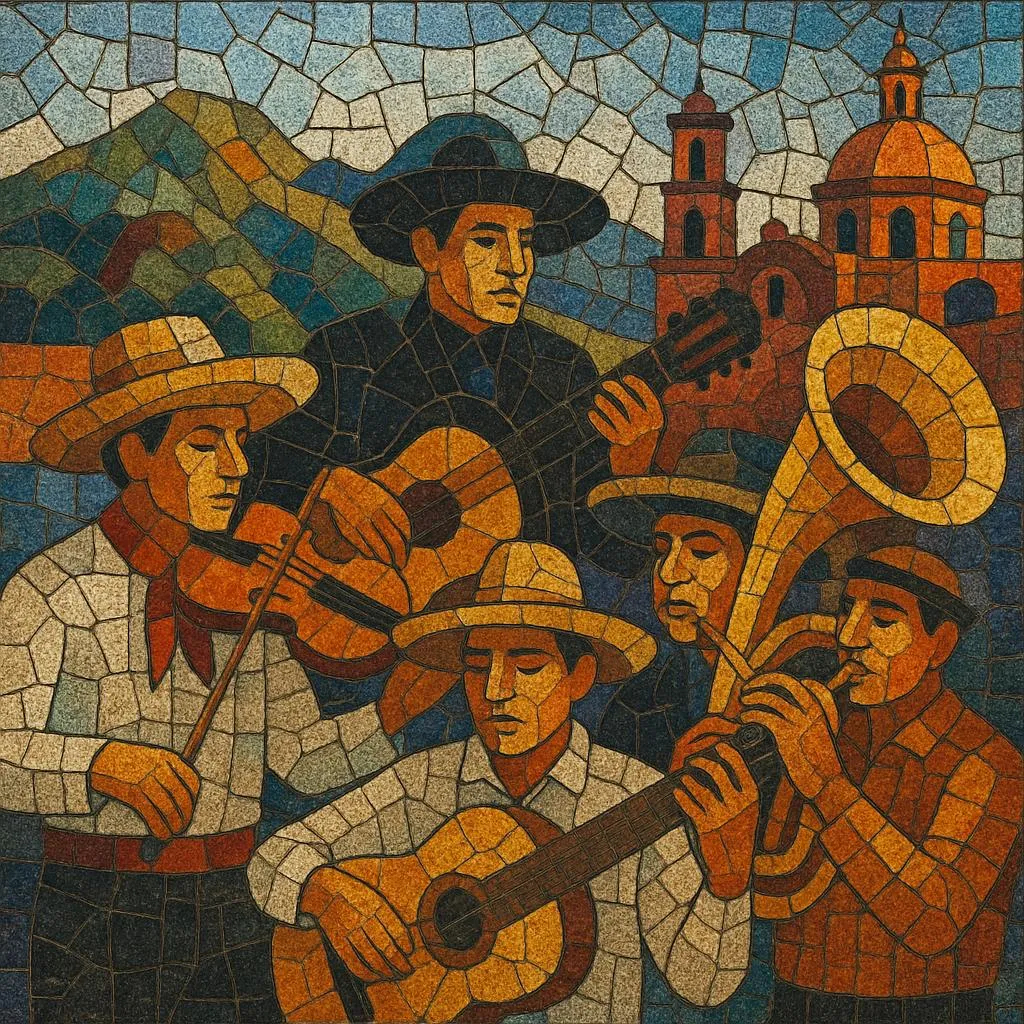
Música queretana refers to the constellation of traditional and popular styles practiced in the Mexican state of Querétaro. It brings together Sierra Gorda huapango/son arribeño trios, wind bands (bandas de viento), mariachi and ranchera repertoires, corridos and polkas/waltzes for fiestas patronales, as well as urban rondallas and estudiantinas linked to local schools and universities.
At its core are string-driven forms (violin, jarana huasteca, quinta huapanguera) that use sesquiáltera (the 6/8–3/4 cross‑rhythm) and poetic verse contests, alongside brass‑led banda arrangements for processions and dances, and romantic guitar choirs (rondallas) that color city serenades. The result is a lively, participatory musical culture that moves between rural fandangos and urban serenatas while maintaining a distinctly queretano identity.
History
Querétaro sits at the crossroads of central‑Mexican musical routes. Rural communities in the Sierra Gorda cultivated huapango/son arribeño traditions—string trios with improvised décimas and sesquiáltera—while town plazas hosted bandas de viento playing marches, polkas, and waltzes learned from military and civic band practice.
The spread of radio and 78/LP recordings popularized ranchera, corridos, and mariachi repertory locally, and school‑based ensembles (rondallas and estudiantinas) flourished in Santiago de Querétaro, bringing multi‑guitar serenades and boleros to patios and public events. Wind bands consolidated as municipal/state institutions supporting civic ceremonies.
Querétaro’s musicians interacted constantly with neighboring states (Hidalgo, Guanajuato, San Luis Potosí), reinforcing huasteco/arribeño repertoires while absorbing norteño‑sax and cumbia/sonidero dance currents for weddings and ferias. The corrido remained a vehicle for local storytelling, and banda arrangements adapted popular ranchera and cumbia hits for community dances.
Today, música queretana spans community trios for huapango contests, university rondallas and estudiantinas, parish and municipal bandas de viento, and working dance groups covering cumbia, banda, and norteño. Cultural festivals, municipal arts programs, and local recording/streaming keep both traditional practices and modern fusions active.
Huapango/son arribeño (Sierra Gorda): write for trio (violin, jarana huasteca, quinta huapanguera). Use sesquiáltera—alternate or superimpose 6/8 and 3/4. Craft décima‑style verses (ABBAACCDDC) with improvised topical lines; feature violin falsetas between sung coplas.
•Banda de viento: arrange rancheras, polkas, waltzes, and cumbias for clarinets, trumpets, trombones, tuba, tarola (snare), and bombo (bass drum). Keep danceable two‑step/polka feels (oom‑pah) and bright, antiphonal brass voicings.
•Rondalla/estudiantina: score for multiple nylon‑string guitars, requinto, bass guitar, and voices. Favor romantic boleros, valses, and serenata repertoire with rich parallel strumming patterns, close‑harmony vocals, and call‑and‑response refrains.