

Your digging level
Description
Música guerrerense is the umbrella term for the popular and traditional music made in the state of Guerrero, Mexico. It blends several regional currents—most notably the violin‑driven son calentano of Tierra Caliente, the festive chilena of the Costa Chica (derived from Chilean cueca), rural duet singing of corridos and rancheras in the mountains and valleys, and later urban tropical/grupera bands from Acapulco and the state capital.
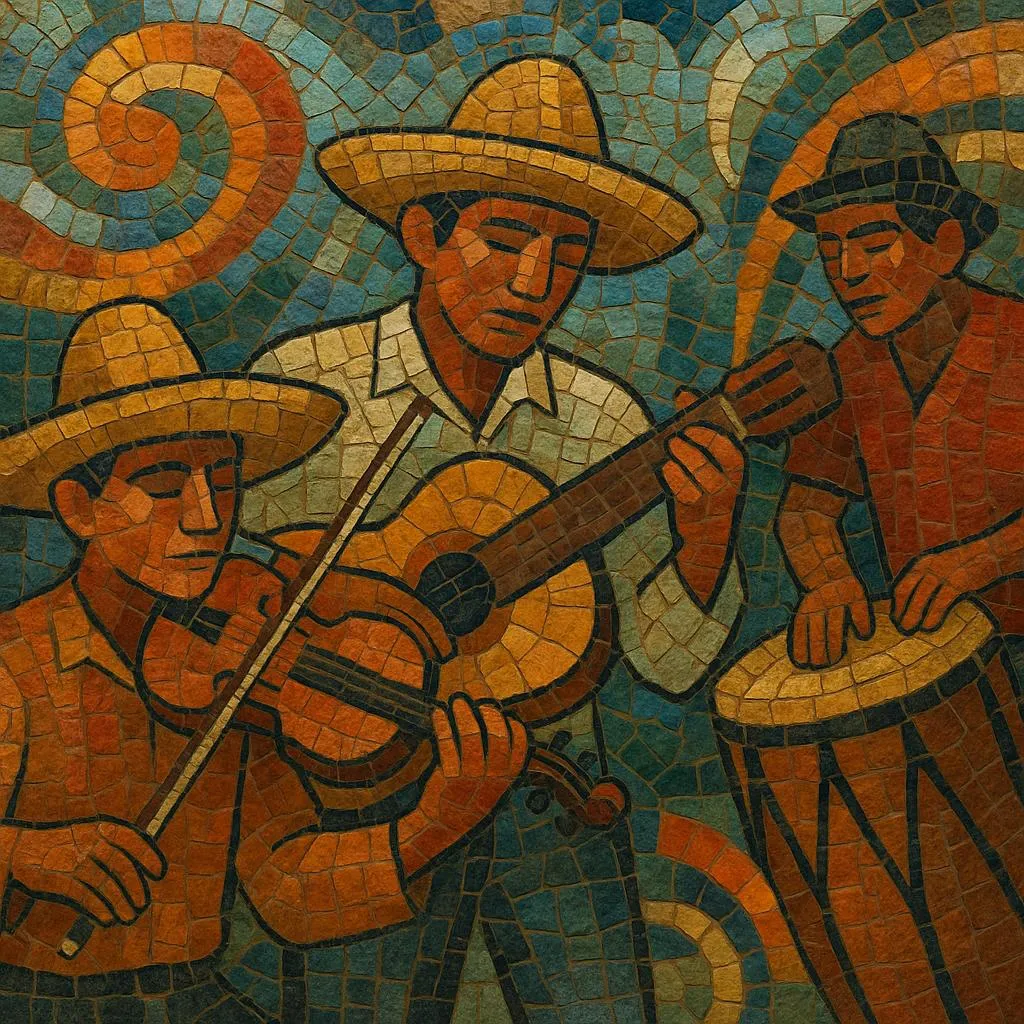
Its sonic palette ranges from small acoustic ensembles (violin, guitarra sexta or vihuela, and tamborita) that play rapid sesquiáltera (hemiola between 6/8 and 3/4), to big, keyboard‑and‑brass tropical groups that adapted cumbia and bolero to local dance floors. Lyrically, songs often celebrate local fiestas, regional places (rivers, coasts, towns), and everyday heroism, while corridos recount events and characters specific to Guerrero.
History
By the mid‑1800s, ports along Mexico’s Pacific coast were receiving Chilean sailors and repertoires. The Chilean cueca took local form as the chilena, which, together with existing regional dances and European couple forms, became a pillar of Guerrero’s coastal sound. The chilena’s buoyant rhythm, playful verses, and call‑and‑response delivery began to anchor coastal fiestas.
In the inland Tierra Caliente, small acoustic ensembles—led by virtuoso violinists with guitarra sexta/vihuela and the tamborita (small drum)—forged the fast, syncopated son calentano. This music is built on sesquiáltera (6/8 over 3/4), melodic violin improvisation, and zapateado dancing. Masters from this tradition codified extensive local repertoires of sones, waltzes, and polkas.
Through the early–mid 20th century, rural duets and trios popularized corridos, rancheras, and boleros with distinctly guerrerense accents, while marimba and string groups served civic and religious functions. Radio and records helped circulate local styles beyond the state, and touring folkloric ensembles showcased chilena and son calentano nationally.
Tourism in Acapulco and urbanization in Chilpancingo nurtured keyboard‑driven tropical bands that fused cumbia, bolero, and costeño rhythms. Grupera orchestration (electric bass, organs/synths, brass, congas/güiro) brought a dance‑band sheen to regional melodies and helped project música guerrerense across Mexico and to migrant communities in the U.S.
Today the tradition persists in parallel: folk ensembles keep son calentano and chilena repertories alive; duets and trios record corridos and rancheras with local narratives; and modern tropical/grupera acts release digital singles and perform at town fairs and diaspora dances. Contemporary productions often blend classic sesquiáltera feels with cumbia backbeats and polished pop arrangements.



