

Your digging level
Description
Tierra Caliente music is a vibrant subgenre of Regional Mexican music that originated in the hot lowlands of Michoacán, Guerrero, and Estado de México.
It is characterized by a distinctive fusion of traditional folk styles, such as the 'Conjunto de Arpa Grande', with modern Technobanda instrumentation.
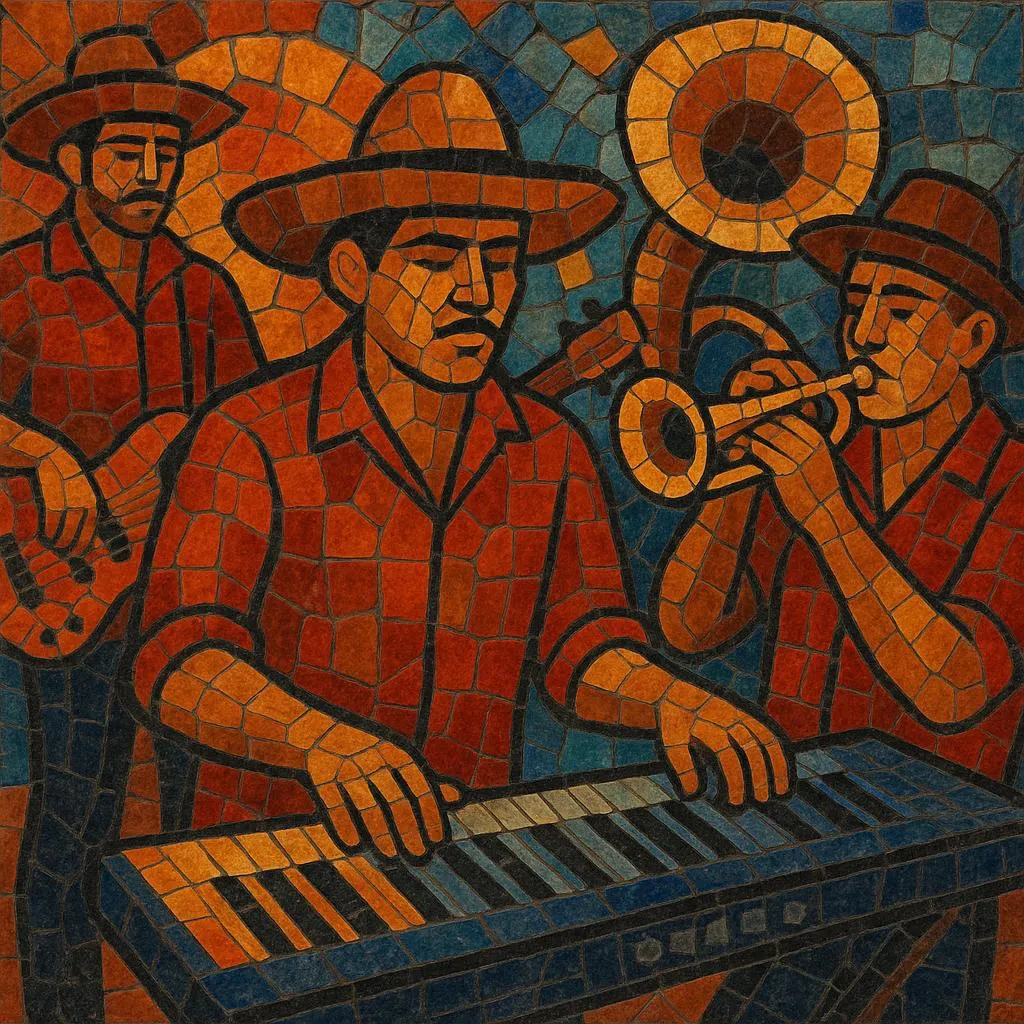
The genre is defined by the prominent use of electric synthesizers and keyboards to play fast, intricate riffs that replace the traditional harp, accompanied by electric bass, drums, and a brass section.
The repertoire typically includes fast-paced zapateados, romantic ballads, and rhythmic cumbias, often featuring high-pitched, emotive vocals.


History
The genre's roots can be traced back to the traditional 'Conjunto de Arpa Grande' folk music of the Tierra Caliente region, which relied on acoustic instruments like the harp, violin, and guitar.
In the late 20th century, particularly during the 1990s, local groups began modernizing this sound by incorporating electronic instruments, heavily influenced by the Technobanda movement.
Musicians replaced the traditional harp with electric keyboards and synthesizers, creating a faster, more aggressive sound that retained the region's melodic identity while appealing to a younger audience.
The genre achieved widespread commercial success in the mid-2000s, expanding its reach beyond Mexico to the United States, particularly among immigrant communities.
Key acts such as La Dinastía de Tuzantla and Beto y sus Canarios played a pivotal role in solidifying the genre's popularity through hit records and extensive touring.
Instrumentation: The electric keyboard or synthesizer is the centerpiece, used to play the main melody and rapid, signature riffs (adornos) that mimic the traditional harp. Support this with an electric bass, a drum kit, and a brass section consisting of trumpets, trombones, and saxophones.
Rhythm: Utilize fast tempos (often exceeding 140 BPM) for 'zapateado' dance tracks, emphasizing a driving 2/4 polka beat. For cumbias and ballads, adopt a steadier, swaying rhythm.
Harmony: Employ simple, diatonic chord progressions (typically I-IV-V) common in Mexican rancheras and corridos to maintain a traditional feel.
Lyrics: Focus on themes of romantic love, heartbreak (desamor), nostalgia for the homeland, and rural life. Vocals should be passionate and often feature close harmonies.



Best playlists


