Your digging level
Description
Música mixteca refers to the traditional and popular music of the Mixtec (Tu'un Savi) people from the Mixteca region of Oaxaca, Guerrero, and Puebla in southern Mexico.
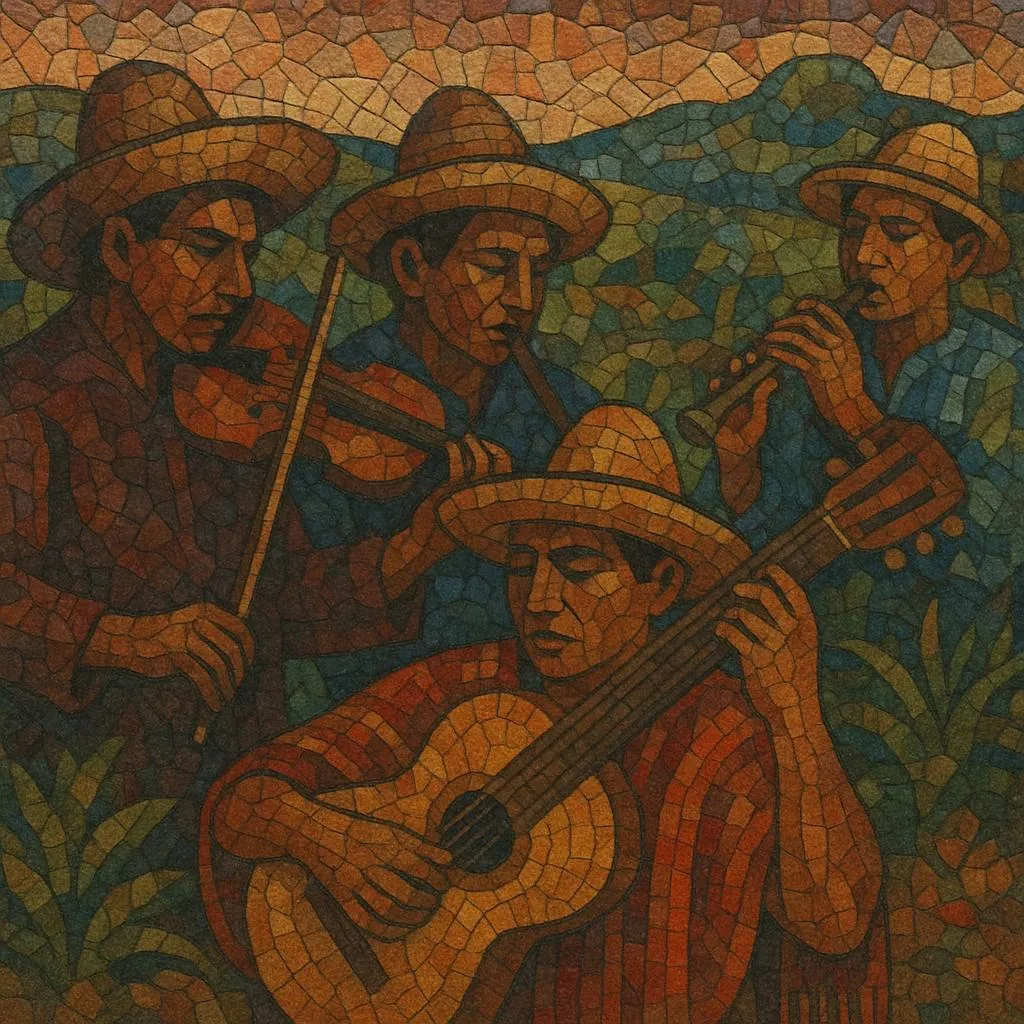
It encompasses indigenous ritual pieces, sones and jarabes with sesquiáltera (2:3) rhythmic interplay, 19th‑century waltzes and polkas adopted via brass bands, and coastal chilena rhythms that arrived in the mid‑19th century. Repertoires are performed by community bandas de viento (wind bands), string ensembles (violins, guitars, requinto/bajo sexto), and, in modern practice, sierreño‑style guitar trios with tololoche or electric bass. Vocals often alternate between Spanish and Tu'un Savi, featuring strophic, narrative forms, responsorial passages, and ornamented, modal melodies.
The music is central to mayordomía cycles, patronal feasts, weddings, homecomings, and regional dances; it also carries a strong diasporic sentiment, with songs that remember the Mixteca homeland and migration experiences.
History
Música mixteca grows from pre‑Hispanic ritual and social music among the Mixtec (Tu'un Savi) communities. Indigenous aerophones (such as chirimía) and membranophones coexisted with post‑Conquest liturgical repertoires, creating a layered sound world used for processions, dances, and communal rites.
In the late 1800s, military and civic wind bands took root across Oaxaca, including the Mixteca. Community bandas de viento adapted European forms (waltz, polka, marcha) and blended them with local sones and jarabes. Around the same period, the chilena—derived from the Chilean cueca via Pacific sailors—spread along the Costa Chica and Mixteca Baja, becoming a hallmark dance rhythm in 6/8 and 3/4 with hemiola.
By the early 1900s, regional composers and bandmasters codified repertories for fiestas, school bands, and church‑linked ensembles. Iconic Oaxacan pieces and Mixteca‑themed songs became emblems of identity, while string ensembles and early recordings circulated sones, jarabes, and chilenas beyond their towns. Mid‑century migration to Mexico City, the northwest of Mexico, and the United States amplified dissemination through radio programs, community dances, and cassette culture.
Since the late 20th century, música mixteca has flourished in multiple formats: traditional bandas de viento for civic and sacred occasions; string groups and violin‑led son ensembles; and newer sierreño/trío configurations for dance venues and recorded markets. Tu'un Savi lyrics have found renewed visibility online, and younger musicians interweave corrido narrative, regional mexicano guitar textures, and banda percussion with the rhythmic DNA of chilena and sones. Cultural festivals (e.g., regional Guelaguetza events) and municipal music schools continue to train new generations, ensuring continuity while encouraging innovation.