Your digging level
Description
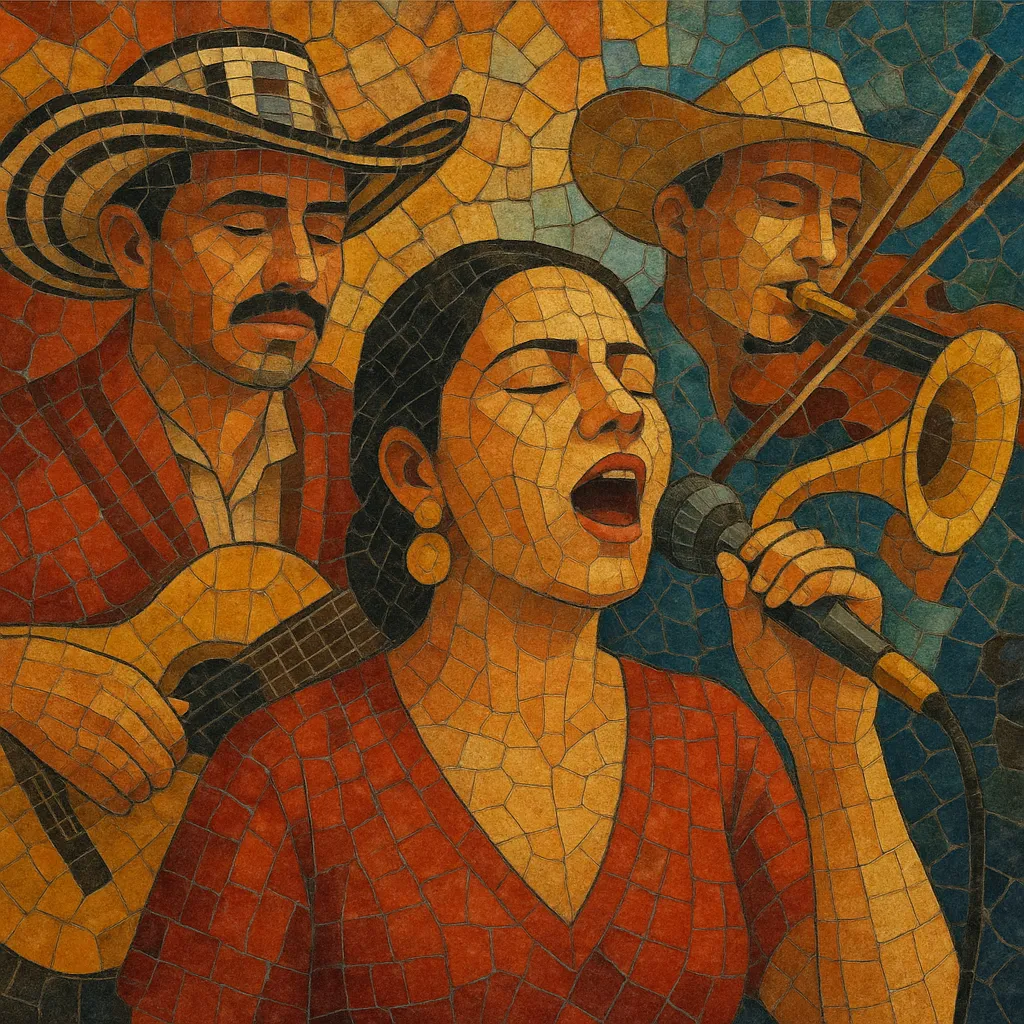
Popular Colombian music (música popular colombiana) is a contemporary Colombian style that fuses Mexican regional idioms—especially ranchera, corrido, norteño, and banda—with Andean-Colombian song traditions like bambuco and pasillo.
Built around the emotive, dramatic vocal delivery known locally as "despecho" (heartbreak), it foregrounds cantina themes of love, loss, betrayal, and resilience, while adopting modern pop production. Brass sections (in the banda vein), trumpets in mariachi style, accordion or requinto guitars, and steady rhythm sections support songs that often move between 3/4 waltz feels and 4/4 bolero or pop-ballad grooves.
The genre evolved from 1980s "música de despecho" and "carrilera" in Antioquia and the Eje Cafetero, and in the 2000s–2010s broke nationally with a new generation that blended classic themes with polished, radio-ready arrangements and crossovers with vallenato and urbano.


History
The foundations of popular Colombian music lie in the 1980s rise of "música de despecho" and "carrilera"—rural cantina music from Antioquia and the Eje Cafetero that adapted Mexican ranchera and corrido aesthetics to Colombian sensibilities. Artists like Darío Gómez and Luis Alberto Posada became icons by articulating raw, melodramatic stories of heartbreak, alcohol, and everyday struggle, pairing Andean-Colombian songcraft (bambuco, pasillo) with ranchera instrumentation and waltz/bolero rhythms.
In the 2000s, a younger wave professionalized the sound: cleaner studio production, tighter brass arrangements, and pop-leaning harmony brought the style from cantinas to mainstream radio and TV. Trumpets and tuba from banda, norteño-style accordion, and mariachi voicings coexisted with electric bass, drum kit, and acoustic guitars. This period cemented the label "música popular" for a distinct Colombian take on regional Mexican idioms.
The 2010s saw national and diaspora success through artists who blended classic despecho themes with contemporary pop hooks and collaborations across vallenato and urbano (reggaeton/Latin trap). While lyrical content remained rooted in romantic drama and resilience, arrangements diversified to include pop ballad progressions, key changes, and modern vocal production. The genre now thrives on large festivals, streaming platforms, and cross-genre duets that bring its cantina ethos to broader audiences.