Your digging level
Description
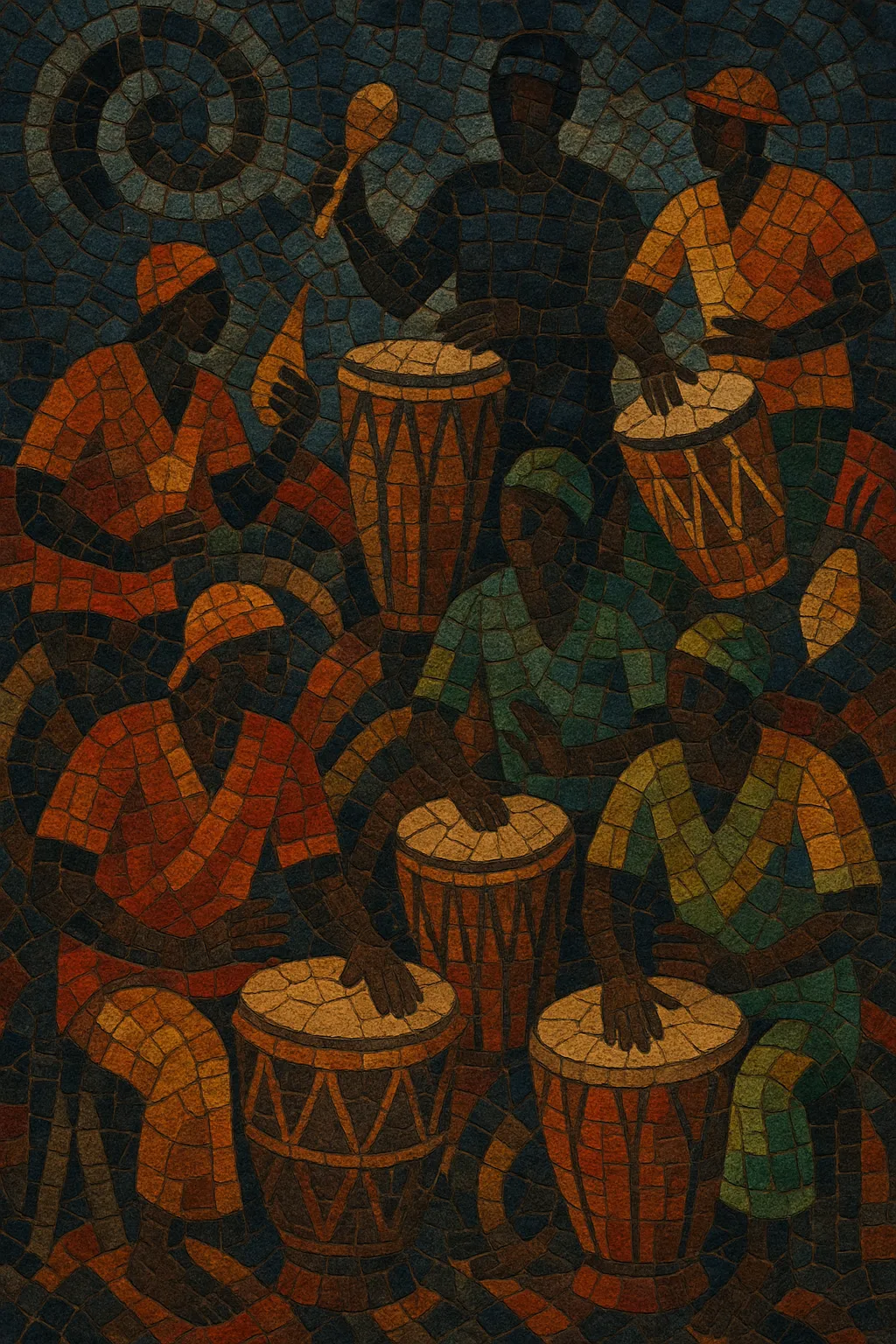
African percussion is a performance- and community-centered musical practice built around hand drums, stick drums, bells, shakers, and other idiophones native to the African continent. It is defined by layered polyrhythms, interlocking patterns, call‑and‑response, and a cyclical groove that supports dance, ritual, storytelling, and social life.
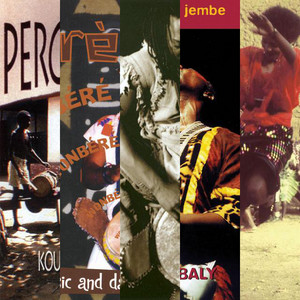
While each region has distinct instruments and playing traditions—such as West Africa’s djembe and dunun, Senegal’s sabar, Ghana’s Ewe drum ensembles, Central Africa’s likembe (thumb piano) and log drums, East Africa’s ngoma drums, and Southern Africa’s hand percussion and clapping—these traditions share a common emphasis on timeline patterns (bell or shaker ostinati), dialog between lead and supporting parts, and cue‑based ensemble communication. In recorded music, the term “African percussion” often refers to ensembles or artists foregrounding these instruments and techniques, whether in traditional contexts or contemporary, cross‑cultural projects.
History
African percussion has roots stretching back thousands of years, embedded in ceremonies, work, healing, initiation rites, courtly functions, and everyday social gatherings. In many cultures, drums and idiophones are communicative tools as much as musical ones—conveying proverbs, lineages, and events through coded rhythms and speech‑like inflections (e.g., talking drums).
The Atlantic slave trade dispersed African rhythmic knowledge across the Americas and Caribbean, shaping Afro‑diasporic genres from rumba and samba to later jazz and Latin jazz. Despite colonial restrictions on drumming in some places, rhythmic memory persisted through body percussion, clapping, and adapted instruments, keeping core principles—polyrhythm, call‑and‑response, and cyclic form—alive.
From the mid‑20th century, national ensembles (e.g., Les Ballets Africains) and master drummers toured globally, while recordings and ethnomusicological releases introduced wider audiences to djembe, sabar, Ewe, and other ensemble traditions. A landmark was Babatunde Olatunji’s 1960 album “Drums of Passion,” which helped frame African percussion as a standalone category in world music markets.
Today, African percussion thrives both in traditional settings and in collaborations with jazz, pop, electronic music, and film. Modern African genres (mbalax, makossa, gqom, amapiano, afrobeats) and global club music often foreground drum timbres and cyclical grooves derived from older ensemble logics. Education networks and community drum circles have further amplified its presence worldwide, while master artists continue to preserve lineages and innovate within them.