Your digging level
Description
Kilapanga is a traditional music-and-dance form of the Bakongo (Kongo) people of northern Angola and the Kongo regions of the Congo Basin.
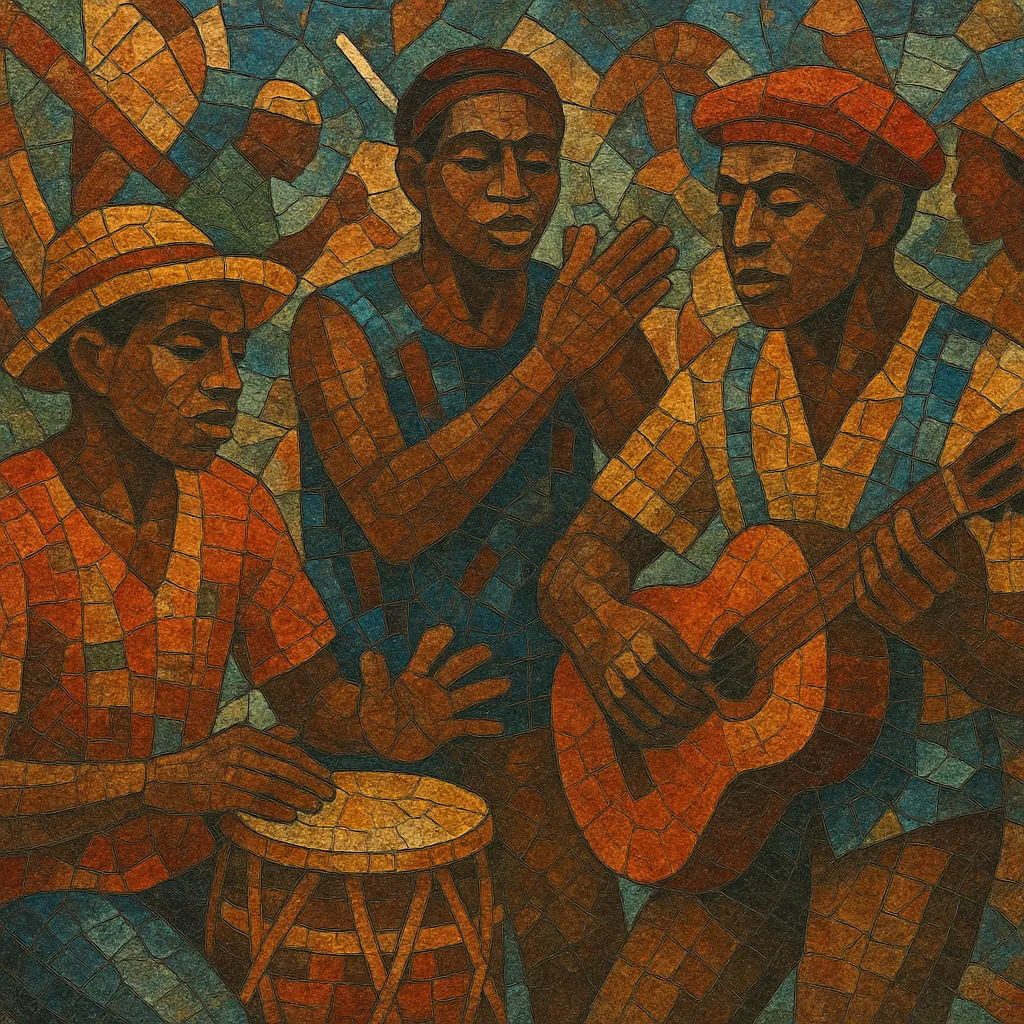
It is characterized by driving polyrhythmic percussion, responsorial (call-and-response) singing, and energetic, hip-and-shoulder-led group choreography. Performed at community festivities and processions, kilapanga emphasizes communal participation, proverb-rich texts, and rhythmic interplay between hand drums, scrapers, and clapping.
As Kongo communities moved into urban centers in the 20th century, kilapanga’s grooves and step-patterns helped shape Angolan popular performance practice and later fed into modern styles—most famously Kuduro—where producers recast its pulse and call-and-response energy with electronic instruments.
History
Kilapanga emerged among the Bakongo (Kongo) people across northern Angola and adjacent parts of the Congo Basin. Rooted in precolonial ceremonial and festive practices, it centers on collective drumming, responsorial vocals, and dance circles that affirm social bonds, transmit proverbs, and mark life-cycle events.
In the early-to-mid 20th century, migration from northern provinces (e.g., Uíge and Zaire in Angola) brought Bakongo traditions into cities. Community associations and folkloric troupes adapted kilapanga for urban festivities and staged presentations, standardizing ensemble formats and choreographies while preserving its core rhythmic language.
After Angolan independence (1975), state cultural ensembles and community groups documented and showcased regional forms—including kilapanga—on national stages and radio. Popular artists drew on its grooves, integrating kilapanga’s call-and-response and percussion textures into guitar-based Angolan styles and urban dance scenes alongside related Angolan forms such as rebita and kazukuta.
By the late 1980s and 1990s, producers recontextualized traditional Angolan rhythmic cells within electronic drum programming. Kilapanga’s driving pulse, communal chants, and kinetic dance ethos informed Kuduro, whose uptempo, looped beats and shouted hooks echo the participatory urgency of kilapanga while translating it to synths, drum machines, and club sound systems.