Your digging level
Description
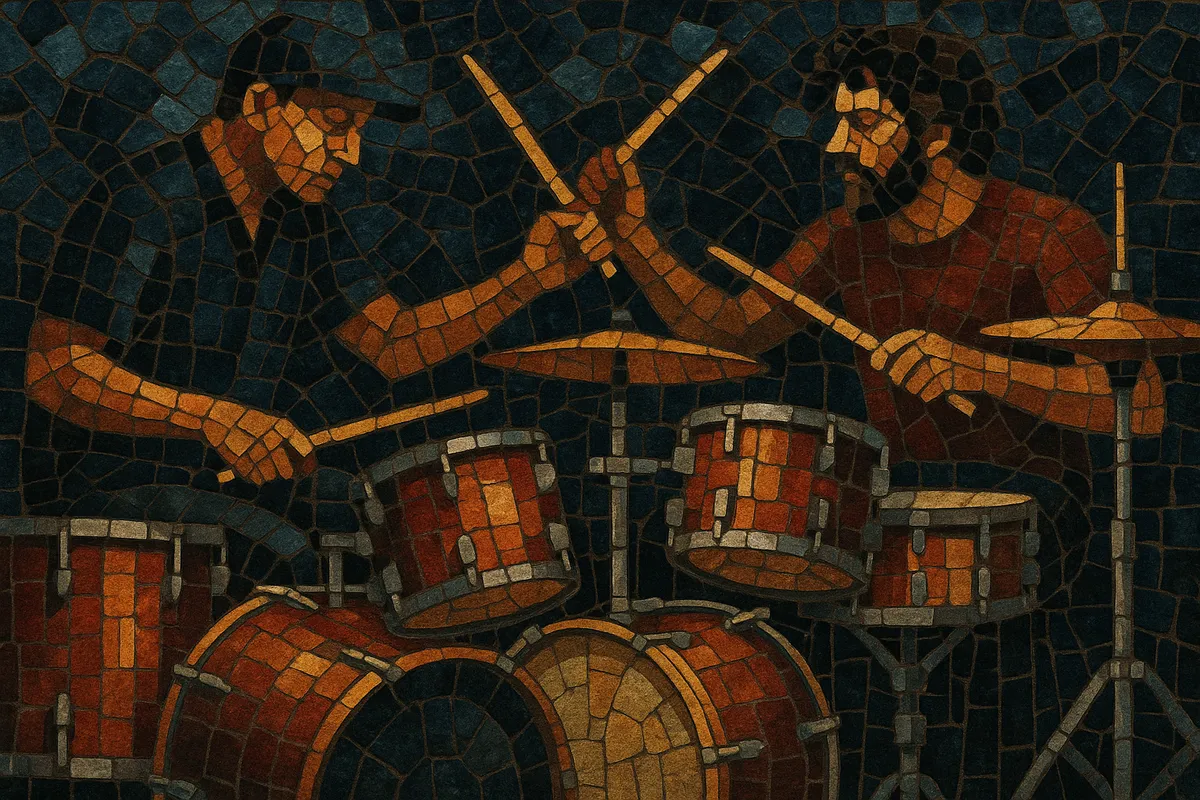
Double drumming is a performance-centric rock approach where two full drum kits (and often additional percussion) play simultaneously to create a wider, denser, and more polyrhythmic groove.
It emphasizes interlocking parts, call-and-response figures, and dynamic layering—one drummer typically anchors the backbeat while the other colors the groove with accents, ghost notes, tom patterns, or counter-rhythms.
The sound is often mixed in stereo with each kit panned left/right, producing an enveloping live feel closely associated with jam-oriented rock, Southern rock, psychedelic rock, post-punk, and experimental scenes.
History
Double drumming emerged in the late 1960s United States as bands sought bigger, more immersive rhythm sections for expansive live shows. The Grateful Dead added a second drummer in 1967, establishing the template for interlocking kits within psychedelic improvisation. In parallel, James Brown’s bands occasionally used two drummers live, reinforcing tightly syncopated funk patterns and showcasing how dual kits could heighten groove and punch.
The Allman Brothers Band (formed 1969) made double drumming central to Southern rock, pairing a deep backbeat with rolling toms and Latin-tinged percussion. The Doobie Brothers likewise consolidated the approach for radio-friendly rock and large venues, while many touring acts experimented with two kits for impact, stereo spread, and visual spectacle.
Adam and the Ants brought a dual-drummer, Burundi-influenced patterning to post-punk/new wave, popularizing layered tom ostinati and martial accents. Experimental and art-rock bands began refining the format in the studio and on stage; King Crimson later evolved the concept into complex interlocking parts that foregrounded metric modulation and polyrhythm.
Butthole Surfers and Melvins adopted two kits for sheer physicality and texture in noise and sludge-adjacent rock. In Japan, Boredoms expanded the idea into massed-drumming spectacles. The 2010s saw psych and indie acts like King Gizzard & the Lizard Wizard, and large-ensemble art-rock lineups, embrace double drumming for propulsion, dimensionality, and live translation of intricate studio layers.
Today, double drumming is less a narrow genre than a recognizable rhythmic language used across rock substyles. It remains a go-to strategy for bands seeking heft, groove complexity, and stereo drama—particularly in jam-oriented, progressive, and psychedelic contexts.