Your digging level
Description
Música michoacana is the umbrella term for the traditional and popular musics of the Mexican state of Michoacán. It blends Indigenous Purépecha song forms (notably the lyrical pirekua) with rural string-band sones, waltz-time ballads, and later brass/wind banda practices.
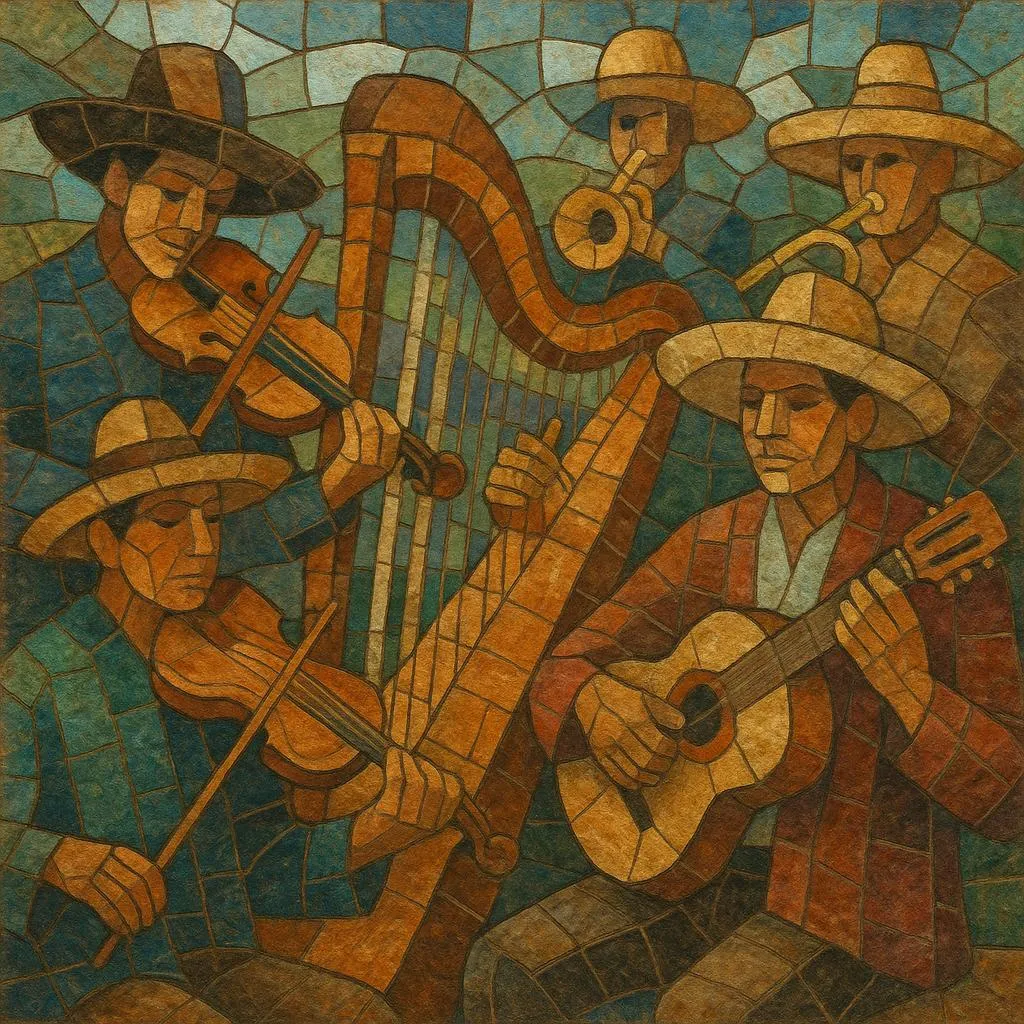
Typical ensembles include string groups with violins, vihuela and six-string guitar, the arpa grande (a large diatonic harp emblematic of the Tierra Caliente zone of Michoacán), and, in some towns, bandas de viento (wind/brass bands). Rhythms move between triple-meter waltzes (3/4) and compound meters characteristic of regional sones, while melodies often sit in major or modal-inflected minors with ornamented violin or harp lines.
Lyrically, música michoacana evokes local landscapes (lakes Pátzcuaro and Zirahuén, Tierra Caliente), love and courtship, fiestas patronales, migration, and historical memory, sung in Spanish and at times in Purépecha.
History
Michoacán’s musical life rests on deep Purépecha traditions. The Purépecha lyrical song form pirekua (often in lilting triple meter with two- or three-part vocal harmonies) coexisted with rural sones and dance repertoires played on violins, guitars, and the region’s iconic arpa grande in Tierra Caliente. European salon dances (waltz, polka) entering Mexico in the 19th century also left their imprint, producing a local taste for triple-meter serenades and valses.
With radio, records, and touring trios in Mexico’s Golden Age, Michoacán repertoires moved onto national stages. The famous Trío Tariácuri helped canonize a Michoacán-rooted approach to ranchera and son, while town bandas de viento formalized repertories for civic and religious festivities. In Tierra Caliente, arpa grande-led conjuntos codified instrumental stylings—sparkling harp arpeggios, agile violins, and guitarra de golpe.
Out-migration to Mexico City and the U.S. (especially California) diversified instrumentation and audiences. Grupera and guitar-band formats (eventually pop-grupero) drew on Michoacán’s melodic and sentimental aesthetics, with figures like Marco Antonio Solís and Los Bukis—artists from Michoacán—bridging traditional lyricism and modern arrangements. At the same time, Tierra Caliente ensembles amplified and electrified their format, adding drum set, bass, and sax/trumpet to harp- and guitar-driven textures.
Today, música michoacana encompasses parallel currents: Purépecha cultural revitalization (pirekua choirs and community ensembles), vibrant Tierra Caliente bands (often dance-oriented and amplified), and professional mariachis and bandas supporting local fiestas and recording projects. Digital platforms have widened reach, while UNESCO’s 2010 recognition of the pirekua as Intangible Cultural Heritage has boosted preservation efforts. The sound remains a living emblem of Michoacán’s identity within the broader landscape of regional mexicano.
Choose one of the region’s archetypes:
•Arpa grande conjunto (harp + 1–2 violins + guitarra de golpe/six-string guitar, optional bass/tololoche; modern groups may add drum kit and electric bass).
•String trio/quartet for sones and rancheras (violins, vihuela/six-string guitar, and a bass register—guitarrón or tololoche).
•Banda de viento format (clarinets, trumpets, trombones, tuba, snare/bass drums) for processional and dance repertory.