Your digging level
Description
Cumbia ranchera is a Mexican fusion style that marries the lilting, syncopated rhythm of Colombian cumbia with the melodies, vocal delivery, and sentimental narratives of Mexican ranchera and norteño traditions.
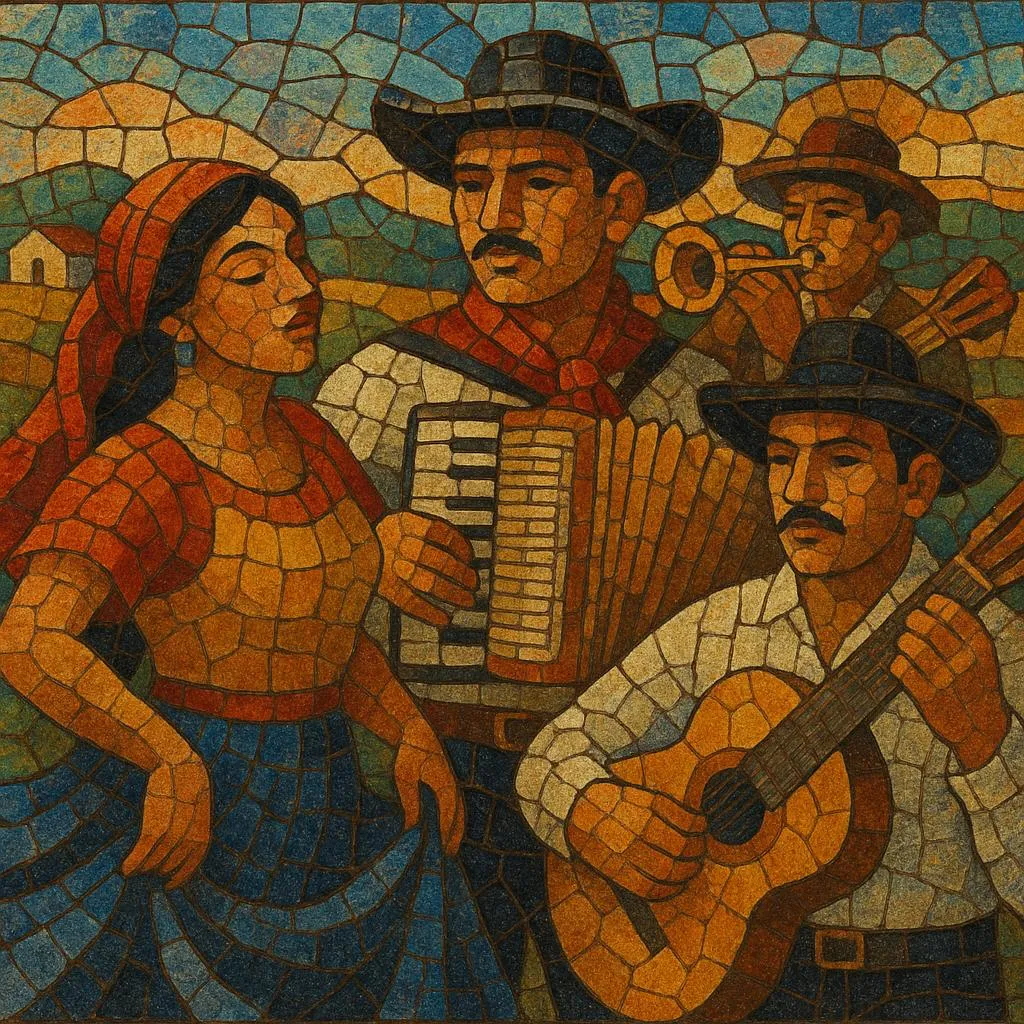
In practice, it keeps the danceable cumbia groove (2/4 feel with a swaying backbeat) while adopting ranchera’s storytelling—love, heartbreak, cantina life, and everyday pride—often sung with a full-throated, dramatic lead and call‑and‑response coros. Instrumentation ranges from norteño (accordion, bajo sexto, bass, drums) to banda (brass, tuba, clarinets, snare), and many groups move fluidly between both formats. Tempos are usually mid‑tempo (roughly 90–110 BPM), melodic hooks are simple and memorable, and arrangements spotlight accordion riffs or brass lines between verses and choruses.
History
Cumbia reached Mexico by the mid‑20th century via radio, records, and touring bands from Colombia, quickly taking root in northern and western states. Local musicians blended cumbia’s percussion‑driven groove with Mexican song forms and instruments—accordion and bajo sexto from norteño; brass and tuba from banda; and ranchera’s emotive vocals—laying the foundation for hybrid styles.
By the 1980s, grupera, norteño, and banda acts were routinely cutting cumbias with ranchera themes and delivery. This period cemented the term “cumbia ranchera” in popular usage: dance‑floor cumbias arranged with ranchera/norteño ensembles and lyrical content. Radio and television variety shows helped the style cross state lines, while touring circuits in Texas and the U.S. Southwest spread it to Mexican‑American audiences.
Northern groups (Nuevo León, Chihuahua, Sonora) leaned toward accordion‑forward, drum‑kit cumbias with ranchera cadences, while Sinaloan and Jaliscan bandas emphasized punchy brass and tuba tumbaos. The Sonoran take (often called cumbia sonorense) favored lighter, bright timbres and catchy unison hooks; technobanda acts brought in synthesizers without abandoning the ranchera narrative voice.
Cumbia ranchera remains a staple across regional Mexican formats—norteño, banda, grupera, and hybrid norteño‑banda sets—regularly appearing in live shows, quinceañeras, and fiestas. Contemporary bands and legacy artists alike continue to cycle between polkas, corridos, ballads, and cumbias rancheras within the same album and setlist, ensuring the substyle’s continued visibility and dance‑floor relevance.