Your digging level

For this genre
0/8
🏆
Sign in, then listen to this genre to level up

Description

Música tamaulipeca is the umbrella term for the traditional and popular styles performed in the Mexican state of Tamaulipas, a border-and‑port crossroads between the Huasteca region, northern ranch country, and the Gulf of Mexico.

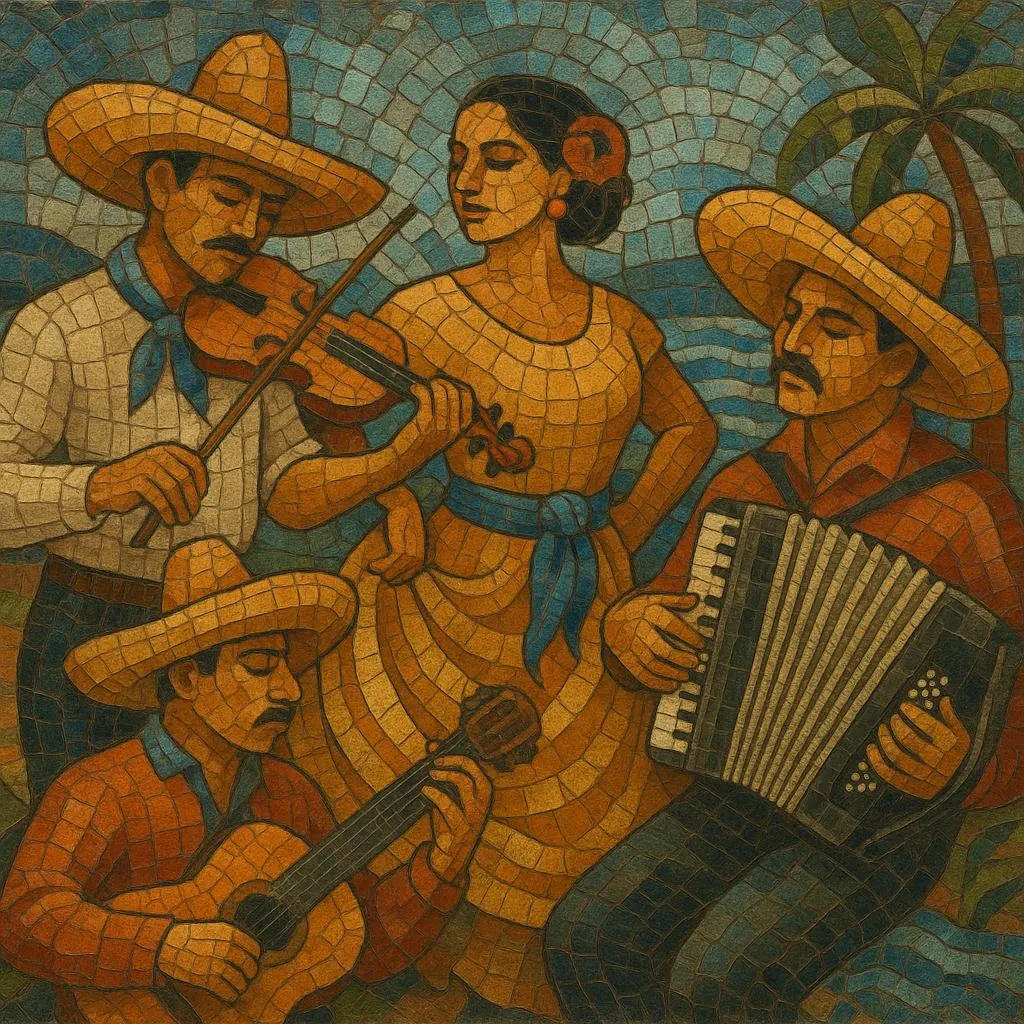
Its sound spans lively dance genres (polka norteña, redova, schottische/chotís, vals), Huastecan string music (huapango/son huasteco with falsetto singing), narrative canción ranchera and corrido, and the coastal influence of bolero and cumbia brought through the ports of Tampico and Ciudad Madero. Instruments commonly include trio huasteco strings (violin, jarana huasteca, quinta huapanguera), the norteño conjunto (accordion and bajo sexto), and, in modern popular groups, electric bass, drums, and keyboards.

The repertoire evokes border life, work and festivity, love and nostalgia, and the region’s rivers, ranches, and coast—performed at huapango fandangos, ferias, dances, and family celebrations.


Sources: Spotify, Wikipedia, Discogs, RYM, MB, user feedback and other online sources

History

Roots (19th–early 20th century)

Tamaulipas sits at a cultural hinge: to the south lies the Huasteca (where the trio huasteco and huapango/son huasteco took shape), while the north absorbed Central‑European dances (polka, redova, schottische, mazurka, vals) carried by migrants across northern Mexico and Texas. By the early 1900s, local musicians in ranchos and towns blended these streams with Mexican canción popular, corrido, and religious/ceremonial song.

Port and border crosscurrents (1920s–1960s)

The port of Tampico intensified Gulf links, circulating danzón, bolero, and Caribbean rhythms, while the border corridor (Reynosa–Matamoros) exchanged styles with Texas conjuntos. Radio and early recordings helped codify dance repertoires (polka norteña, redova, chotís) alongside huapango huasteco’s distinctive falsetto and violin floritura.

Modern popularization (1970s–1990s)

Amplified conjuntos and grupero/cumbia formats entered local bailes and fiestas, with electric bass, drum set, and keyboards sitting next to accordion or guitars. Meanwhile, huapango gatherings (fandangos, concursos) preserved sesquiáltera rhythms (3/4 vs 6/8) and poetic décima verse. The regional brand “música tamaulipeca” came to encompass both traditional trios and dance bands that reflected port and border tastes.

Today

Contemporary acts alternate between preservation (trío huasteco lineups, traditional dances) and hybridization (norteño‑cumbia, pop‑ranchero fusions). Festivals across the Huasteca and the border attract players from neighboring states, but the repertoire, dance steps, and lyrical themes remain rooted in Tamaulipas’s ranch, river, and coastal life.

How to make a track in this genre

Core ensembles
•   Huastecan approach: trio huasteco (violin, jarana huasteca, quinta huapanguera), with two singers trading coplas and using ornamental falsetto. •   Norteño/conjunto approach: accordion (diatonic), bajo sexto, bass (tololoche or electric), and drum set for danceable polkas, redovas, schottisches, and valses. •   Coastal/grupero approach: electric guitar, bass, keys, drums, sometimes accordion; cumbia and bolero feels dominate.
Rhythm & groove
•   For huapango/son huasteco, write in sesquiáltera: alternate or superimpose 6/8 and 3/4 (e.g., vi‑o‑lin hemiolas over a steady strum). Keep the zapateado in mind—phrases should invite footwork. •   For dance tunes, build brisk 2/4 polkas (oom‑pah bass with off‑beat chord “pah”), flowing 3/4 redovas and valses, and square 2/4 schottisches with clear 8‑bar phrases. •   For cumbia, set a relaxed 4/4 with a tumbao bass, off‑beat keyboard or guitar guajeos, and light percussion (güira, congas).
Harmony & melody
•   Favor diatonic I–IV–V frameworks with secondary dominants; huasteco often toggles I and V with modal color. •   Violin leads in huapango should use mordents, slides, and rapid arpeggiation; accordion leads in norteño should outline triads and sixths, with call‑and‑response fills.
Vocal style & lyrics
•   Huasteco singing employs ornamental falsetto and antiphonal exchanges; norteño/corrido delivery is direct and narrative. •   Write verses that reference border life, rivers (Pánuco/Tamesí), ranch work, love, migration, and fiesta. Use copla or décima forms for traditional pieces.
Form & arrangement
•   Keep dance forms concise: 16–32 bars per strain, repeat with instrumental breaks and shout‑outs. •   Alternate sung coplas with instrumental vueltas (violin or accordion solos), and end with a ritard or a final subida for dancers.

Top tracks

Locked
Share your favorite track to unlock other users’ top tracks

Upcoming concerts

in this genre
Influenced by
Has influenced

Download our mobile app

Get the Melodigging app and start digging for new genres on the go
© 2026 Melodigging
Melodding was created as a tribute to Every Noise at Once, which inspired us to help curious minds keep digging into music's ever-evolving genres.
Buy me a coffee for Melodigging