Your digging level

For this genre
0/8
🏆
Sign in, then listen to this genre to level up

Description

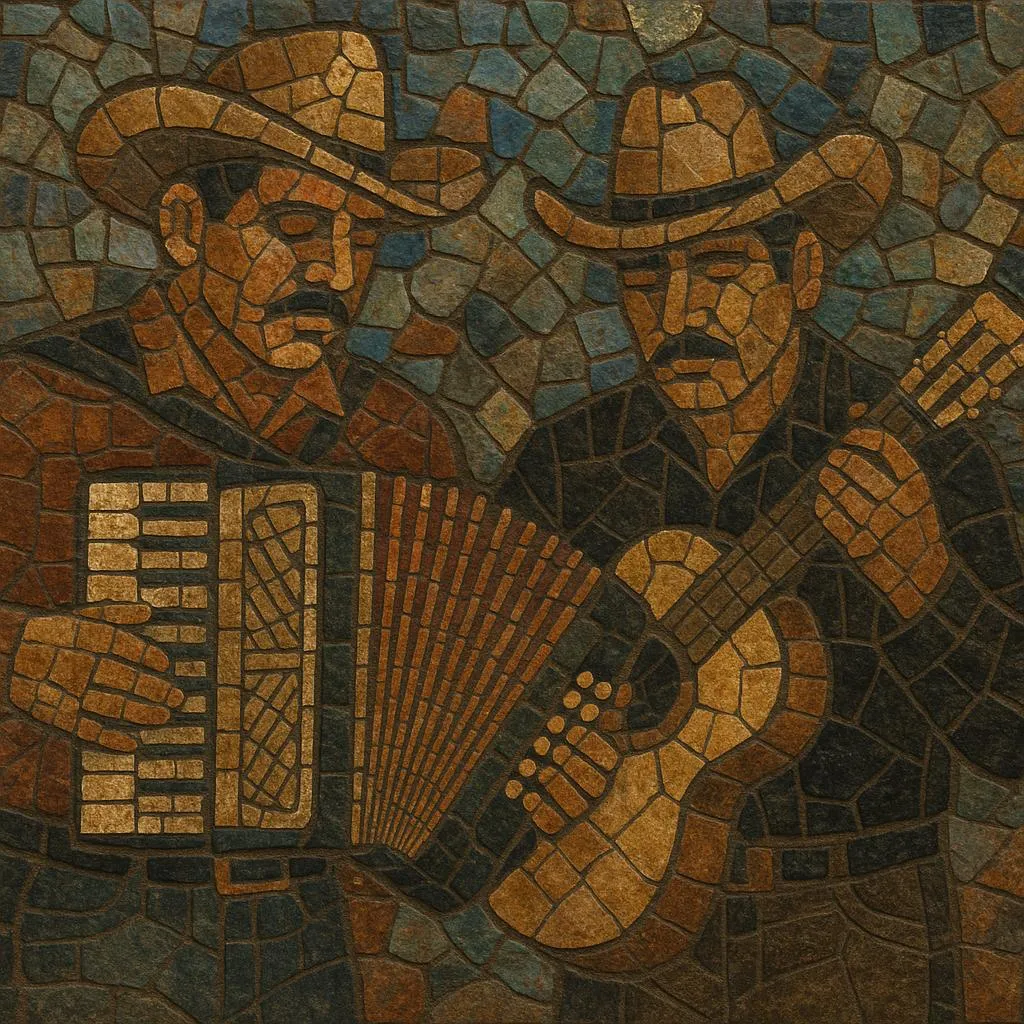
Deep norteño refers to the most traditional, roots-oriented strain of norteño music from northern Mexico and the U.S.–Mexico borderlands.

It centers the accordion–bajo sexto duo, dance-meter forms (polka, schottische, redova, and waltz/vals), and story-driven songs (corridos), delivered with a dry, unadorned ensemble sound. Compared to pop-leaning regional variants, deep norteño favors brisk two-steps, tightly interlocking rhythms (accordion right hand with snare rimshots and bass drum), and ornamented but earthy accordion lines over simple I–IV–V harmonies in accordion-friendly keys (G, D, A). Lyrically it focuses on love, ranch life, migration, work, and border narratives, preserving the genre’s rural, working-class ethos.


Sources: Spotify, Wikipedia, Discogs, RYM, MB, user feedback and other online sources

History

Origins (late 19th–early 20th century)

Central European immigrants (German, Czech) brought polkas, schottisches, and waltzes to northern Mexico and Texas. Local musicians adapted these dance meters to the diatonic button accordion, partnering it with the Mexican bajo sexto. By the 1910s–1920s, border ensembles were forging a distinct norteño sound grounded in ranch social dances and corrido storytelling.

Early recording era (1930s–1950s)

Radio and shellac records circulated polkas, valses, and corridos by pioneering duos and conjuntos across Nuevo León, Tamaulipas, Coahuila, and Chihuahua. The core ensemble solidified: accordion carrying melody and riffs, bajo sexto providing propulsive strums and bass notes (later joined or replaced by tololoche/electric bass), and a snare/“tarola” marking the two-step.

Golden consolidation (1960s–1970s)

Groups such as Los Relámpagos del Norte, Los Alegres de Terán, Carlos y José, and later Ramón Ayala’s Bravos del Norte codified the brisk two-step polka feel, highly ornamented accordion phrasing, and strophic corrido forms. This period cemented the deep norteño aesthetics—tight small-band interplay, austere production, and dance-first arrangements.

Cross-border circulation and stylistic branches (1980s–2000s)

As norteño spread among diasporic communities in the U.S., it cross-pollinated with Tejano and Tex-Mex and developed offshoots (e.g., norteño-sax, norteño-banda). Yet a "deep" current persisted, especially in border hubs (e.g., Ojinaga/Chihuahua line), maintaining quick polkas, valses, and narrative corridos with minimal pop adornment.

Present day

While contemporary regional scenes experiment with ballad-pop, trap fusions, and studio sheen, the deep norteño lineage endures through dance halls, festivals, and independent labels. It remains a touchstone for master accordionists, storytellers, and dancers who value the genre’s original swing, grit, and communal function.

How to make a track in this genre

Core ensemble and instrumentation
•   Accordion (diatonic, 2-row or 3-row): principal melody, riffs, fills, and shout-leading. •   Bajo sexto: percussive strums, bass notes, and harmonic grid (I–IV–V with quick turnarounds). •   Bass (tololoche or electric): roots/5ths with two-step pulse; can mirror bajo sexto bass notes. •   Drums (snare/tarola + kick, sometimes hi-hat): rimshots on beats 2 & 4 (or off-beat pops) to lock the two-step.
Rhythm & groove
•   Polka (2/4): driving two-step; kick on 1, snare rimshot accenting the dance step; keep tempos brisk (≈ 110–140 BPM). •   Vals/vals mexicano (3/4): flowing, sentimental; kick on 1, snare brushes or light rim on 2–3. •   Schottische/redova (4/4 or 2/4 phrased): emphasize the lift into step patterns; keep articulation crisp.
Harmony & melody
•   Stick to I–IV–V, with quick dominant (V) push and chromatic approach notes in accordion runs. •   Favor accordion-friendly keys (G, D, A; relative minors for darker corridos). •   Ornament melodies with trills, mordents, grace notes, and rapid bellows changes; end phrases with signature cadential riffs.
Forms & arrangement
•   Corrido and canción ranchera are typically strophic with instrumental intros/outros and brief turnarounds between verses. •   Keep intros short (4–8 bars) with a hooky accordion riff; spotlight the story and danceability over long solos. •   Alternate vocal verses with 4–8 bar accordion interludes; finish with a decisive tag riff and ritard.
Lyrics & delivery
•   Themes: border life, migration, love and heartbreak, work, hero/anti-hero narratives. •   Narrative clarity is key; use plain, memorable language and rhyme; allow verses to unfold chronologically. •   Employ gritos and brief spoken asides to animate dancefloor energy and audience call-and-response.
Production tips
•   Keep mixes dry and intimate; close-mic accordion reeds, capture bajo sexto pick noise and snare rim crack. •   Avoid heavy processing; a slight room reverb is enough—the groove and articulation should feel live and immediate.

Top tracks

Locked
Share your favorite track to unlock other users’ top tracks

Upcoming concerts

in this genre
Influenced by
Has influenced

Download our mobile app

Get the Melodigging app and start digging for new genres on the go
© 2026 Melodigging
Melodding was created as a tribute to Every Noise at Once, which inspired us to help curious minds keep digging into music's ever-evolving genres.
Buy me a coffee for Melodigging