Your digging level
Description
Banda carnavalera is a festive brass- and woodwind-led wind-band tradition associated with carnival celebrations in southern Mexico, especially Oaxaca and the Costa Chica region of Oaxaca/Guerrero.
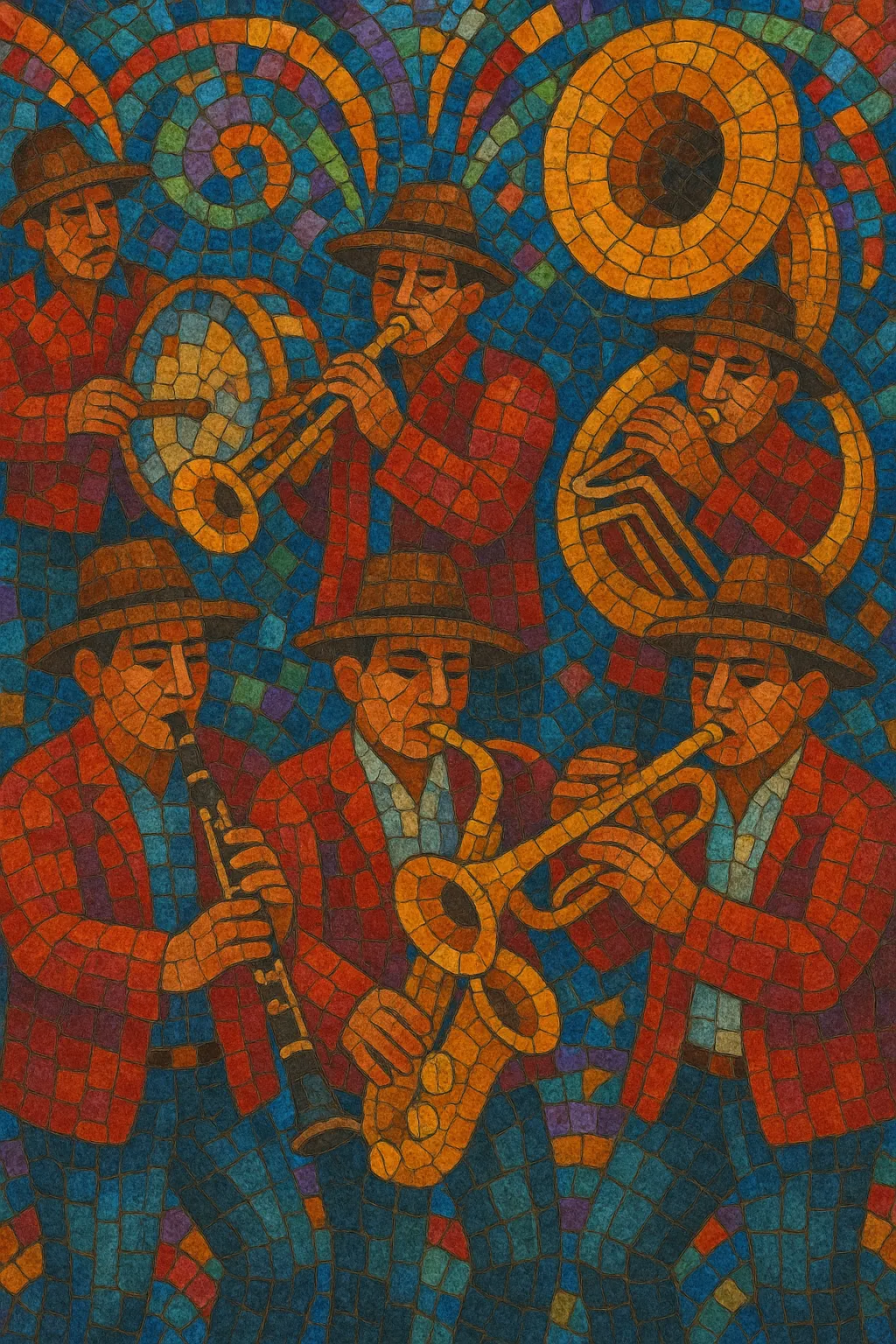
Built around clarinets, trumpets, trombones, tuba/sousaphone and a powerful percussion battery (snare, bass drum, cymbals), these bands perform upbeat medleys for processions, parades, and plaza dances. Their repertoire blends local dance forms (chilena, sones, jarabes) with imported band idioms (polkas, waltzes, pasodobles) and, in contemporary settings, cumbias and popular songs.
The sound is bright, extroverted, and highly rhythmic: 2/4 marches and cumbias sit alongside 6/8 chilenas with hemiola swing, call-and-response horn riffs, and unison melodies doubled at the octave, all designed to keep crowds moving for hours.
History
Wind bands arrived in southern Mexico via military and civic bands during the late Porfirian period. Indigenous and mestizo communities in Oaxaca adapted the instrumentation and format, forming community "bandas de viento" that played sacred and secular repertory for local fiestas. As these ensembles became central to Carnival (Carnaval), their most danceable repertoire and performance practices crystallized into what is now called banda carnavalera.
By the early-to-mid 20th century, banda carnavalera ensembles were fixtures of Carnival processions and plaza dances. Their sets mixed European-derived forms (polka, waltz, pasodoble) with local dance genres like chilena (with its characteristic 6/8–3/4 cross-rhythms), sones, and jarabes. The emphasis on continuous, high-energy performance—often hours-long—shaped the genre’s medley-based programming and robust percussion style.
From the late 20th century onward, cumbia and popular songs entered the carnival band book, arranged for clarinets and brass in unison or parallel thirds/sixths, supported by tuba ostinatos and crisp snare/bass drum patterns. Community training institutions (notably in the Mixe region) professionalized teaching and instrument maintenance, while radio, cassettes, and later YouTube helped circulate the sound beyond its local base.
Banda carnavalera remains a living, community-based practice that animates Carnival across Oaxaca and the Costa Chica, while also appearing in diasporic celebrations in Mexican migrant hubs. Contemporary bands balance tradition and modernity—preserving chilenas and sones—while updating setlists with cumbias and regional hits, maintaining the genre’s core identity: extroverted, communal dance music for the street.