Your digging level
Description
Música oaxaqueña refers to the rich regional music traditions of Oaxaca, Mexico, spanning wind-band repertoire (bandas de viento), string-and-voice song forms (son istmeño, chilena oaxaqueña, jarabes and waltzes), and ceremonial processional music heard in community fiestas and religious calendar rites.
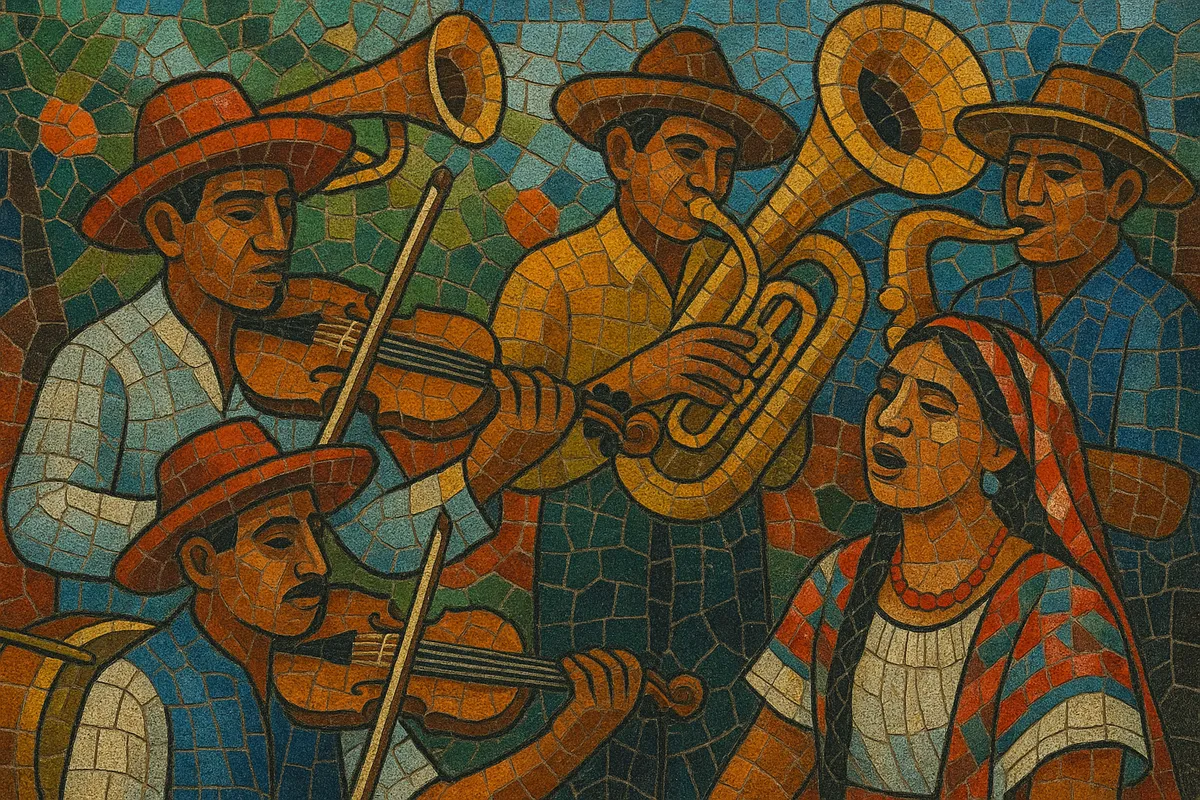
Characteristically, Oaxacan wind bands feature clarinets, trumpets, cornets, trombones, saxophones, tuba/sousaphone, and a percussion battery (snare, bass drum, cymbals), performing dance-derived genres like chilena (often in 6/8 with cross‑rhythms), pasodoble, polka, danzón, and waltz, alongside solemn marches. In coastal and isthmus ensembles, strings (guitar/reharmonized requinto), violin, and occasionally marimba appear, supporting lyrical melodies and call‑and‑response vocals.
Lyrics may be in Spanish or indigenous languages (Zapotec, Mixtec, Mixe, Mazatec), frequently celebrating hometown pride, patron-saint festivities, love and nostalgia for migration, and communal reciprocity (guelaguetza). The sound ranges from festive and dancing to deeply sentimental, with iconic Oaxacan waltzes and sones recognized across Mexico.
History
Música oaxaqueña crystallized in the mid-to-late 19th century as European social dances (waltz, polka, pasodoble, danzón) and military-band practices converged with local indigenous musical life. Community wind bands (bandas de viento) proliferated as civic and church institutions adopted brass and woodwind instrumentation, adapting European forms to local rhythms and ceremonial needs. Coastal contact with Pacific trade routes and neighboring Guerrero brought the chilena (linked to Chilean cueca via 19th‑century sailors), which Oaxacan musicians localized into a vibrant regional dance music.
By the early 1900s, composers from Oaxaca helped codify a regional repertoire. Macedonio Alcalá’s waltz "Dios Nunca Muere" became an unofficial Oaxacan anthem, while José López Alavez’s "Canción Mixteca" gave voice to migration and homesickness. In the Isthmus of Tehuantepec, son istmeño flourished with violin, guitar, and vocal traditions. Bands and string ensembles performed at fiestas patronales, village processions, and civic ceremonies, embedding the music in social life.
Through the 20th century, community music schools and band programs multiplied, with landmark institutions such as CECAM (Centro de Capacitación Musical y Desarrollo de la Cultura Mixe) training generations of indigenous wind players and directors. The Guelaguetza festival (and its local iterations) became a showcase for regional dances and music, reinforcing stylistic markers (chilenas, jarabes, marches, and waltzes) and inter‑community repertoire exchange.
Since the late 20th and early 21st centuries, artists like Lila Downs and Susana Harp have brought Oaxacan songs and indigenous languages to global stages, blending traditional forms with popular and world-fusion aesthetics. Urban and diaspora communities commission new works for bandas de viento, and youth philharmonic bands sustain the tradition. While modern arrangements and recording technology have expanded textures, the core communal function—music for dancing, procession, celebration, and remembrance—remains central.