Your digging level
Description
Bandinhas refers to the tradition of small community wind/brass bands found across Portugal that perform at town fairs (romarias), religious processions, and local festivities.
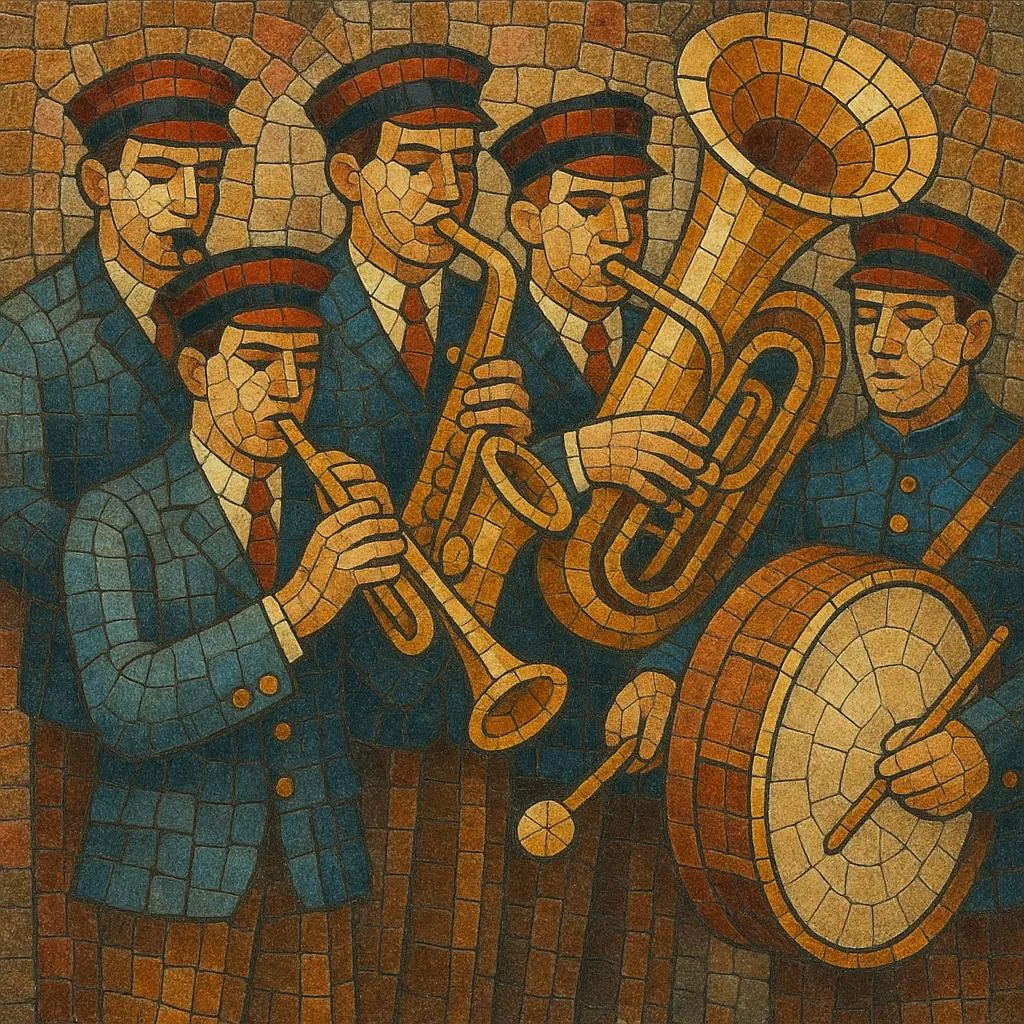
Typically made up of clarinets, saxophones, trumpets, cornets, trombones, baritones, tubas, and a parade-style percussion section (bass drum, snare, cymbals), these ensembles play lively marches, pasodobles, polkas, and waltzes, alongside arrangements of Portuguese folk melodies. The overall feel is festive and “oom‑pah” driven, with strong melodic leads, simple yet effective harmonies, and clear, danceable rhythms.
In practice, bandinhas act as cultural anchors in their communities, preserving repertoire and performance customs while also arranging popular tunes for local celebrations.
History
Community wind and brass bands flourished in Portugal in the 1800s, mirroring similar “philharmonic” and town‑band movements across southern Europe. Local artisans, farmers, and students learned instruments in civic associations and parish groups, forming the nucleus of what people colloquially called bandinhas.
As these bands became fixtures at romarias and processions, their core repertoire settled around marches, pasodobles, polkas, and waltzes—dance‑derived forms ideal for parading and outdoor fêtes. Bandmasters adapted Portuguese folk tunes and popular songs for wind ensemble, standardizing parts, transpositions, and parade percussion.
Despite social change and urban migration, municipal support, music schools, and local associations helped bandinhas endure. Many ensembles expanded instrumentation, improved training, and recorded their repertoires. Today, bandinhas continue to animate festivals across Portugal, balancing heritage pieces with new arrangements while serving as vital hubs for community music education.
Write for standard wind band forces: clarinets (in Bb), saxophones (alto/tenor), trumpets/cornets, horns, trombones, baritones/euphoniums, tubas, and parade percussion (bass drum, snare, cymbals). Favor bright, singable melodies in the upper winds and brass, with countermelodies in middle voices and sustained harmonic pads in lower brass.
Use diatonic major and relative minor keys (common band keys: Bb, Eb, F, Ab). Triadic harmony with occasional secondary dominants keeps the sound open-air and festive. Craft melodies that project clearly outdoors: stepwise motion with memorable motifs and periodic phrasing (4+4 or 8+8 bars).
Favor clear articulation, moderate vibrato in brass, and unified crescendi at cadences. Outdoor balance matters: ensure low brass and percussion support without masking clarinet/sax melodies.