Your digging level
Description
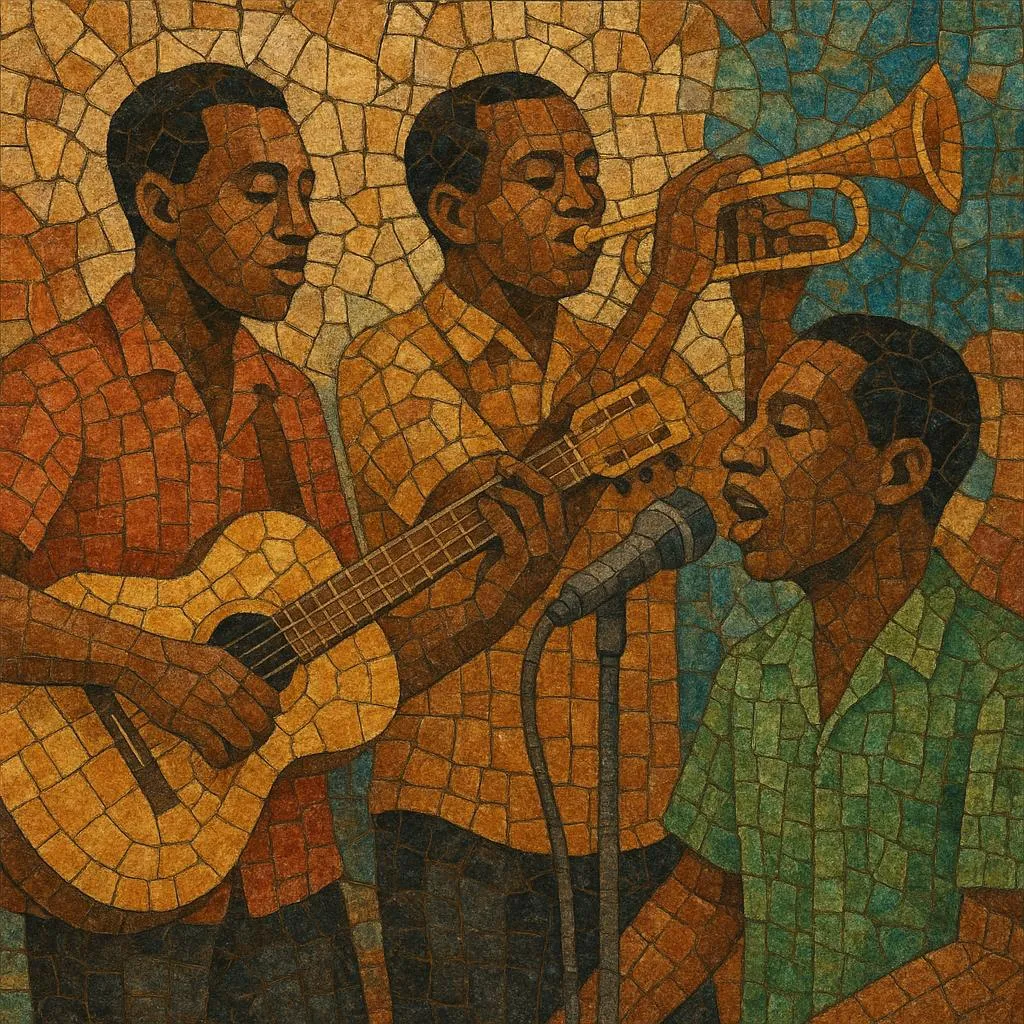
Old school highlife is the early band- and guitar‑band era of Ghanaian highlife, defined by dance orchestras with jazzy horns, interlocking guitars, and call‑and‑response vocals set to West African rhythmic timelines. It arose along the coastal towns of the then Gold Coast as local musicians fused Akan and other indigenous song forms with European ballroom dances and brass‑band instrumentation.
Typical features include an upbeat 4/4 groove shaped by bell/clave timelines, two‑finger plucked guitar arpeggios that weave cyclical riffs, tight horn sections stating riffs and responses, and lyrics often in Akan (Twi/Fante), Ga, or Ewe that address love, social advice, and urban life. Early dance‑band orchestras (and later guitar bands) carried the style from elite ballrooms and social clubs to beer bars, lorry parks, and open‑air dances across Ghana and, by mid‑century, to Nigeria and the wider West African coast.
History
Highlife formed in coastal Ghana under colonial and maritime exchange. Military and civic brass bands, European ballroom dances (foxtrot, waltz), and popular Caribbean idioms met Akan/Ewe song forms and local percussion. The name “highlife” circulated in the early 1920s around exclusive clubs where dance bands played orchestrated indigenous melodies for formally dressed audiences.
By the 1920s–30s, cosmopolitan dance orchestras blended jazz harmonies, horn riffs, and West African rhythms; in parallel, palm‑wine/guitar‑band highlife developed a leaner, guitar‑led sound for bars and street dances. Signature rhythmic cells relate to Ghanaian bell timelines and Afro‑Cuban guajeos, while arrangements alternated sung verses with instrumental breaks for horns and guitars. Pivotal ensembles and leaders included The Tempos under E.T. Mensah, King Bruce & the Black Beats, and later the Ramblers Dance Band—acts that codified the sound in Ghana and popularized it across Anglophone West Africa.
Old school highlife flourished in Ghana’s independence era and spread to Nigeria, where local variants (e.g., Igbo highlife) thrived. Its horn‑and‑guitar language, jazz‑tinged harmony, and danceable polyrhythms profoundly informed later West African styles—most famously Afrobeat—and remained a cornerstone of Ghanaian popular music even as newer fusions emerged.