

Your digging level

For this genre
0/8
🏆
Sign in, then listen to this genre to level up

Description

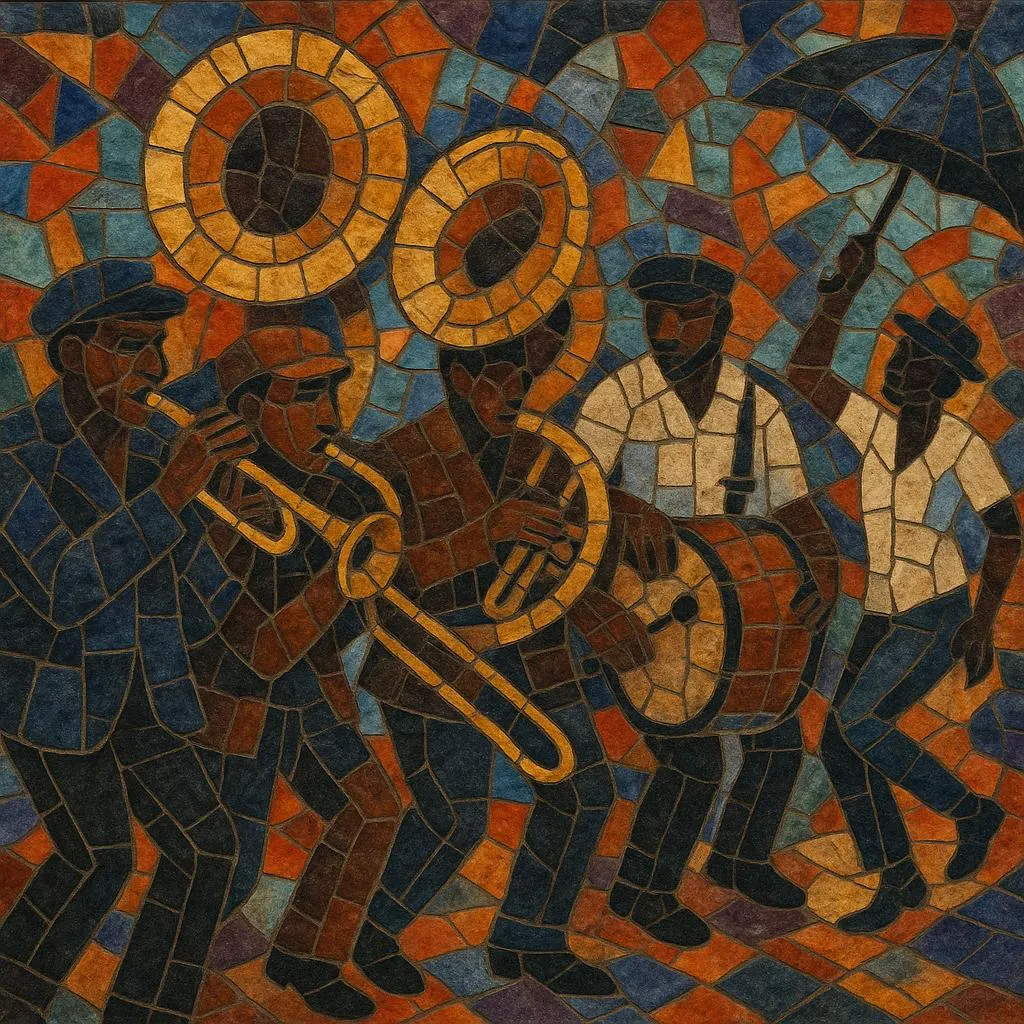
Second line is a participatory parade music and dance tradition from New Orleans in which a brass band (the "main line") leads a moving street procession while revelers fall in behind as the "second line." The sound is built on a distinctive second‑line beat: a rolling, syncopated, press‑roll snare feel over a two‑and‑four backbeat, often inflected by Afro‑Caribbean tresillo/habanera accents.

Musically it blends early New Orleans jazz, marching/brass band repertoire, blues, gospel, rhythm & blues, and later funk. Typical instrumentation includes trumpets, trombones, saxophones, sousaphone/tuba, and a two‑person drum line (snare and bass), with call‑and‑response horn riffs, tailgating trombone glissandi, walking or percussive sousaphone lines, and shout choruses designed to energize dancers. The overall feel is celebratory, communal, and mobile—music made to move through the streets.


Sources: Spotify, Wikipedia, Discogs, RYM, MB, user feedback and other online sources

History

Origins (late 19th–early 20th century)

Second line emerged from the Black social, cultural, and mutual‑aid fabric of New Orleans—especially Social Aid & Pleasure Clubs (SAPCs) and jazz funerals. Brass bands adapted military and marching repertoire to local dance needs, mixing it with blues, spirituals, and Caribbean rhythmic cells. The “second line” referred to community members who followed the band, waving handkerchiefs and umbrellas and transforming a procession into a street party.

Classic Era and the Second‑Line Beat (1900s–1960s)

As early jazz took shape, parade bands codified a snare approach of press rolls, off‑beat accents, and swing that powered Sunday parades and life‑cycle ceremonies. The same lilt fed New Orleans R&B; drummers translated parade syncopations into backbeat‑driven grooves that helped define the city’s mid‑century sound.

Modern Reinvention (1970s–1990s)

A new wave of brass bands modernized the idiom, folding in funk horn voicings, blues‑based vamps, and gospel shouts while keeping the street‑parade core. Community parades remained anchored by SAPCs and neighborhood routes, even as the music found club and festival stages.

21st Century and Global Reach

After the early‑2000s, the tradition rebounded strongly, with youth programs, women‑led bands, and cross‑genre collaborations. The second‑line aesthetic—portable, communal, and groove‑focused—inspired brass ensembles and street‑parade cultures worldwide while remaining a living New Orleans practice tied to local clubs, neighborhoods, and calendars.

How to make a track in this genre

Core Instrumentation
•   Brass frontline: trumpets (melody/calls), trombones (tailgating slides and counter‑riffs), saxophones (fills and inner lines) •   Low end: sousaphone/tuba providing a walking or syncopated bass ostinato •   Drum line: snare (press rolls, buzzes, drags, rimshots) and bass drum (boom‑chick pulse, dotted‑eighth tresillo hits); add cowbell/woodblock for street projection
Rhythm and Groove
•   Use a 4/4 parade feel around 90–120 BPM (often pushing higher during climaxes) •   Emphasize the backbeat (2 and 4) while weaving in tresillo/habanera accents •   Snare articulations should feel conversational: rolling press‑rolls into backbeat pops, with fills that set up cadences and shout choruses
Harmony and Form
•   Favor blues‑rooted progressions (I–IV–V; 12‑bar blues) and mixolydian vamps •   Common keys for brass bands: Bb/Eb/F (comfortable for horns) •   Structure: short intro riff → parade vamp → horn statements (call‑and‑response) → breaks/shout chorus → returns to vamp; repeat and escalate to suit the route and crowd
Melodic Language and Arranging
•   Trumpet states motifs and signals hits; trombone uses slides/glissandi and simple counterlines; saxes pad harmony or add rhythmic riffs •   Arrange “hits” (unison stabs) and “shout choruses” to lift energy; leave space for improvised street chants and drum breaks
Lyrics and Crowd Interaction
•   If using vocals, favor chants, neighborhood roll‑calls, and simple refrains everyone can sing •   Encourage call‑and‑response with the audience; use whistles/hand signals to cue stops, breaks, and modulations
Performance Practice
•   Keep the music mobile and projecting; dynamics should swell around corners and intersections •   Maintain the dance: prioritize pocket, forward momentum, and clear cues over harmonic complexity

Top tracks

Locked
Share your favorite track to unlock other users’ top tracks

Upcoming concerts

in this genre
Influenced by
Has influenced

Download our mobile app

Get the Melodigging app and start digging for new genres on the go
© 2026 Melodigging
Melodding was created as a tribute to Every Noise at Once, which inspired us to help curious minds keep digging into music's ever-evolving genres.
Buy me a coffee for Melodigging


