Your digging level
Description
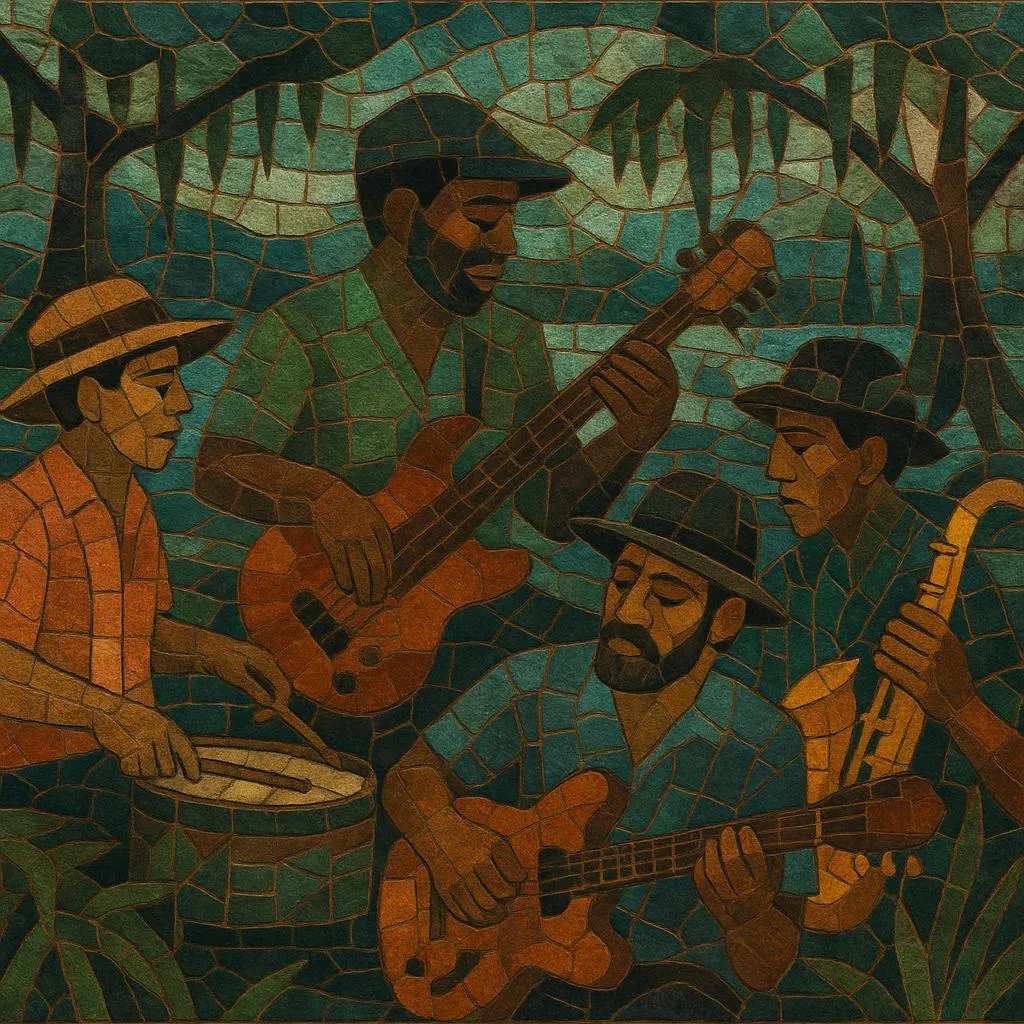
Bayou funk is the groove-driven strain of Louisiana funk that blends earthy New Orleans second‑line rhythms, swamp‑pop harmony, and bluesy R&B with deep, in‑the‑pocket funk vamps.
Built on syncopated drum patterns, rolling bass lines, clipped guitar, clavinet and organ, and tight horn riffs, it feels humid and gritty—"greasy" in the best sense—evoking Mardi Gras parades, neighborhood barrooms, and the heat of the Gulf Coast. Chants and call‑and‑response, often drawing on Creole and Mardi Gras Indian traditions, add a communal, celebratory character.
The sound was codified by The Meters, Dr. John, and Allen Toussaint’s productions, then carried forward by the Neville family, brass bands, and modern New Orleans funk-jam outfits.
History
Bayou funk emerges in New Orleans in the late 1960s as local rhythm & blues and second‑line parade beats collide with the national rise of funk. Producer/arranger Allen Toussaint and the house band that would become The Meters distill a uniquely local groove on records for Lee Dorsey and others—dry, syncopated drums, percolating bass, clipped guitar, and organ/clavinet vamps. Dr. John’s Gris‑Gris (1968) adds voodoo‑psychedelic color and Creole street chants to the palette.
The Meters’ albums for Josie and Reprise define the aesthetic—minimalist, irresistibly funky instrumentals like Cissy Strut and Just Kissed My Baby—while they also back artists from Toussaint’s orbit. The Neville Brothers and The Wild Tchoupitoulas (1976) fuse Mardi Gras Indian chants with funk rhythm sections, cementing the idiom’s community roots. The sound permeates local clubs and Jazz Fest, shaping how New Orleans bands approach groove.
The Dirty Dozen Brass Band and later Rebirth Brass Band inject modern funk into the traditional brass‑band template, taking bayou funk’s syncopation to the streets. The Neville Brothers bring the style to global stages, while crate‑digging and hip‑hop sampling spread The Meters’ breaks to new audiences. Post‑Mardi Gras Indian funk projects and barroom house bands keep the style alive.
After Hurricane Katrina (2005), the music travels with displaced musicians and returns with renewed purpose. Galactic, Dumpstaphunk, Jon Cleary, and countless Frenchmen Street/Maple Leaf residencies refresh the language with jam‑band energy, modern production, and occasional hip‑hop and Afro‑diasporic flavors. The bayou funk groove remains a living New Orleans vernacular—party music with deep roots.